
Everywhere we’ve been in Argentina the locals have asked, ‘Are you going to Salta?’. We had no idea why; they just kept insisting we simply must go. After spending 10 days in the area, we now understand. We started with 4 days in Jujuy and then spent 7 days exploring Salta province to the west and south of Salta city. There are so many dramatic landscapes to explore and an established high altitude wine region to discover.
Exploring Salta La Linda
When we were taking Spanish lessons before our trip we learned some words that seemed very unlikely we’d use. One of those words was ‘linda’, which means lovely. As in ‘Thanks for the flowers, they’re lovely’. Lovely just isn’t a word that we use that often in English. So we weren’t sure why it kept getting repeated in our lessons.
Turns out we’ve heard and used that word so often it comes a close second to ‘hola’. It’s the way Argentinians describe the beauty of a place. And we’ve been to a lot of ‘muy linda’ places in the last two months.
The Province of Salta has a tagline of ‘Salta La Linda’ for good reason. The landscape varies from green, lush subtropical jungles home to toucans and a host of other wildlife, to arid valleys filled with rainbows of sandstone and red clay covered in giant cacti, with volcanoes and 6,000 metre mountains.
On our week-long road trip we plan to see just a small slice of this lovely province. From the capital city of Salta we’re heading west to the foothills of the small town of Cachi, then south to Molinos and finally the wine capital of the region Cafayate.

Exploring Salta: From Salta to Cachi
On our first morning we stop for a cafe con leche and medialuna (coffee and croissant) at the cute little farming town of Chicoana, where locals sit in cafes surrounding the leafy plaza as tractors drive by hauling double loads of what look like tobacco leaves, maybe. Leaving the green pastures of the Lerma valley behind, we start winding our way through the Quebrada del Escoipe along yet another river, with huge mountains towering above us. There are signs of recent rock falls quite regularly along the road.

As we drive, the jungle-like trees are replaced by low shrubs and then eventually cactus. Suddenly a small farming town appears in the one area that has some flat land. After this, the paving disappears and we’re once again on ripio (gravel) as we wind our way along the edge of the mountain and up to 3,300m. We’re above the clouds and looking down on the lush green mountainsides that form the quebrada. It’s a beautiful view and a great road but we’ve just been to Jujuy and it pales in comparison.
Looking this up later we find it is listed on an odd website called dangerousroads.org

Exploring Salta: Fun with Cactus
Once over the mountain pass, we enter the National Park of Los Cardones – the giant cactuses (cactuses – heehee). It seems hard to believe they need a national park when we’ve seen these cardones everywhere in the last few days. Then, as the valley opens out in front of us we realise why.
A dead straight, flat road cuts through a forest(?) of cacti that covers the entirety of a flat open valley. Cacti, cacti, cacti as far as the eye can see, some reaching 5m tall or higher. Eventually we can’t resist any longer and we leap out of the car to take a closer look and a hundred or so photos.

Many of these giant cacti are more than 300 years old, growing only a few centimetres each year. We’d never thought about it before, but something so large naturally needs a strong internal structure, and when we eventually saw a dead cactus we could see the wood trunk inside. Once we start looking we realise cactus wood is everywhere here; chairs, tables, floors, lampshade are all made from it. We’d visited a church in Jujuy where the whole ceiling and walls were made from cactus wood. We also learned previously that many are dying because they are being attacked by a burrowing worm.

We’re on the Tin Tin Road, originally laid by the Indigenous people of the area and later part of the famous Inca Road. As one of the few pieces of straight road we encounter, no doubt it’s very tempting to speed. But the speed limit is 40km an hour (with multiple signs warning about radar enforcement, somehow, apparently), and despite the fact there isn’t another car in sight for the full 30mins we’re stopped here.

Finally we finish having fun with the cactuses and drive the remainder of the way to the town of Cachi and our beautiful BnB in a colonial home. It was very peaceful sitting on the back patio looking out over the mountains and the large garden.
The Wine Tasting Begins!
We stroll up the hill from the centre of Cachi to Bodega Isasmendi, a small winery tucked into the mountainside. We have just settled in on the patio overlooking the vineyard to taste some wines when the growls of thunder start. Luckily the colonial house has giant verandahs from were we can watch the storm, which is pretty ferocious but passes quickly. All three wines are very good, even the Torrontes which isn’t as sweet as usual.
Our host explains that because it’s so dry here (other than right now), they don’t have problems with insects or mould. The one pest is birds which they control with 6 farm dogs. They throw rocks for the dogs to chase between the vines. As if on call, four dogs appear trotting after the carbenero. We take her up on the invitation to wander down to the vines, about a third of which are trellis-like table grapes rather then the upright trellises we have seen in most other parts of the world. Our hosts explains this is common for Torontes.
We also see the system of channels that brings water from the glacier high up in the mountains and distributes it to this winery as well as four other farms downstream.


Aliens and Volcanoes
We discover in the archeology museum that people have lived here in Cachi for 10,000 years in the shadow of huge mountains and many volcanoes. Over time people in this area have reported seeing flying objects in the sky. There’s quite a number of kitch souvenirs with an extraterrestrial theme.
One famous Swiss resident supposedly had a close encounter with some aliens who told him to build a landing pad. So he did. A 48m wide star of painted white rocks.

Our BnB hosts have a series of photos hanging on their wall of a UFO sighting in 2011 by their housekeeper.

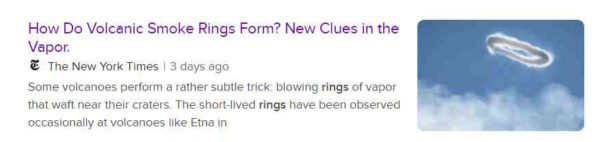
Coincidently Al was reading an article in the New York Times that featured some very similar looking objects: vapour clouds generated above volcanoes. Hmmm…
Exploring Salta: Chilled out Cachi
Cachi is a friendly, quiet town perfect for a relaxing break. As we sit at outside at a wine bar on a beautiful mild summer reflecting on our last night in town, kids play futbol in the central plaza – seemingly designed with this exact purpose in mind – and the church bells are rung by hand to call people to the outdoor service.


Exploring Salta: The ‘High’ Class Wine of Bodega Colomé
It’s not often you’re driving to a winery through red clay hills, past cactus and over creeks that have obviously flooded very recently. Then again, you’re not often visiting a winery at 2,800m above sea level.
Bodega Colomé is the self-proclaimed highest altitude vineyard in the world and it takes some effort to get to. It’s ripio road for an hour and a half from Cachi to Molinos (including 10km of detour off the usual ripio road), and then 45 minutes of clay road and mud from Molinos to the winery. I guess we should count ourselves lucky we’re just going to their 2,800m vineyard and not the one at 3,000m.
We figured if we’re going to this much effort, let’s go the whole hog – lunch, tasting and a visit to the James Turell Museum. Yes, that’s right: there’s an art installation gallery out here in the middle of the high desert. Lunch was excellent, the gallery was also excellent but the wines were not really to our liking. A little too acidic and not subtle enough for our tastes. In fact our favourite of the day was the Shiraz they’d given us as a welcome drink.


James Turrell has many installations around the world, all based on light. We’ve been to a couple other galleries with his works including one in Japan. The museum here was quite substantial, with seven or eight rooms each housing a large installation. No photos but we both agreed our favourite was a series of rooms where you are completely bathed in a different colour of light in each room. The shape of the room combined with the light makes it feel like you’re in some kind of space with no boundaries. Moving from a red room to blue, the colour is intensified as is the sensation.

Exploring Salta: The Epic Ruta 40
We’ve been looking forward to the drive from Molinos to Cafayate ever since we first learned about this area: an opportunity to drive one of the most spectacular sections of Ruta 40, the highway that stretches the full length of Argentina.
Much of Ruta 40, especially here in the North, remains unpaved and, well, pretty basic. On our northern loop from Salta to Jujuy and the Salt Flats, we returned to Salta rather than trying to navigate the road between San Antonio de Los Cobres and Cachi, which we’d been told was impassable (and given the state of the road leading up to Los Cobres, we tend to believe them!) So we’ve been asking anyone we can find what the road between Molinos and Cafayate is like.
And, we’ve been given wildly different answers. Everything from ‘Definitely don’t, it’s rocky and remote and there’s no cell coverage’ through to ‘You’ll be fine, my friend did it in a VW Gol’ (yes, Gol not Golf). We have a healthy respect for the dangers of remote driving, not least as a result of our travels across outback Australia, so we weren’t going to go if it was dangerous. On the other hand, if we didn’t go this way we’d have to retrace our steps towards Salta (again) and then take Ruta 68 down to Cafayate.
There are definitely grumblings up here in the Northwest asking why Ruta 40, which is a huge tourist draw up and down the country, remains in such a poor state. We did see a giant (and we mean giant) sign on the road proclaiming that they were paving 18km of the 160km stretch between Cachi and Cafayate. It started a month ago, is going to take 18 months and is costing millions. And that’s just for 17km.
We finally received what we deemed to be a trustworthy answer from the local police in Molinos, who assured us the road is fine and well-travelled, so getting help wouldn’t be a problem should we get stuck. Perfect. With a bunch of torrontes grapes from our hostel host’s back yard, we’re on the road again.

The drive from Molinos to Cafayate is 100km of ripio and takes us three hours, with a 40 min stop at the main mirador. After all the buildup, the road is not nearly as bad as the road we drove in Jujuy from Salinas Grandes to Los Cobres.
We start driving through farmland and small towns before suddenly the appropriately named Quebrada de Las Flechas (Ravine of Arrows) appears out of nowhere. Huge spires of sandstone angle towards the sky for miles around and the road winds back and forth between them.

We stop at Mirador Ventisquero where there’s a handy information panel that describes a fascinating cave that has sophisticated ventilation and water systems. Well, it appears it used to have this information before the whole thing gave in to the heat and wind and left only a few words to tease us. We tried to follow what we thought was a trail to the cave but to no avail. We have to make do with the stunning panoramic view.

Exploring Salta: Cafayate
The province of Salta produces only 1% of the wine in Argentina, but you wouldn’t know it driving into Cafayate. It’s a wine tourism mecca, and the most tourist-centred town we’ve been in for our whole 2 weeks in the region. We spend two days exploring the wines of this famously high altitude wine region.
Our favourite wineries were Bodega Piatelli and Bodega Nanni which are at either end of the spectrum. Piatelli is a huge winery where you can have a beautiful lunch looking out over the vineyards towards the mountains. It’s known for wine that is less sweet as they harvest early.
Nanni is a small winery right in town with a cute patio restaurant off the street and an informative tasting of 6 wines.

We also stopped in at Chato’s wine bar where we asked the very friendly Chato to give us a couple of local gems. We tasted a very nice, dry torrontes from Bodega Luna de Cuarzo and an excellent reserve Malbec made by Chato’s very hands.
Overall we found the high altitude wines of this region a little too ‘fuerte’ (strong) for us. The high altitude makes the grapes more acidic, sweeter and more fruity. As a result, many of the wines are over 13% alcohol, acidic and not very subtle. There are a few stand outs though; you just have to look for them. We did a side by side comparison of a Malbec from Cafayate with one from Mendoza, both from the same year and from Piatelli. The Mendozan was more balanced by far.

A Mini Machu Picchu
In the haze of wine tasting we almost missed the fascinating site of the Quilmes ruins.
An hour’s drive south of Cafayate through the arid landscape and into the province of Tucuman, a small sign indicates the road towards the mountains and the La Ciudad Sagrada de Los Quilmes.
The ruins here are the remains of the largest pre-Hispanic settlement in Argentina, dating from the 10th century. In the very impressive small museum we watch a Hollywood-style short film that tells the story of the rise and fall of this society.
From its beginning over 1,000 years ago it became the largest settlement in the region at 7,000 people(!), eventually becoming part of the Inca empire in the 1400s. And then the inevitable 130-year battle with the Spanish in the 16th century, concluding with the Spanish poisoning their water supply and forcing them from their land.
Fortunately a few of the community escaped and today their descendants are working to continue the Quilmes customs and traditions. Today the Quilmes are recognized in the national constitution and there’s even a national beer named after them.
Our guide Fernanda, a volunteer and Quilmes descendent, takes us around a small part of the huge 30 hectare site. The 15% of the settlement that has been excavated sits in the natural ‘V’ at the base of two mountains.

We walk around and into the foundations of large communal houses with walls made of stones piled 1m thick and 2m high. Fernanda explains that these walls actually extend further below the ground as they haven’t been fully excavated.


Higher up the mountain we see the smaller houses which were the homes of the elite. From there we climb up a ridge to the Pucara which is a series of defence fortifications up either side of the centre of the township. From here we can see for miles, and about 1km south we can see a long wall that separated the town from the irrigated fields of corn, chilli peppers, pumpkins, potatoes and nuts.
Fernanda explains that the arrival of the Incas in the 1480s was a double-edged sword as the Incas introduced irrigation systems and roads but also tried to force the Quilmes people to speak Quechua and perform human sacrifices.
Return to Salta
It’s just three hours back from Cafayate to Salta and the end of our 10-day tour of Northwestern Argentina. Once again the drive is full of viewpoints and spectacular scenery. We make two stops for a couple of short hikes on the way.
The first hike is Los Colores, a 4km walk onto the red sandstone cliffs which tower overhead and have been carved into all kinds of weird and wonderful shapes. When we touch the cliff face, the red dust falls away in our hands. It’s hard to believe they are still here when they seem so fragile.


Our second stop is at Los Estratos trail, near La Yesera which is a short 1km walk out to a high viewpoint over a rainbow of colours in a canyon carved by the river.


Finally we return to the lush green that surrounds Salta city and our north west adventure comes to an end. In fact, it’s the end of our trip through Argentina as well. In two days we climb on a bus to head across the border to Bolivia.

Side Foodie Note
Everywhere in Argentina we have found that restaurants start service with some bread served with a dip of some kind. In the north this is replaced with a delicious lentil, bean or grain tapenade. Michelle was in legume heaven.

Also delicious was the local stew called ‘locro’.

And of course the empanadas….

Exploring Salta: In a Nutshell
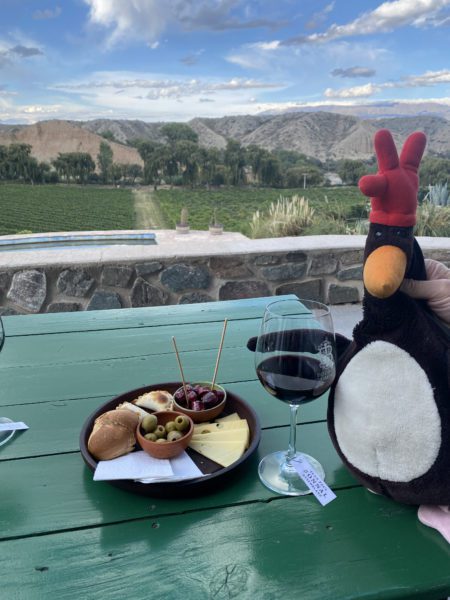
Wine tastings in this region are not nearly as generous as in Mendoza where there seems to be an attitude of ‘we’ve got a tonne of the stuff, drink as much as you want of anything you like’. You may only taste one or two wines in some places.
Salta – we stayed in Salta city three times on our figure of eight loop. Each time we stayed with the wonderful people at Augusta apartments.
Cachi – Our BnB, Casa de Tejedor, was beautiful, quiet and with a great breakfast.
We also stopped in at Bodega Nueve Cumbres on the edge of town. It’s a brand new bodega that’s just setting up so didn’t even have tastings yet, just very keen staff.
Molinos – The Hacienda de Molinos is a very nice hotel which is also one of the only places for dinner which was very good. They have a beautiful patio inside the building for a coffee stop on the way from Cachi to Cafayate. For about a third of the price, we stayed around the corner at a nice little family home where they rent out two rooms. (On the other hand, there was no hot water for a shower, so…)
Bodega Colomé – The lunch is very good and well worth the drive (not to mention the fabulous museum). To do the tasting only, you only taste three wines so we’re not sure it’s worth the drive. There is a hotel there as well; you couldn’t book on the website but it appeared there were a few guests – definitely worth calling them if you’re interested in some high-altitude luxury.
Cafayate – We stayed in a gorgeous boutique hotel called Villa Vicuña. It was quiet with a beautiful patio area, great friendly staff, a good breakfast and they have bikes (including tradems!).
Quilmes Ruins – The 1,500 peso entrance fee goes to the community. The small museum is a good introduction and the film has English subtitles. You can walk the ruins on your own but we found it very valuable to have a personal guided walk for 25 minutes. We just paid a tip.
Walks on Ruta 68 from Cafayate to Salta – The beginning of the Los Colores walk is the most spectacular really, especially given a large power line across the valley further in takes away from the feeling of being in the wilderness.
Road Trip Tips
- A lot of this can be done as very long day trips from Salta but you would miss a lot of the charm of the area.
- Our total trip to Jujuy and Salta was 1,600km and took 10 days.
- Be sure to download maps onto your phone. Mobile coverage is non-existent outside the towns and sketchy in most towns.
- You can get wifi in each town but as we discovered storms can cause whole areas to slow down to basically no coverage.
- The unpaved sections can only be driven when it’s dry so it’s best to avoid in wet season.
- We saw evidence of a recent rainfall threat closed the paved road between Salta and Cafayate for a day.
- Locals told us the nicest times to come are March/April and October/November. The middle of the year can be quite cold.
- If you are thinking of driving on the ripio (gravel) roads:
- If you’ve driven on unsealed roads before you’ll be fine.
- Rent a larger car and make sure it has a spare tyre and a jack.
- Ask the police for advice on the road conditions.
- There are SOS phones in some sections.

2 thoughts on “Exploring Salta La Linda”
Comments are closed.