
The Moor’s Last Sigh: Granada’s Rich Islamic History
Why did we choose to visit Granada and Córdoba, you might ask? Well, when the pandemic first hit many, many moons ago, Toronto’s ‘Hot Docs’ documentary festival was quick to offer online options, and since we were rattling around the house and had just cancelled four planned international trips in the course of a week, we decided to watch a series on the historical landmarks of Spain and Italy. We spent about 6 nights feeling like we were back at university (except Al was actually in the lecture) with a lecturer telling bad puns, and showing his dodgy holiday photos as he took us through Granada’s rich Islamic history and what made a number of Spanish buildings so significant. (This was early on in the pandemic, at a time when we were clearly keen to ‘better’ ourselves. Short lived!)
The decision to come to Spain had the added benefit of seeing these landmarks for ourselves as well as chasing the (elusive) sunshine. So, after the sensory overload of Valencia we head southwest into the foothills of the Sierra Nevada mountains, to explore the rich Islamic history of the Andalusian region with our first stop of Granada.
The drive from Valencia to Granada was quite spectacular as we made our way through the rocky mountainous terrain, with tiny villages perched on the side of mountains and clinging tenaciously to the tops of peaks. The final valley we drove through was the town of Purullena, where we could see hundreds of cave homes dug into the sides of the mountains. The entryways varied from simple holes in the mountain to elaborate home frontages. We’d learn more about the role caves have played in the region’s history in Granada.
Granada’s Rich Islamic History: The Alhambra
The main reason for a tourist to visit Granada is the Moorish complex that is the Alhambra. Granada sits in the shadow of the Alhambra complex both literally and metaphorically. Everywhere you are in the city, you can glance up to see its imposing outline. Initially built as a fort by an Emir (Muhammad I, since you asked) who was running from the approaching Catholics, ‘Alhambra’ literally means ‘the red’ in Arabic, likely due to the colour of the rammed earth outer walls.
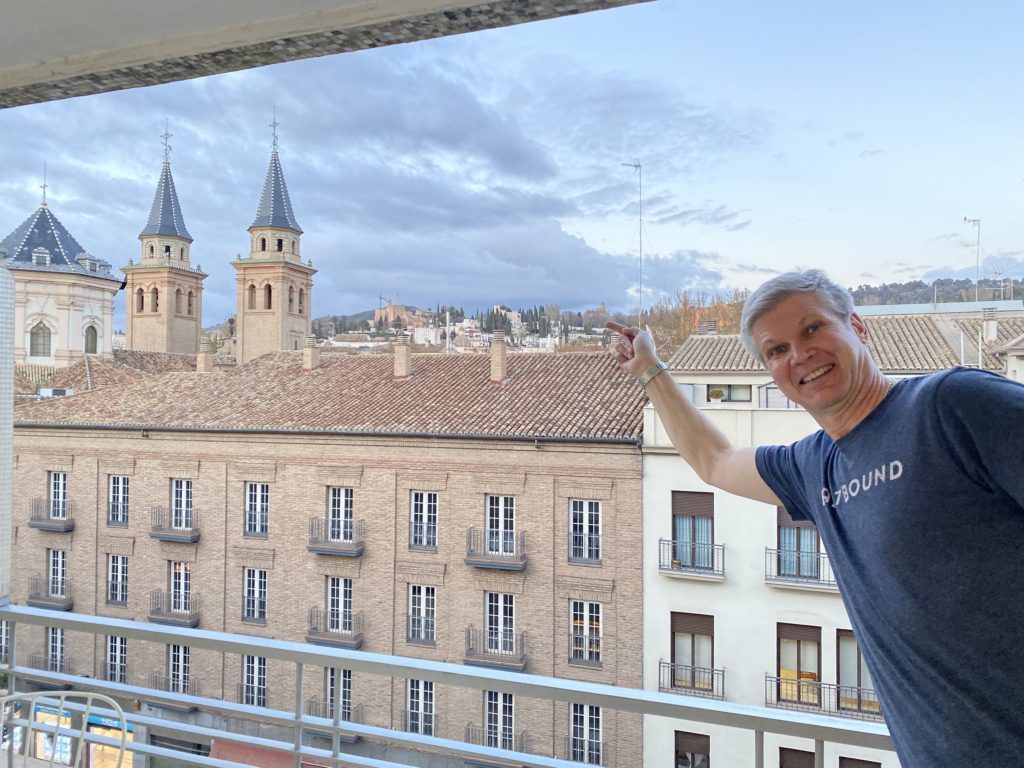
I love this because Al is actually not even pointing at the Alhambra. It’s the much bigger thing on the left behind the crane.
Muhammad I built a military fort on the site to defend his people in 1237, and it must have been pretty effective, because Granada was the last city in the Iberian peninsula to be ‘reconquered’ by the Catholics – to the tune of a further two hundred years! before eventually being defeated in 1492 by the infamous pair of Ferdinand and Isabella.
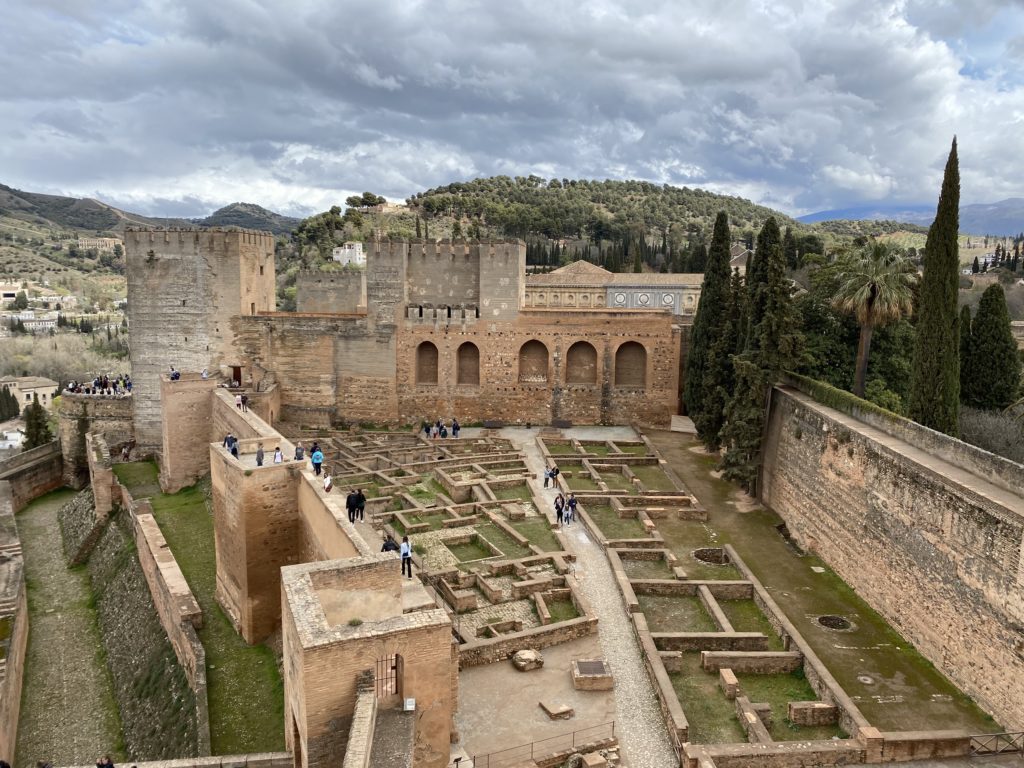
The fort continued to grow through the Nasrid Dynasty, with multiple extensions by successive Emirs, and this continued during Catholic rule and really continues right up to the present day. Today the grounds cover more than 35 acres: an incredible complex of buildings, gardens and one of the most well-preserved Islamic palace complexes in the world. It took us five hours to tour the whole thing!
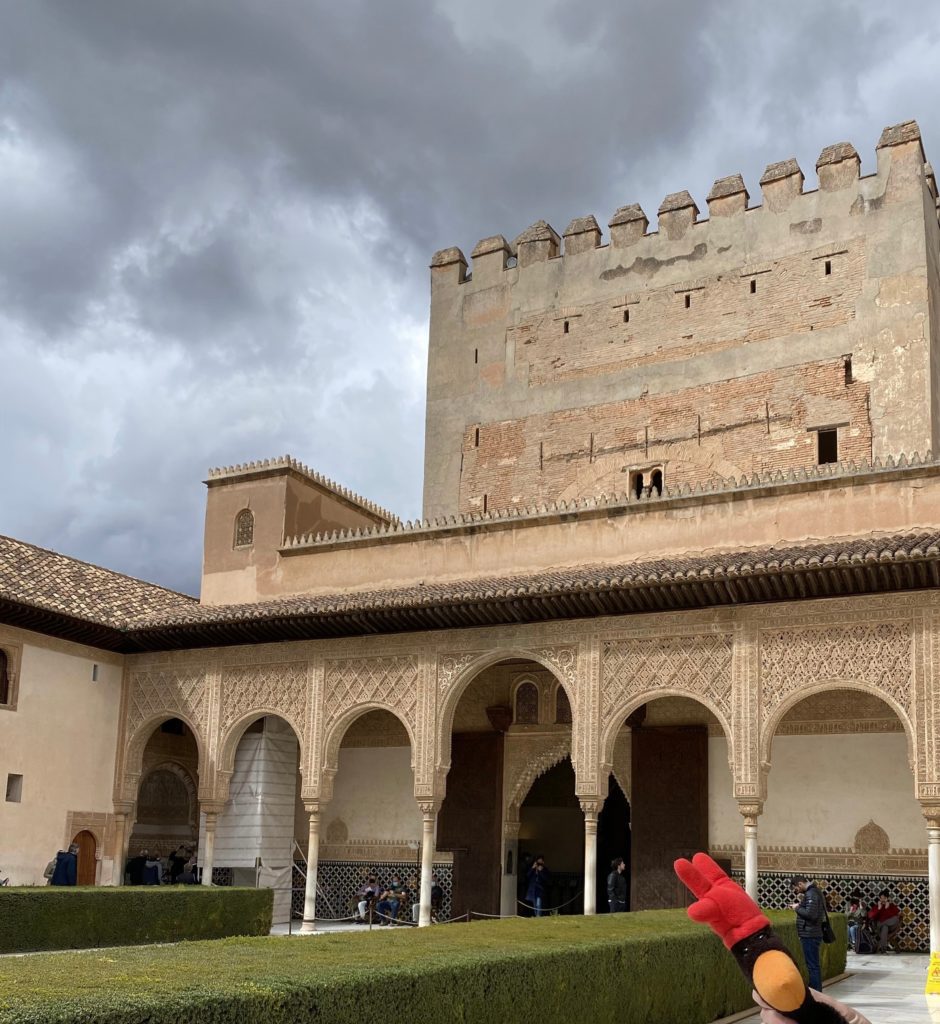
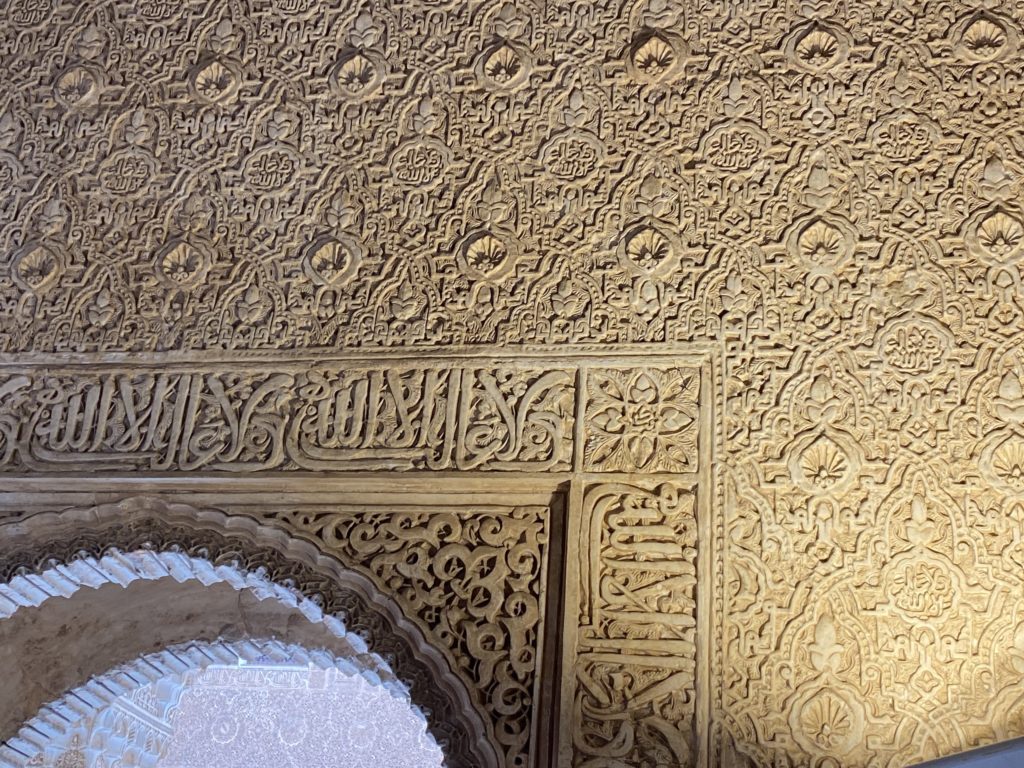
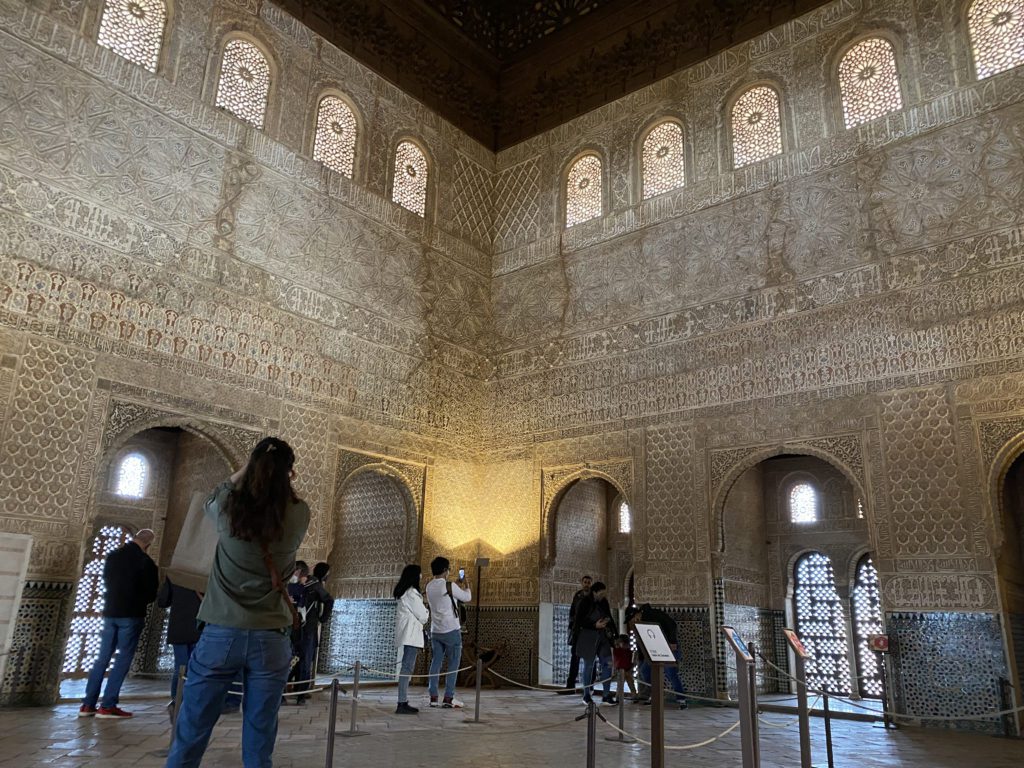
The throne room with its intricate carvings
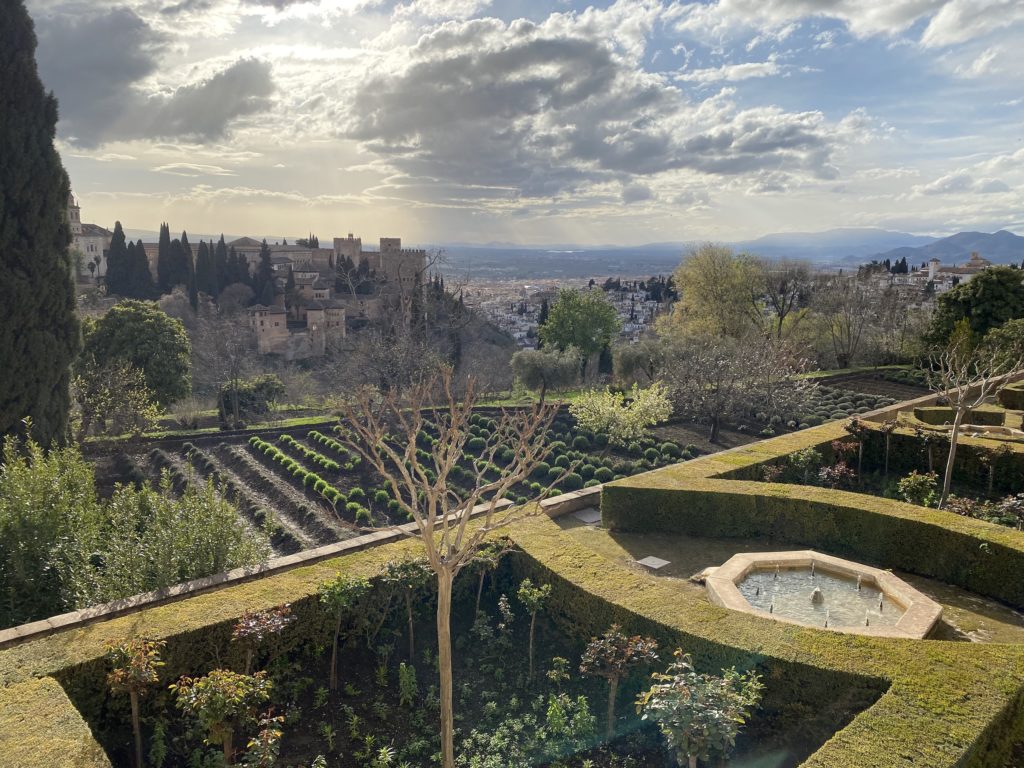
A view from the Generalife, sort of the ‘home away from home’ for the nobles of the time
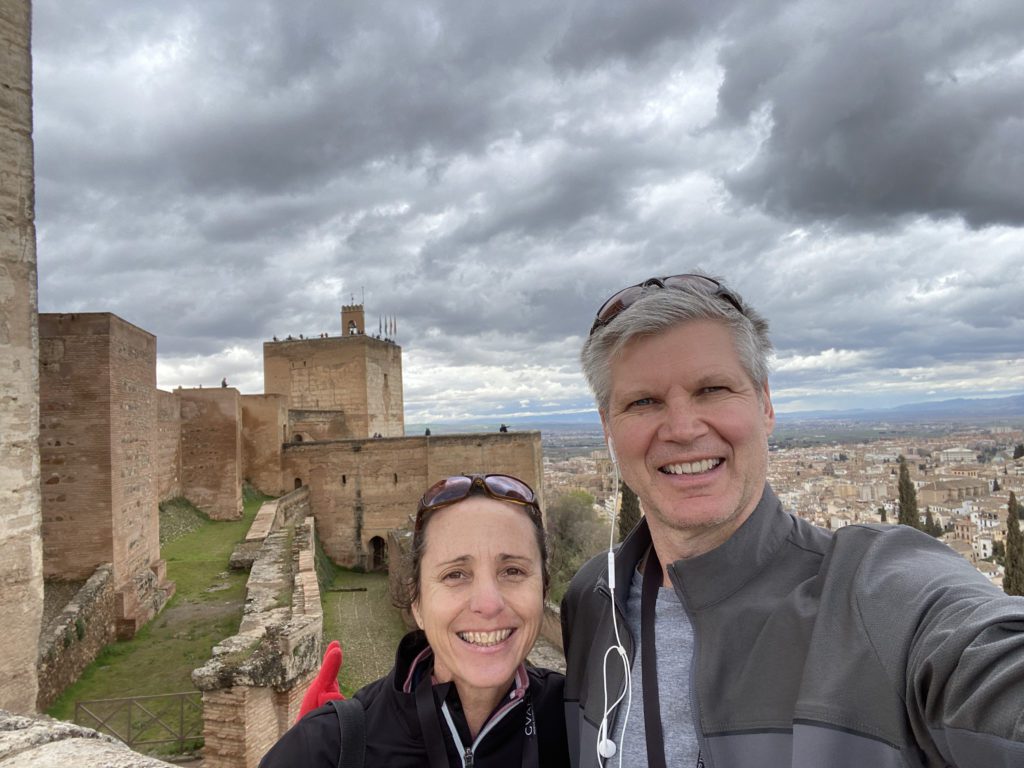 Al was listening to the audioguide. Certainly NOT trying to tune out Michelle.
The cities of Granada and Cordoba are a reminder of the varied religious history of the Iberian Peninsula. At this point we needed a crash course in Spanish history to make sense of all the to and fro*: People in Cadiz since time began; Romans arrive and settle for several hundred years; Visogoths pillage various regions, take control and build churches; the Moors arrive from Northern Africa (Morocco) in 700CE and implement sophisticated social changes; Islamic rule for about 800 years; in 1492 the Catholics finally completed the 600-year long ‘reconquering’ of the Iberian peninsula (and of course the infamous inquisition lead to the expulsion of everyone who wasn’t Catholic).
*many, many important events excluded for readability and because we are not actually experts on this.
As a result of all this back and forth of rulers, the old town of Granada is also a mix of influences, with North African restaurants and tea houses sandwiched between medieval ‘carmenes’ with secluded gardens behind high walls, a monastery, Jewish synagogues and on the far side of the valley, more of the cave dwellings we saw on the drive in. The old town is a tourist’s romantic dream of narrow, steep, cobblestone streets. Having said that, we really liked where we stayed by the Genil River as it was outside the real tourist area and when we had a coffee or bought bread there were lots of locals around. It was only a few minutes by bus to the main tourist area.
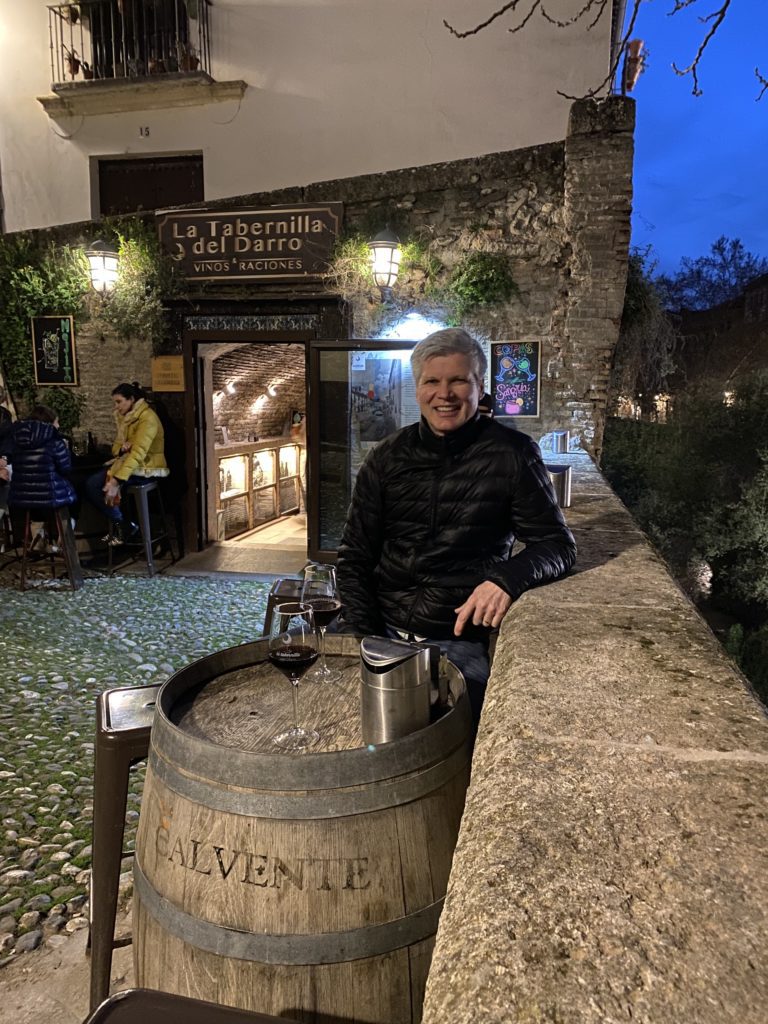
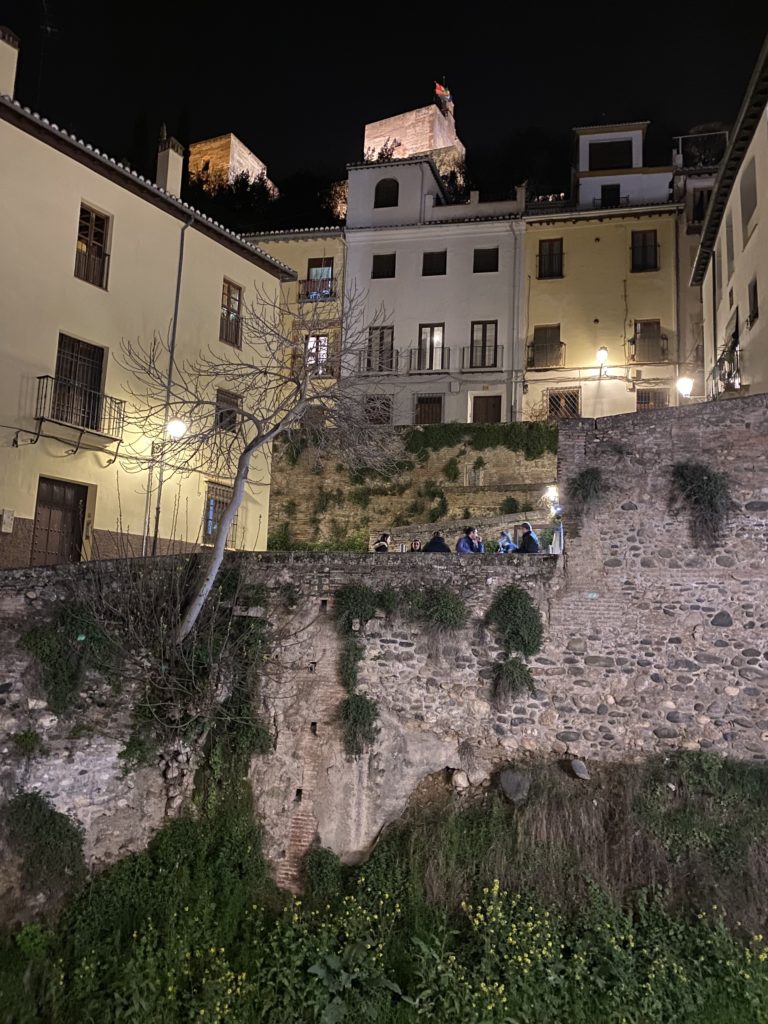
We may have fallen for that romantic tourist dream one night at an adorable wine bar on the side of the Daro river.
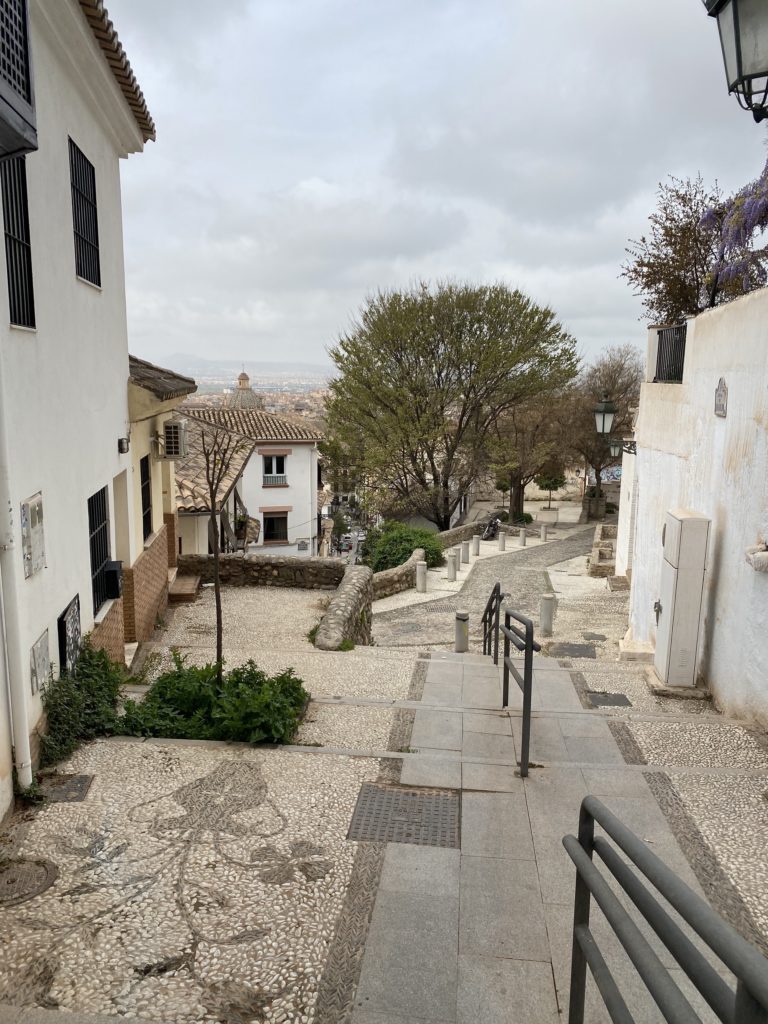
The old town of Granada is lined with steep streets, many paved with these beautiful stone paving designs
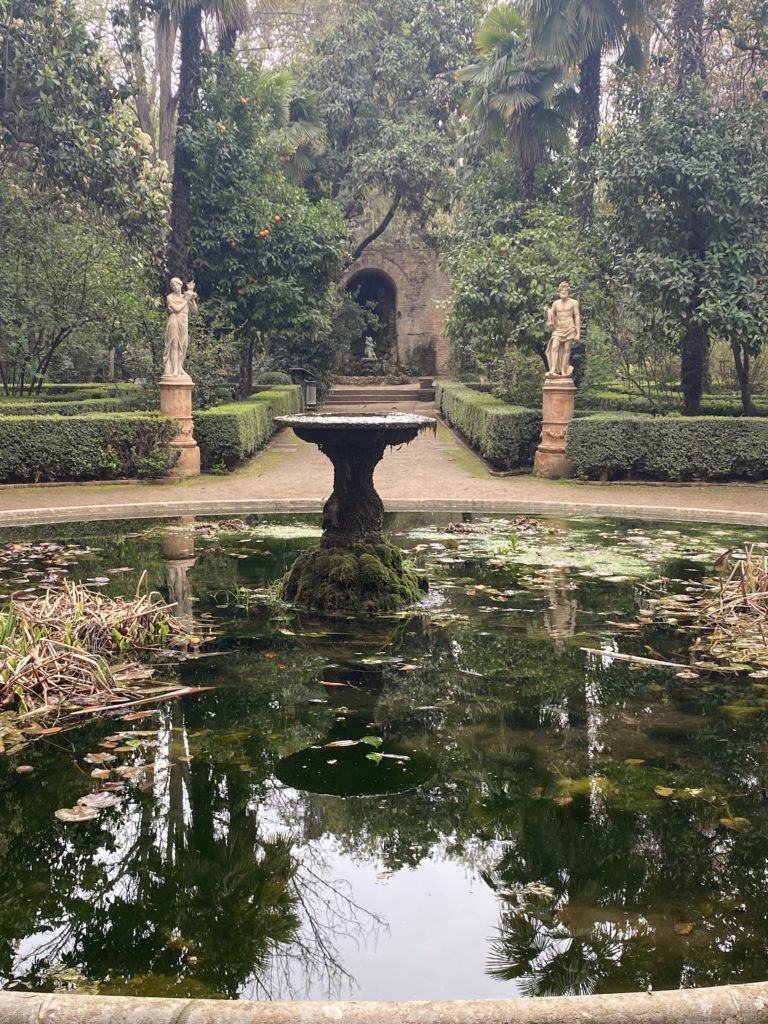
The Carmen de Los Martires gives a glimpse into the life of the Spanish Elite who lived here after the Moors. The sprawling gardens are a quiet oasis away from the tourist crowds.
Sacromonte Cuevas – not to be confused with huevos (or jueves)
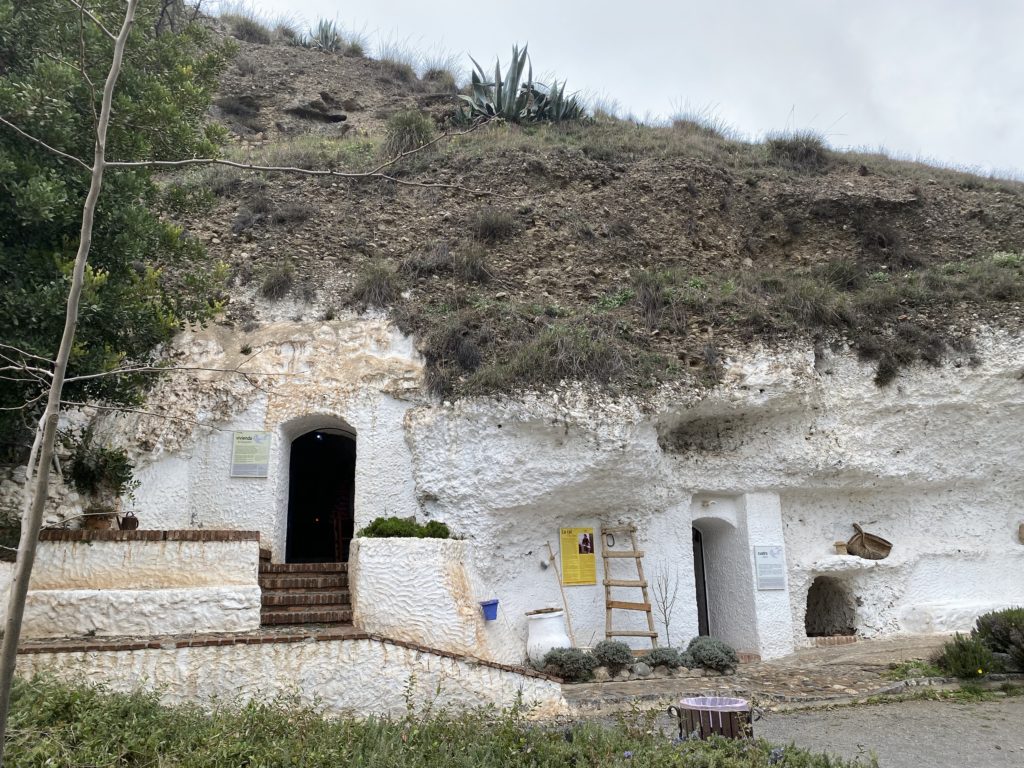
Around the time the Catholics arrived in Granada, the Roma settled in the outskirts of the old town in Sacromonte and built cuevas (caves) into the mountainside, where they still live today. We visited a quirky little outdoor museum of these tiny homes, whitewashed with lime and with some history of how the people lived. They mixed with the Muslim people who had been banished by the Catholics, and from this came a very specific type of flamenco dance. Different parts of Spain lay claim to flamenco dancing, but in Granada the specific style of dance called the Zambra is credited to the people of Sacromonte.
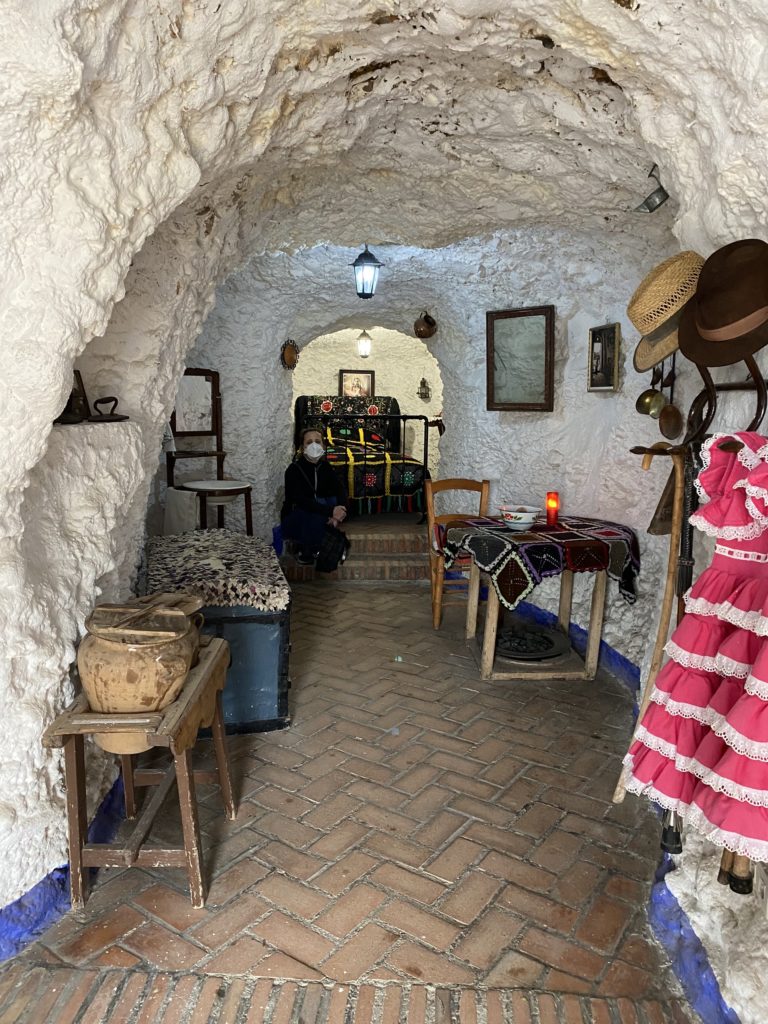
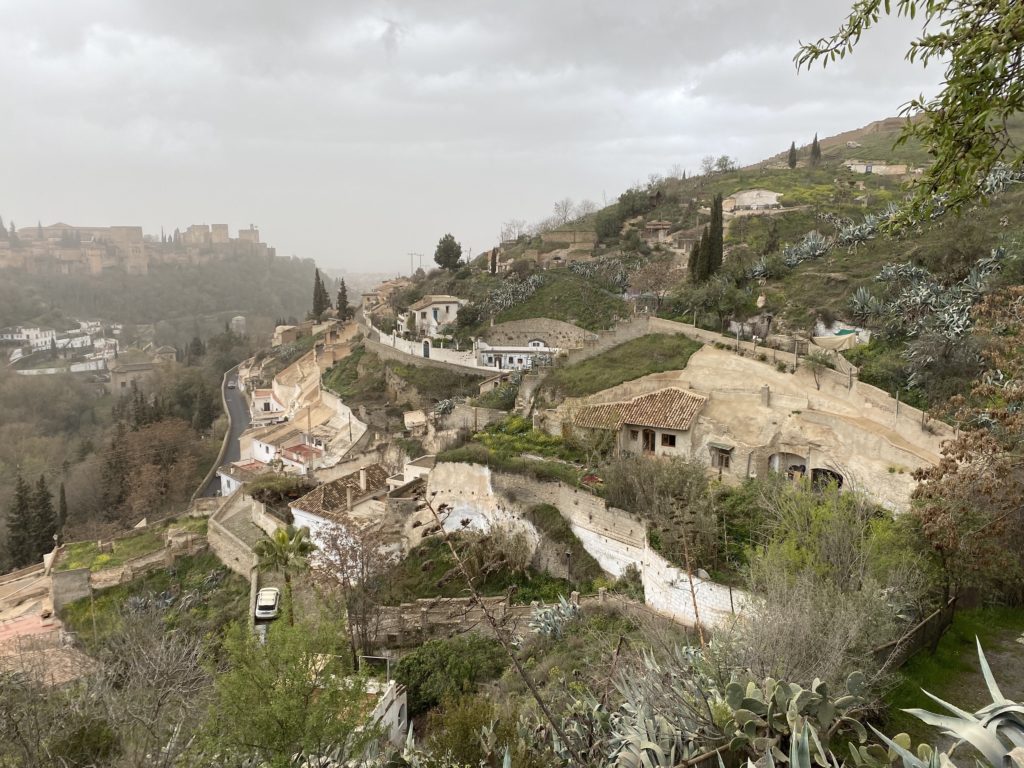
Terracotta towns
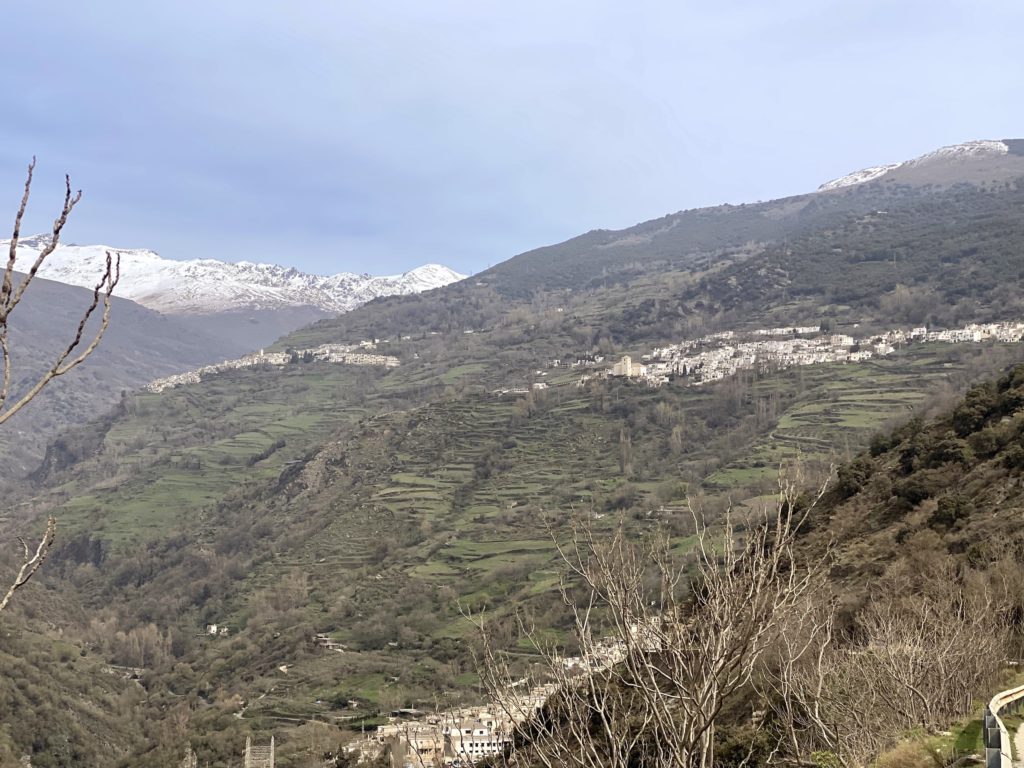
With ten days in Granada we had hoped to do some walking in the Sierra Nevada mountains but the weather was still struggling out of its Spring blues. Once the sun started shining again we decided on a wander between some of the famous ‘white villages’.
The drive was quite spectacular once again, and the folds of the mountain range and the rounded ridges of the mountains were reminiscent of the Bungle Bungles in Western Australia. Every inch of the steep mountains was terraced for growing olive and fruit trees and well as vegetables. But as we drove out of Granada and across the mountains, the full effects of the recent sandstorm from the Sahara desert were on show. From road signs that were barely visible to an entire landscape dulled by a coating of dust, it was reminiscent of driving in the Pilbara region of Western Australia where the fine red dirt rich in iron ore seems to coat everything in sight (if you have even more time with nothing better to do you can relive our 1997 trip across Oz elsewhere on this site).
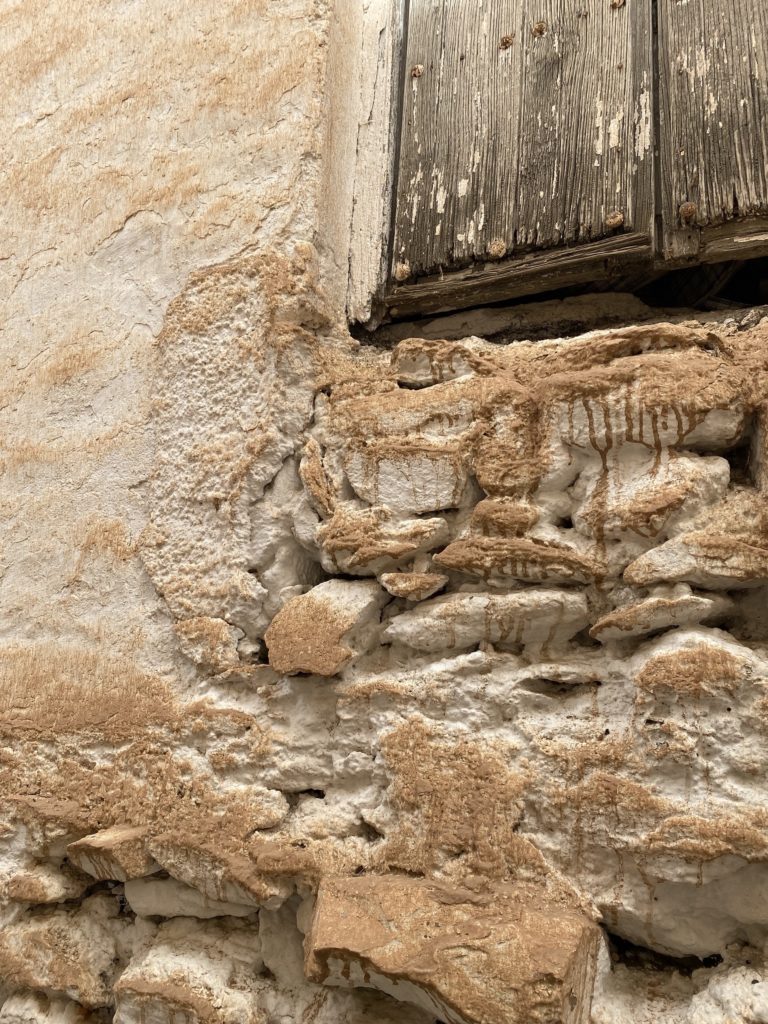
But the worst was the poor whitewashed villages which depend so heavily on tourists like us. The sides of the buildings facing the Sahara were entirely caked in red mud, looking like a wall of terracotta, while on other sides you could see where the sand had mixed with the light rain and red mud had literally dripped down the stone walls. The first decent rain is going to be nasty here. Even the snowy peak of the Sierras had not escaped, and you could see a dusting of red sand on the white slopes.
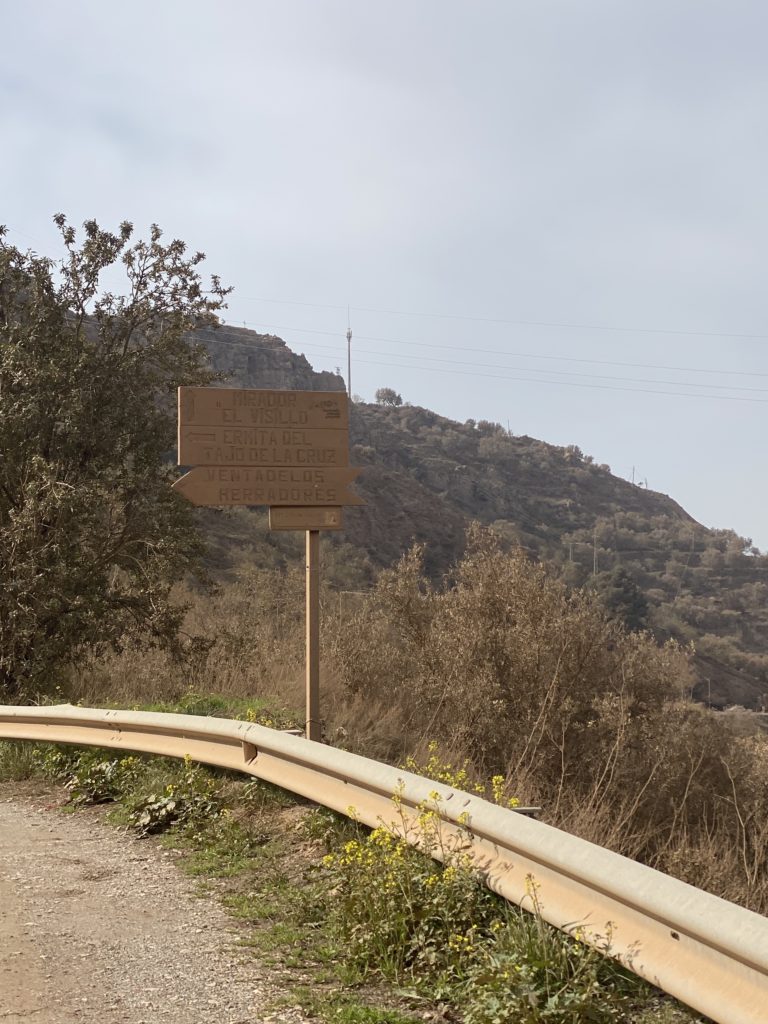
No, you can’t read it and yes, you should be able to! That’s some dust…
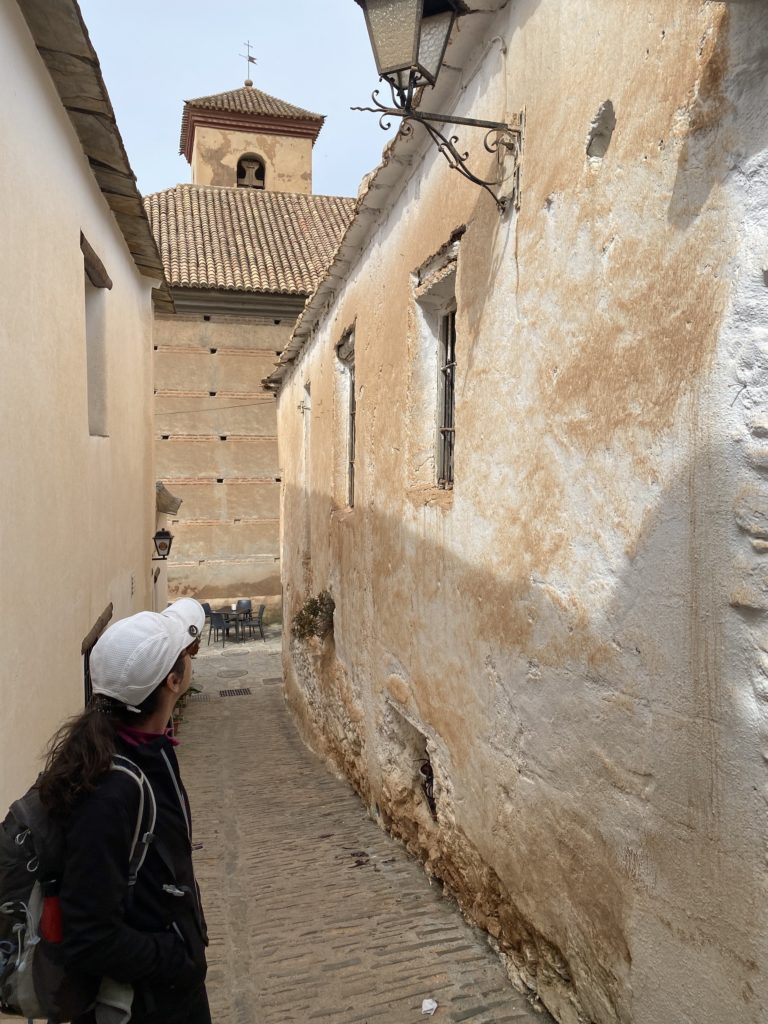
Normally these are so bright you gotta wear shades, a la Timbuk3
For the Foodies
Tasting local wine has been more challenging in Granada than in Catalonia as wine by the glass is usually only offered as either ‘tinto or blanco’ and if your lucky by ‘sec (dry) or fuerte (strong)’. The bonus is that every glass comes with free tapas which shifts from awesome to ‘salt overload’ the longer you stay in the city.
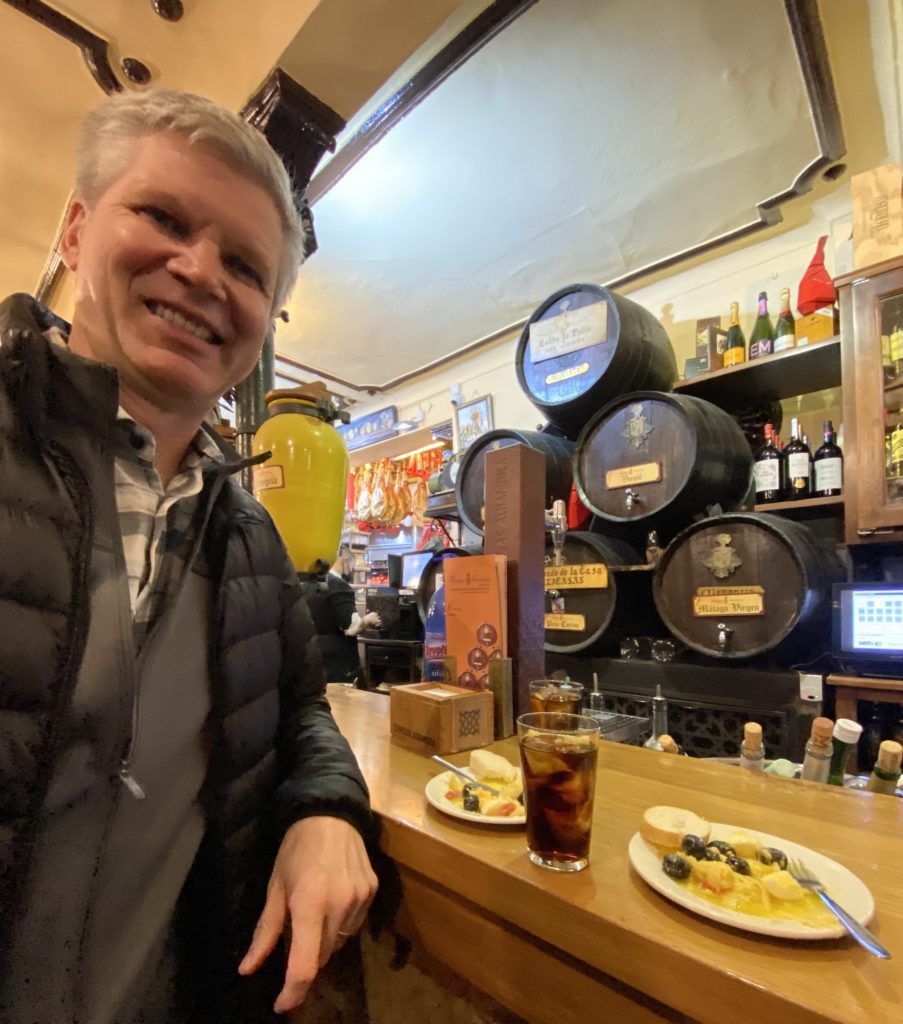
Back in the land of standing tapas bars!