
In which Michelle books a local cooking class at the Lunático Cooking Studio in Cartagena. When she’s handed a coconut, it proves to be a hard nut to crack.
Coconuts and Plantains
No matter how hard I bash this coconut with the solid wooden stick it won’t yield. Bash, bash, bash – nothing. Maria, chef and owner of Caffe Lunático, eventually takes pity on me and comes over to offer me a hand. With a fews swift bashes a crack forms and the coconut water spills out.
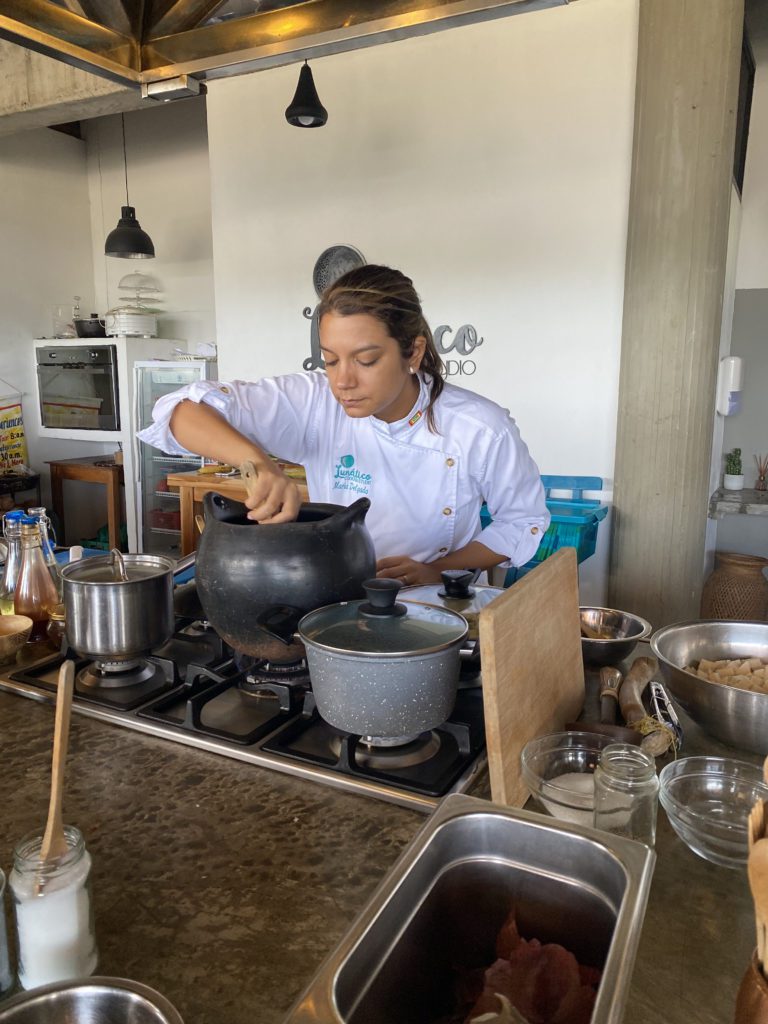
Maria is teaching our group to cook some of the dishes from her restaurant menu which, like so much of Cartagena, is a fusion. Her style is a mix of her Spanish heritage and skills learned from studying and working in restaurants in Spain and Holland, as well as flavours from her home town of Cartagena.
Once the coconuts are open, we then need to spoon out the meat so it can be blended and squeezed to get the milk we’ll caramelize and then use to flavour the rice of our main dish, braised beef with plantains. No tins of coconut milk for us.
Sea Bass Ceviche
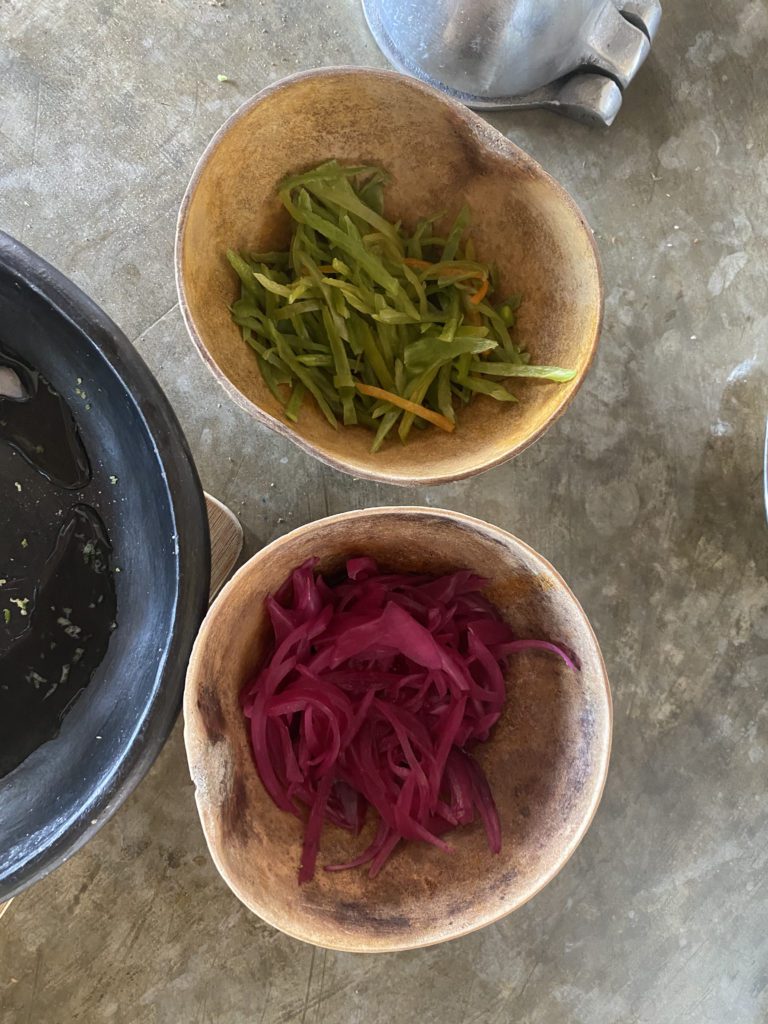
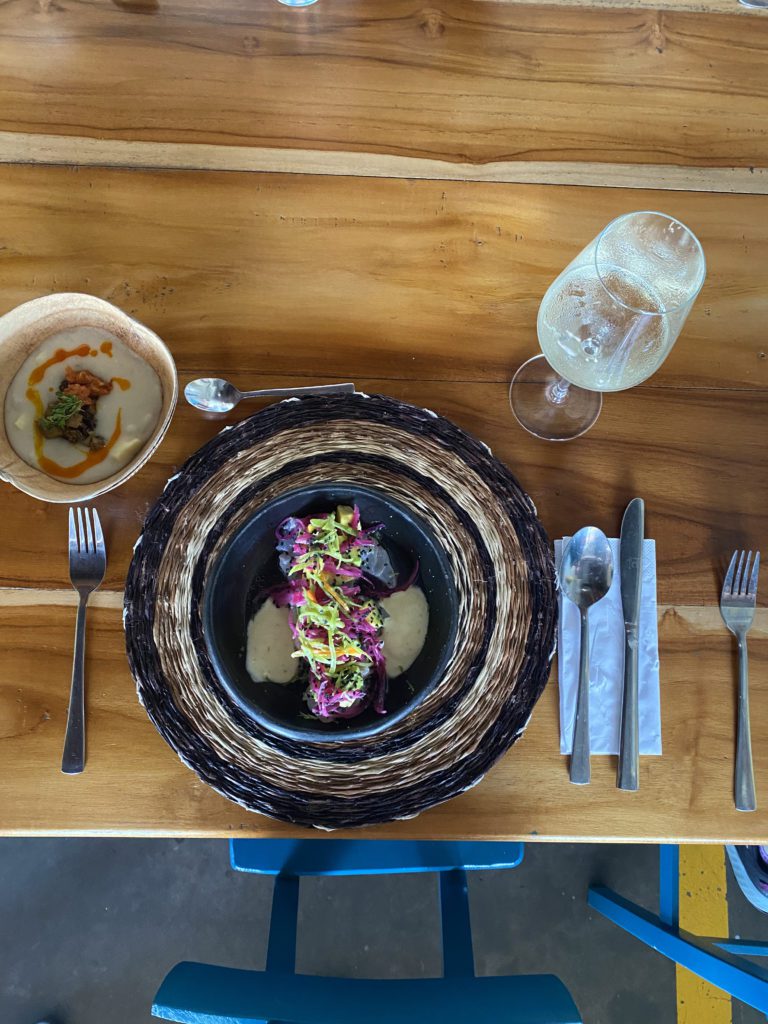
The menu starts with sea bass ceviche with banana emulsion and lemon grass, a combination I never would have though of but is actually a quite delicate match for the fish. This is followed by ‘mote de queso’, a deliciously thick white soup made of local yam called ‘name’ and the soft fresh cheese so common here. As we’re chopping the eggplant and tomatoes that will garnish the soup, Maria explains that all of the cheese in Cartagena is fresh. Like so many foods here, there has never been a culture of preserving because there was never a need. Without long, cold winters produce is always readily available so there’s no need to store it.
Posta Negra Cartagenera
After the soup comes ‘posta negra cartagenera’, slow cooked topside beef with coconut rice, accompanied by plantains in temptation sauce which is made with the local soft drink called Cola Roman, similar to red creaming soda, and an avocado mayonnaise. The plantains are a a little sweet for my taste but it’s certainly different to the usual fried plantains that come with many meals here. Finally, we have tree tomatoes poached in syrup which are a delicious combination of sweet syrup and the slightly sour red fruit.
As Maria bustles around the kitchen, she jokes with us and introduces us to the tools of the Colombian kitchen, like the giant clay cooking pot where our soup is slowly cooking and starting to smell amazing.
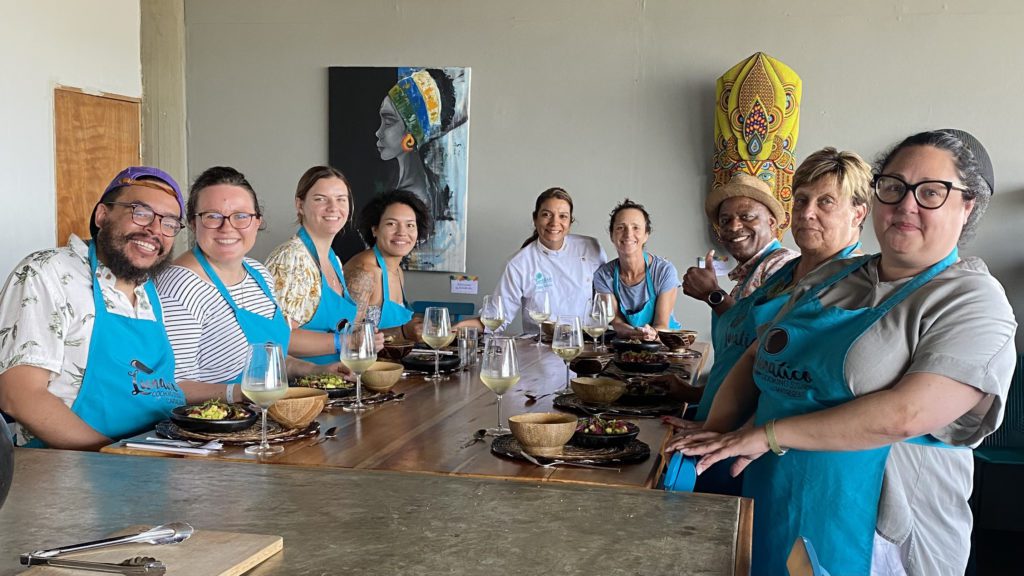
Before we know it we’re sitting down to enjoy the fruits of our labours, along with a wine made by a local business that uses the proceeds to look after the large population of stray dogs in Colombia.
I’m not sure I’ll be making coconut milk from scratch anytime soon but at least now I have a much better idea of how it’s made.
https://lunaticoexperience.com/cooking-workshop-cook-eat-share/


…or follow us on Instagram…