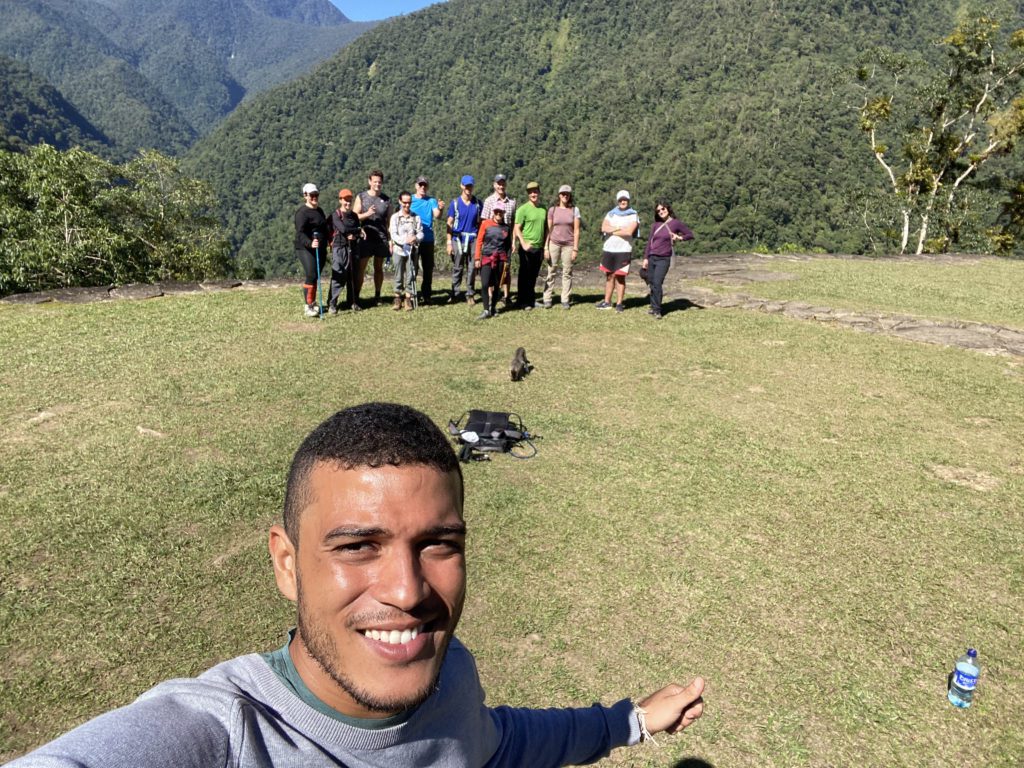
La Ciudad Perdida
It was with a mixture of apprehension and excitement that we set off on the trek to La Ciudad Perdida, the Lost City, in the Sierra Nevada mountains on the Caribbean coast of Colombia. We had booked it months ago and were excited that the day had finally arrived. On the other hand, it’s a 47 km four-day trek through a jungle which by all reports is hot, humid and tough.
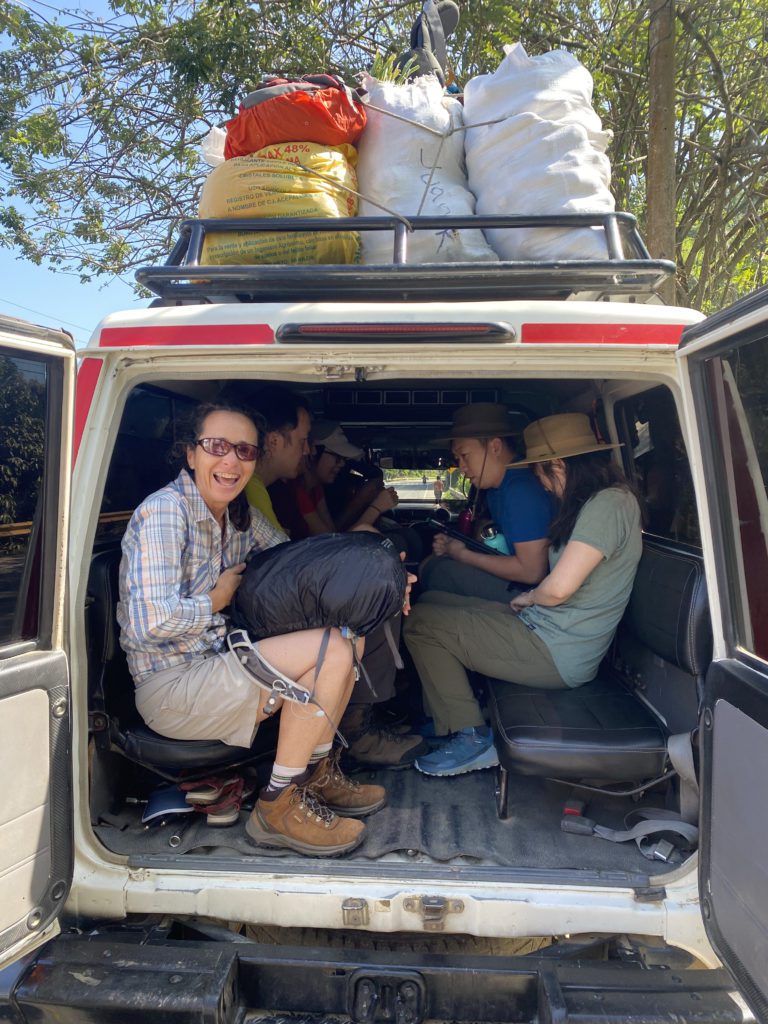
The steep trail, the humidity, the wet clothes and freezing showers, not to mention the bone rattling ride to and from the trailhead in the back of troop carrier all add up to this falling squarely into the category of ‘What we can while we can’.
But equally the stunning mountain scenery, the dense jungle, learning about the life of the local people and ultimately wandering through La Ciudad Perdida makes it all worthwhile.
The Jaguars
Our group, dubbed ‘the Jaguars’, consists of a fascinating group of of 11 extranjeros (foreigners) from France, Austria, Buenos Aires (originally from France), Poland, Israel, the US, a fellow Australian, and of course Canada. We are being led by our local guide, Laura, who with the help of the effervescent interpreter Tyson, manages to keep us all up-beat and laughing along the way.
On the morning of Day One we meet our fellow trekkers in the town of Santa Marta, and we all pile into Land Cruiser Troop Carriers for the three-hour drive to the trail head. We have our first (delicious) lunch and then set out on the trail. Today is one of the shorter days: four hours to camp.
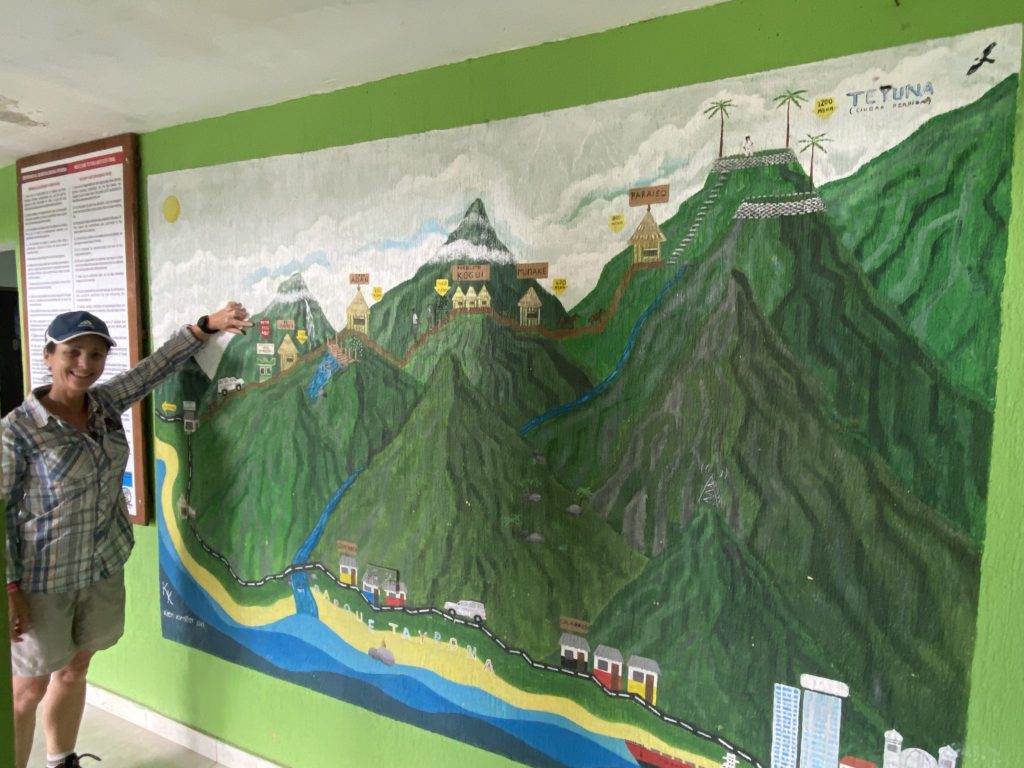
Within 30 minutes of starting the trek we’re already stopping for jugos (juice), watermelon and pineapple slices. At various points along the trail we stop at small houses where people are selling bags, snacks of cocoa dipped in honey and spices, and various trinkets. Our guide, Laura explains that these sales are vital to the local people with tourism having become a major income stream. Like many areas in Colombia, the mountains we’re looking out over have had their fair share of drug trade issues. Tourism may not bring in as much money as the drug trade, but the locals are ecstatic to have traded drug money for tourism dollars as it means peace and safety in their communities.
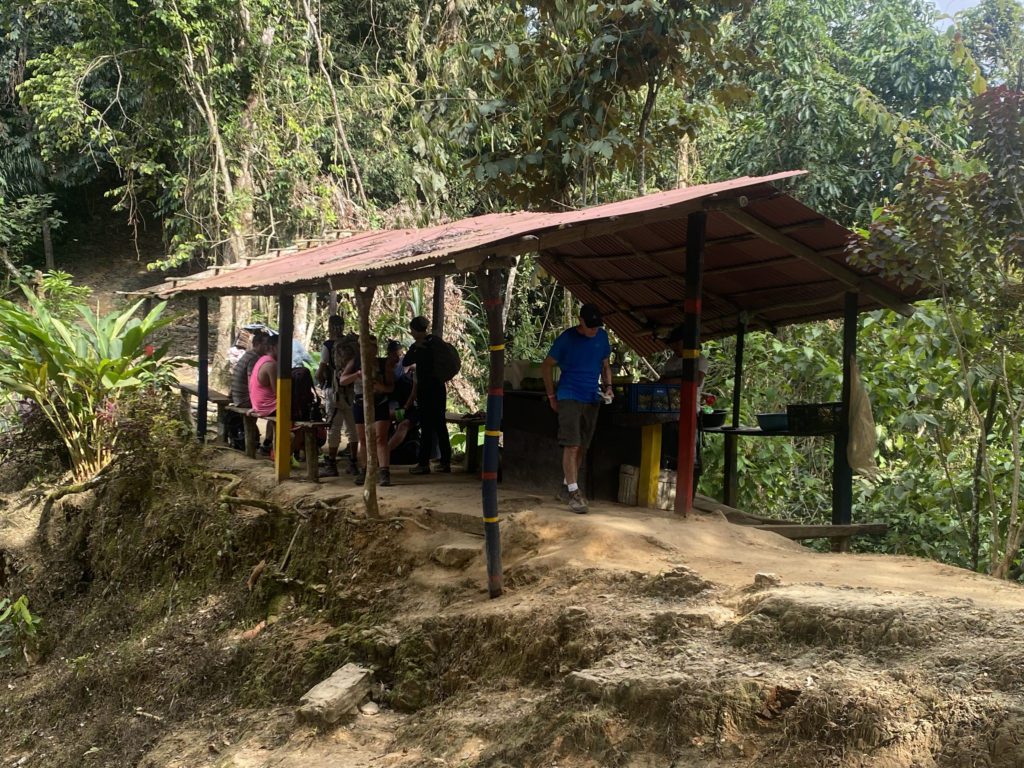
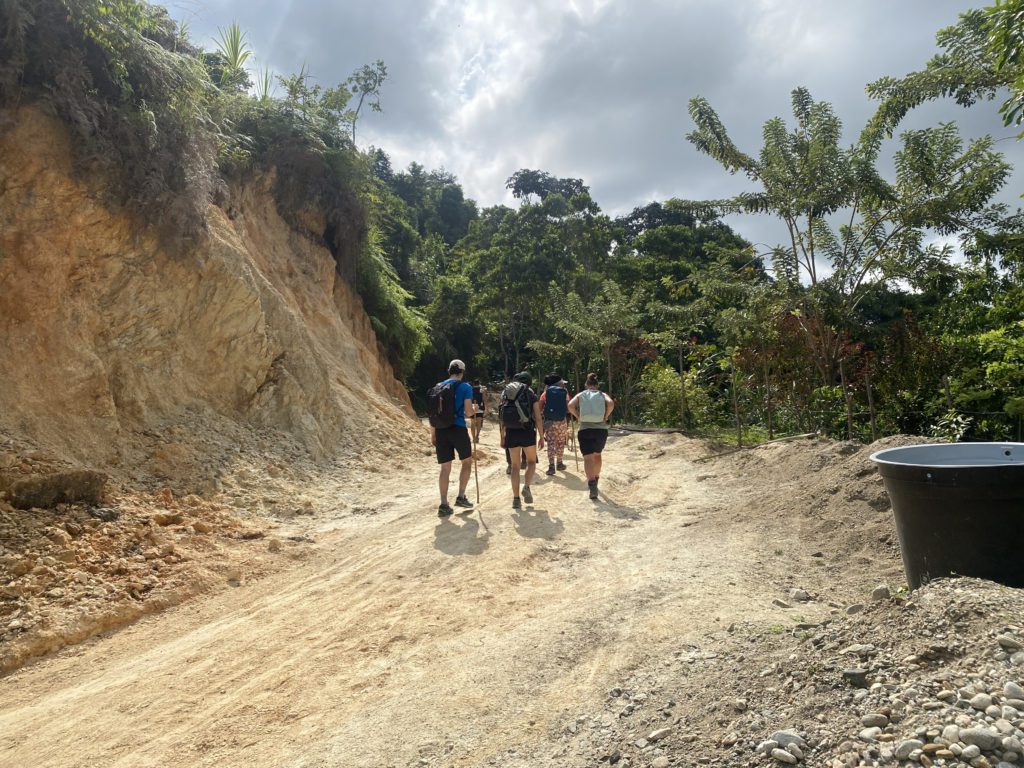
The trail starts in farmland, worked by people forced from their land in other regions of the country by violence. As we look out over the mountains, Laura explains how they have farmed and sold fresh produce here for many years, but the difficulty of getting it to market in good condition meant it didn’t bring in much money.
The Curse of Coca
So, in the 1980’s the promise of a much more lucrative crop came when foreigners landed on the Caribbean shores and promised a trade in marijuana. When the government stepped in to stop this trade, coca filled the gap. Easy to grow, extremely resilient, and extremely profitable, coca plants replaced other crops across Colombia.
Laura goes on to explain that in the name of a ‘War On Drugs’ the government of Colombia, using US contractors, began spraying glyphosate over the coca plants 20 years ago. The practice stopped in 2015 only after it became indefensible that it wasn’t causing harm to humans, wildlife and plants. (Glyphosate is also the main ingredient in Roundup, for which Bayer has had to pay billions of dollars in compensation for misrepresentation of its cancer risks). She points out areas of the hillside where still to this day nothing grows, even in this lush environment. (Laura starts each of her speeches with ‘OK chicos y chicas’, which Tyson dutifully translates to ‘OK guys’. The spanish version sounds way more fun).
The trail here is hard packed clay, shared with motor bikes bringing provisions into the camps. Four hours of reasonably easy walking, with none of the promised bugs yet. But there is some evidence of the difficulty faced in keeping the harsh environment at bay, with large parts of the road subsumed from previous heavy rains. At about the halfway point the bikes can no longer navigate the roads, and the sound of their two stroke engines are replaced by the exhortations of the mule train drivers, urging their beasts up and down the steep paths.
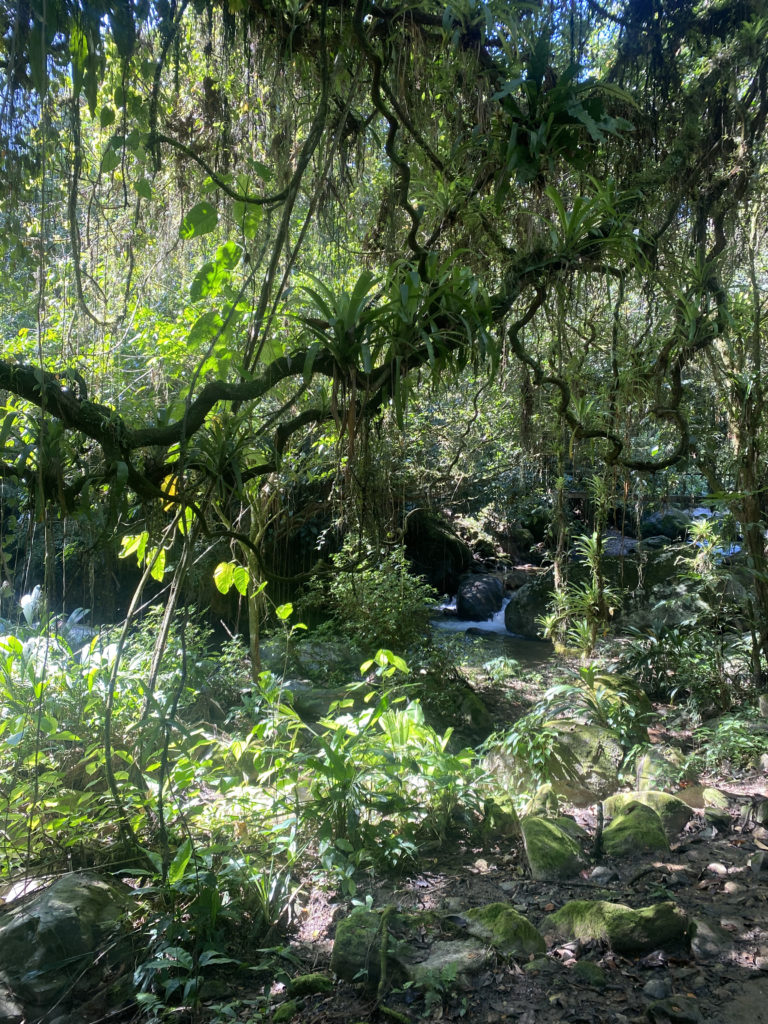
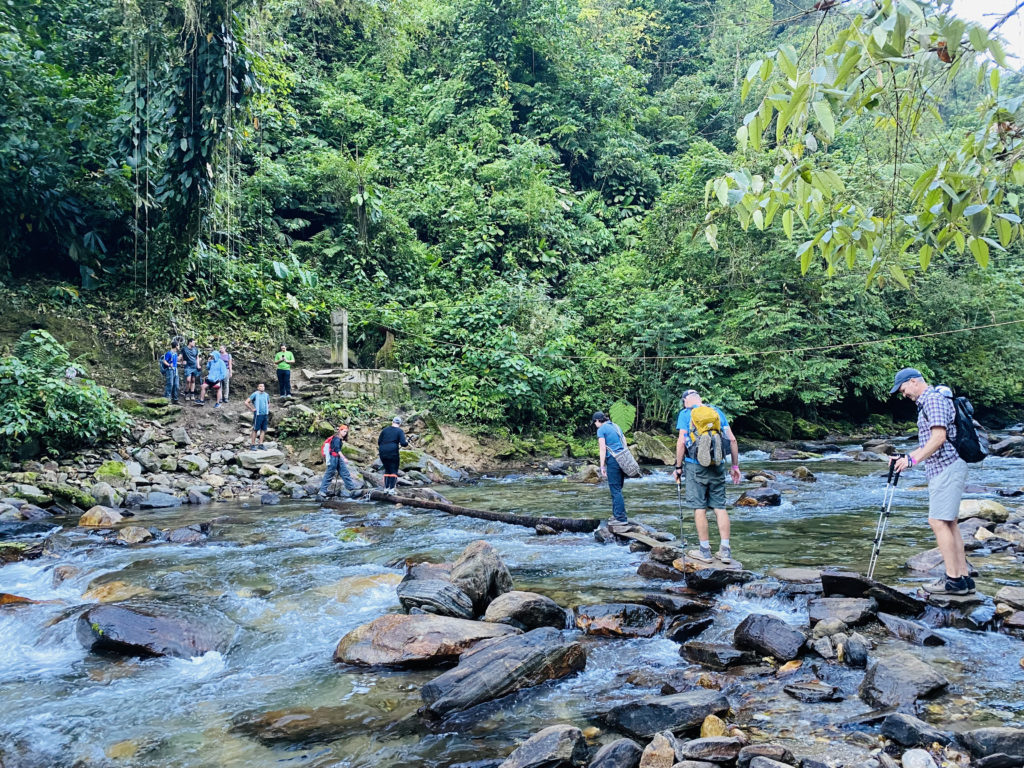
Forest and farmland turn to jungle and heavy vegetation. As we round a bend in the path we both stop, proverbial jaws dropping. If the producer of a film had asked for a jungle scene, this would be it. Sunlight shining through the high canopy of leaves, large moss-covered trees with vines hanging down over a rushing river and a rickety bridge in the background.
Camp Day One
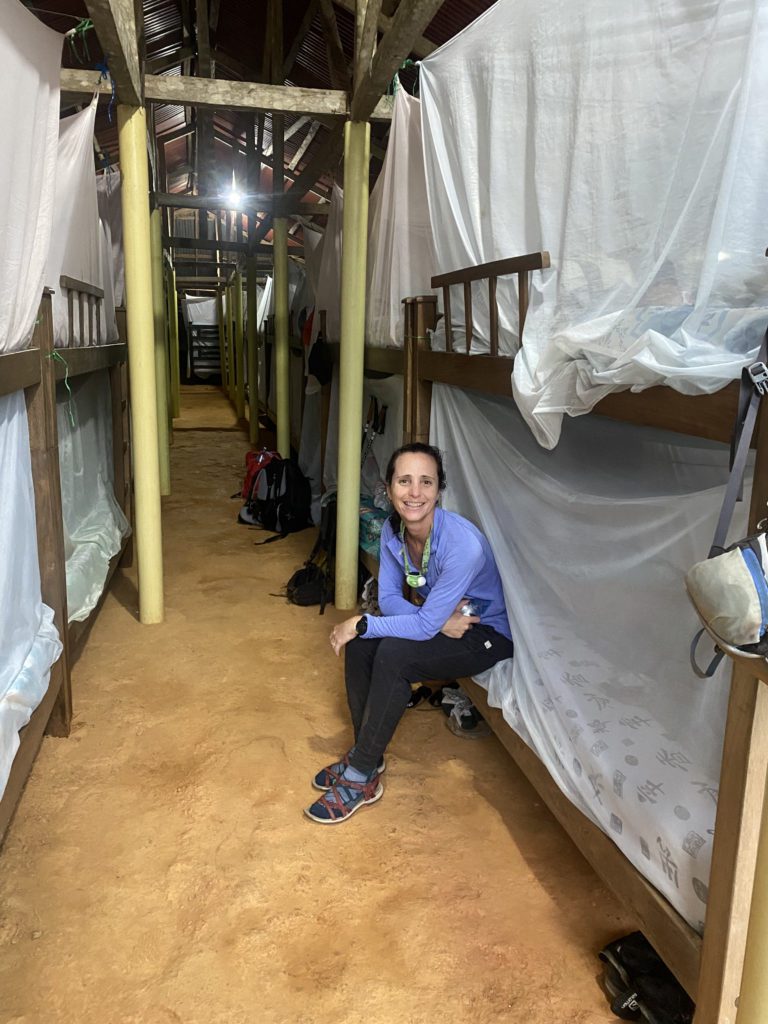
We eventually reach a large structure housing 50 or more bunk beds, the sides open to the air. Bug nets carefully surround each bed, which are clean and comfortable. Previous reviews detailing bed bugs have obviously been read and dealt with by the tour operators, as the sheets are sparkling white and clean. But before we are allowed to touch anything, we must shower to clean away the day’s dust, deet and sunscreen. The showers’ water is straight from the river and is, shall we say, bracing. Much hooting and hollering is heard from the shower stalls as people come to terms with the reality of the next few days.
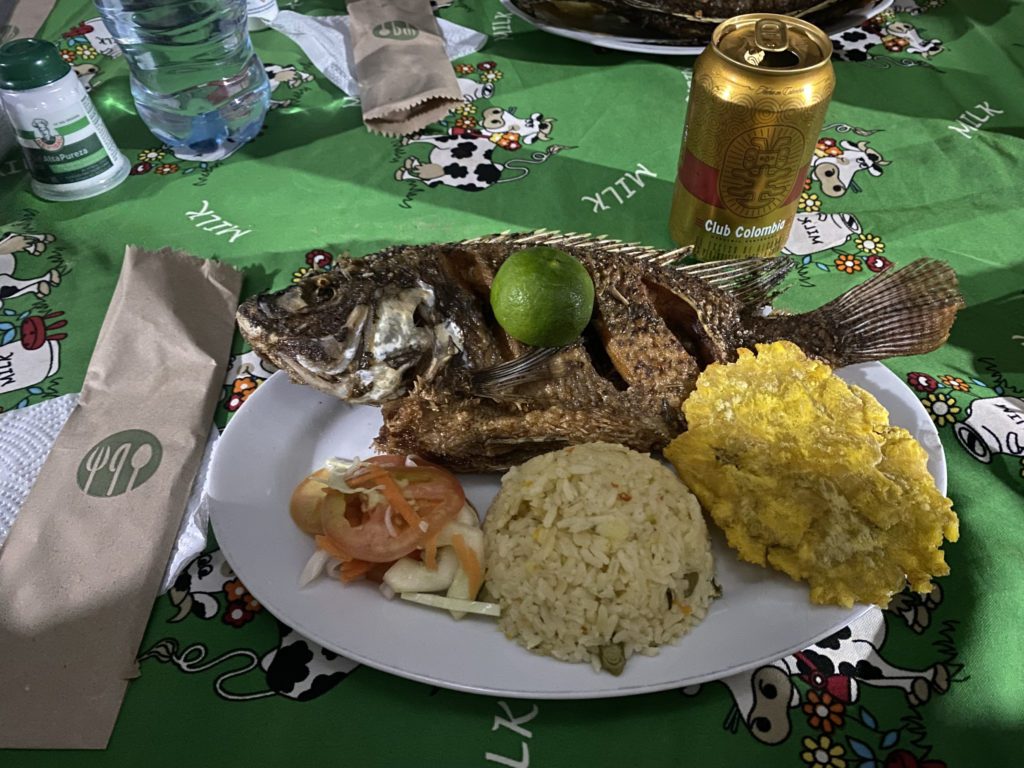
Dinner is one of the best meals we’ve had in Colombia so far. A large freshwater fish baked whole, with coconut-infused rice and fried plantains, disappears in seconds as conversations range in topics as diverse as 19th C French literature to nanotechnology to Polish history to pet cats. A single ice-cold cervesa is all most of us have the energy for, and we make our way to bed well before the promised 9pm ‘lights out’.
Colombian ‘Flat’
With 2,700m of elevation changes over the 47 km, there is a lot of up and down. Each morning and lunch break Laura carefully explains the terrain for the next few hours. One hour up, 30 minutes flat, one hour down. Which sounds fine until you realize a Colombian’s idea of ‘flat’ is not our idea of ‘flat’. It’s not anyone’s idea of ‘flat’, except perhaps a fellow Colombian. Colombia, where every day is Leg Day.
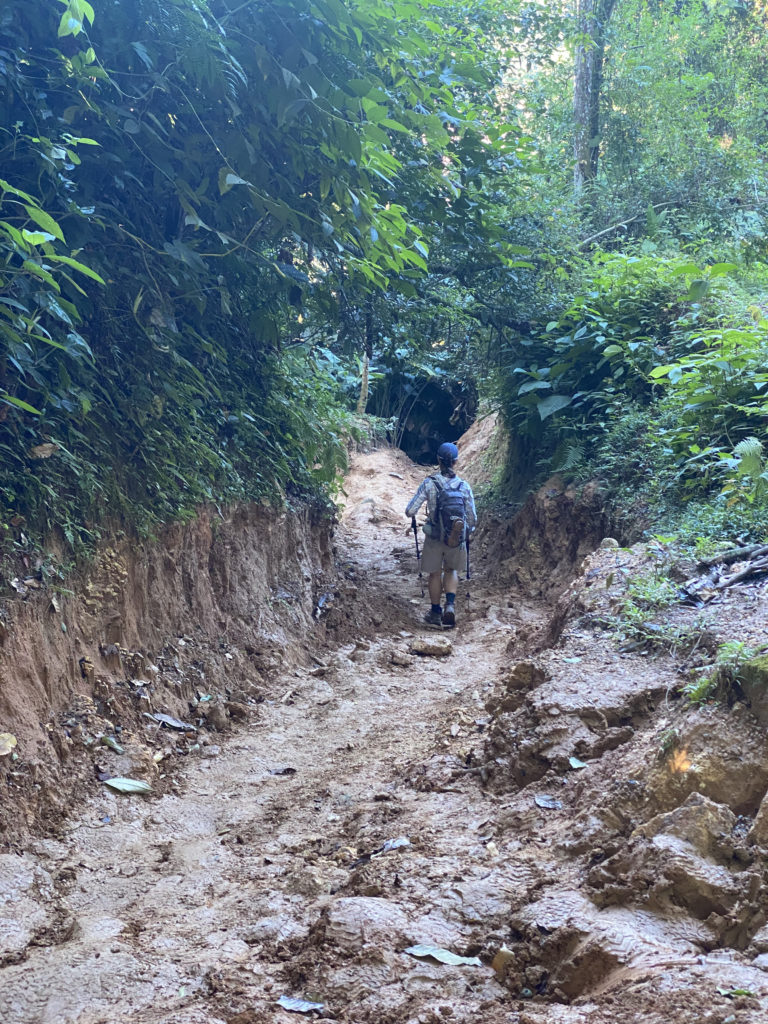
The 90% humidity is stifling which is why the guides get us up early and on the trail by 6am so we get at least a few hours of relative cool before the real heat of the day kicks in. Our clothing, which we have rinsed, wrung out and hung out the night before, is no drier this morning than it was last night. We put on our wet shirts and the warmth of our bodies and the early morning sun quickly dries them momentarily before our sweat soaks them once again.
Today we’ll be hiking all day to reach the camp at the base of La Ciudad. We try not to listen to Laura explaining how much ‘up’ there will be today, and remember that her idea of ‘flat’ is anything but.
Before we head off, we say goodbye to Paola, the local parakeet that lives in the camp. She and Al really hit it off.
Americas’ Early Civilizations
In school we learned about the Mayans, the Incas and the Aztecs, but never the Taironas; possibly because evidence of their society wasn’t rediscovered until the 1970’s. Tairona actually refers to a number of different indigenous groups in the north-west corner of South America, with a presence stretching back at least to the 1st century AD and possibly much older. But like the Mayans, Incas and Aztecs, the culture was largely wiped out by the Spanish conquistadores in the 16th century.
However, there are still four indigenous peoples (the Kogi, Wiwa, Arhuacos and Kankuamo) who it’s believed are direct descendants of the Taironas and who still live in the lands surrounding the ‘Lost City’. Unsurprisingly, for them the city was never really ‘lost’ – they just didn’t spread the word about it to outsiders. A family of local treasure looters called Los Sepúlvedas stumbled across the first of the 1200 stone steps leading to the city in 1972, while they were out hunting turkeys. When the looted gold and statues started showing up on the black market, the government eventually learned of the site and stepped in to protect and rebuild it between 1976 and 1982.
Tunnels of Clay
The trail today is hugely varied. At times we are walking through deep jungle, and at other times we are high on the side of the mountain, exposed to the baking sun. The trail here is literally carved into the mountainside, with years of rain, people and mules making a deeper and deeper bowl into the earth. At times the sides easily extend over our heads, providing some much needed shade. While the humidity never goes away, the difference between being in the sun and in the shade is huge. We constantly seek shade for our many rest stops.
As we carefully pick our way along the path we the local indigenous people walk past quickly in their gum boots like it’s a perfectly flat paved road.
Lunch time finds us at a beautiful swimming spot, with just enough current to make a perfect natural ‘lap pool’. The water is icy, icy cold, and even with the heat and humidity it’s still a courageous act to dive headfirst into the water.
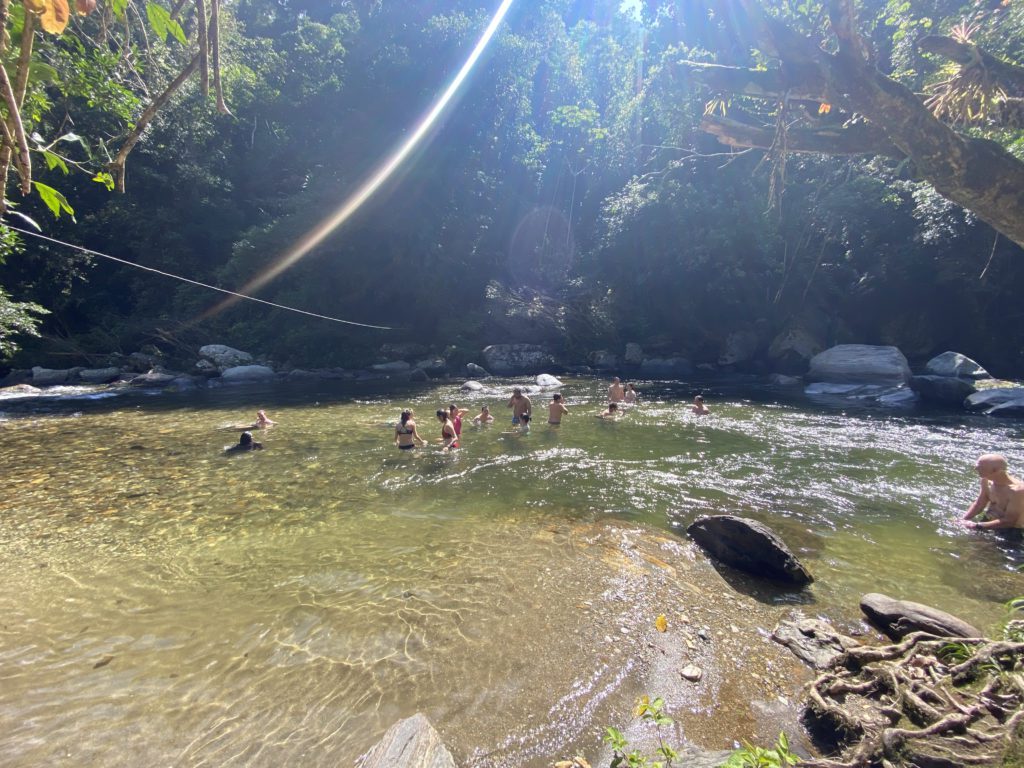
The last part of the day is beautiful as we walk through dense green jungle with huge trees covered in green moss, vines snaking up into the canopy and long strands of vines looping down to almost touch the ground. There are beautiful waterfalls every other turn.
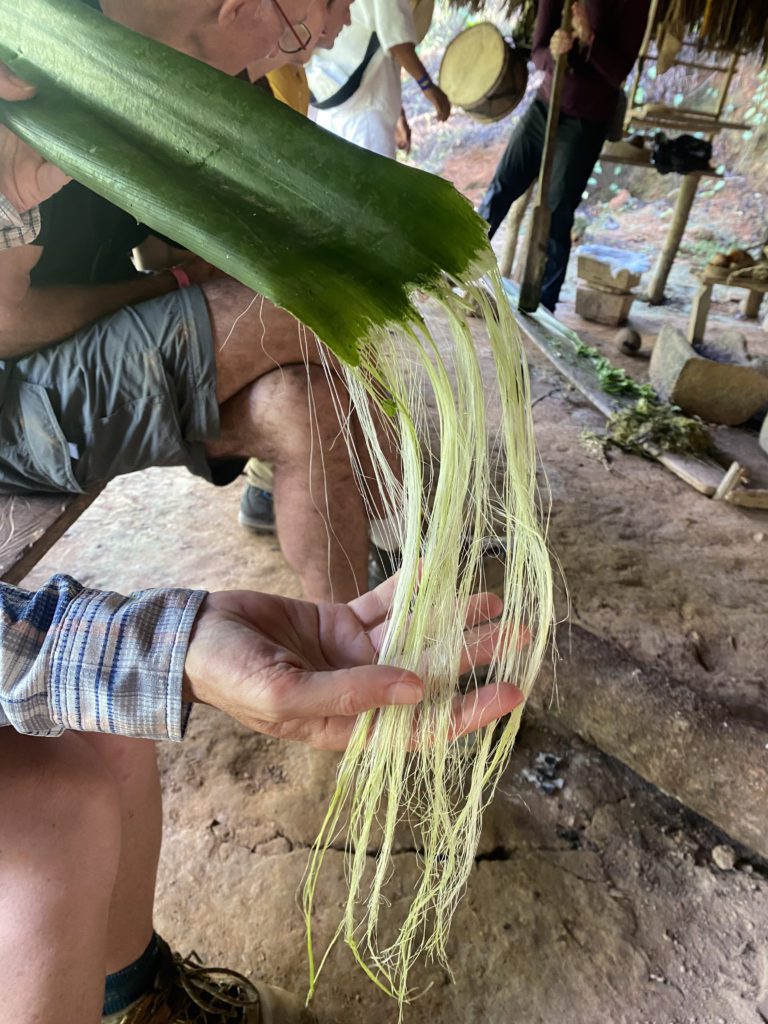
During a much-needed break, we are given a presentation by a young Wiwa man training to be a Mamo: a leader within the community with knowledge about local plants and medicines, traditions and culture. He demonstrated how they use the yucca plant to create a fibrous thread that is made into ropes and bags. He also described their traditions of marriage and some of the rites of passage they go through to become men and women, including the granting of a poporo to a young man.
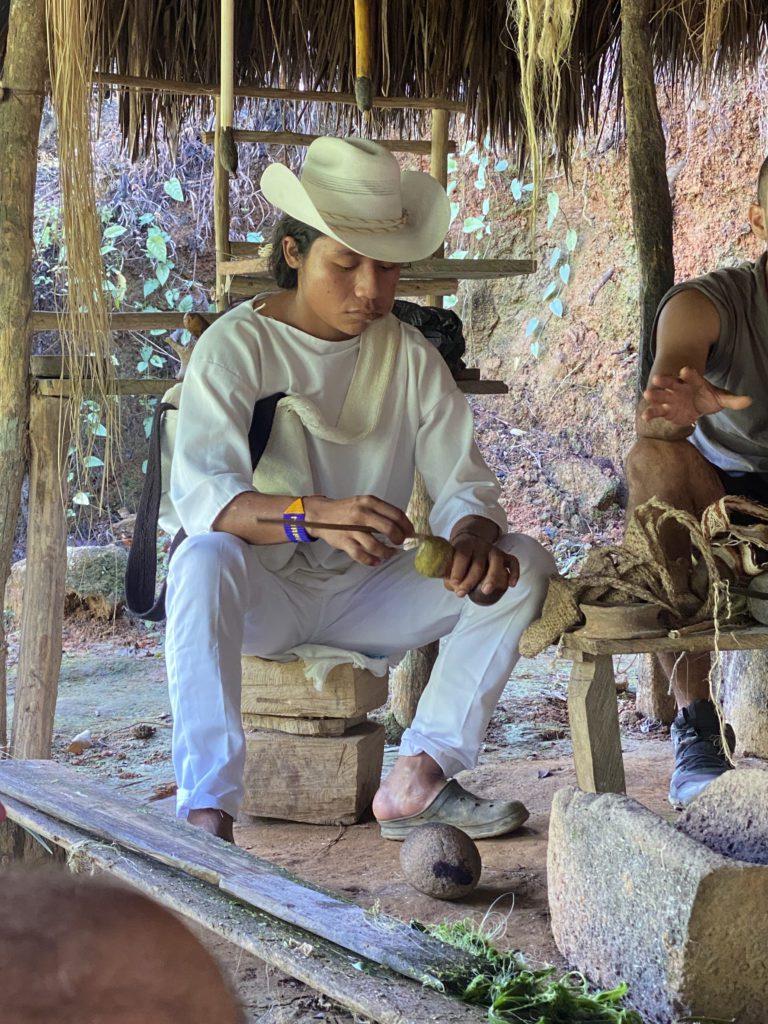
The poporo is a vessel made from a gourd that holds powdered lime from seashells, used during coca leaf chewing. A stick is dipped into the poporo to transfer some lime into the chewer’s mouth; the lime releases the alkaloids in the coca, helping with ‘meditation’… A man will have many poporos during his lifetime, but only one ceremonial poporo which will be kept private. We saw the most famous of the Colombian poporos, the Poporo Quimbaya, in the Gold Museum in Bogota.
This evening’s camp includes another swimming spot deep in the jungle, the water equally as cold. Most of us have foregone the showers, preferring an invigorating plunge and scrub in the river.
The camp is busy with 7 groups of 10 people, and it’s not even peak capacity. We sip hot chocolate made with chunks of melted chocolate, panela (from sugarcane) and cinnamon, and rest our feet and muscles. There’s a sense of excitement in the air for tomorrow, when we’ll reach La Ciudad. We discuss strategies to get the jump on the other groups the next morning. Tyson suggests we wake up 15 minutes earlier so that we can be first out. We agree, and collapse in our bunks even earlier than usual. Several people forego bunks and try sleeping in hammocks, which for Al evokes only a feeling of existential dread.
Day Three: Listos Chicos?
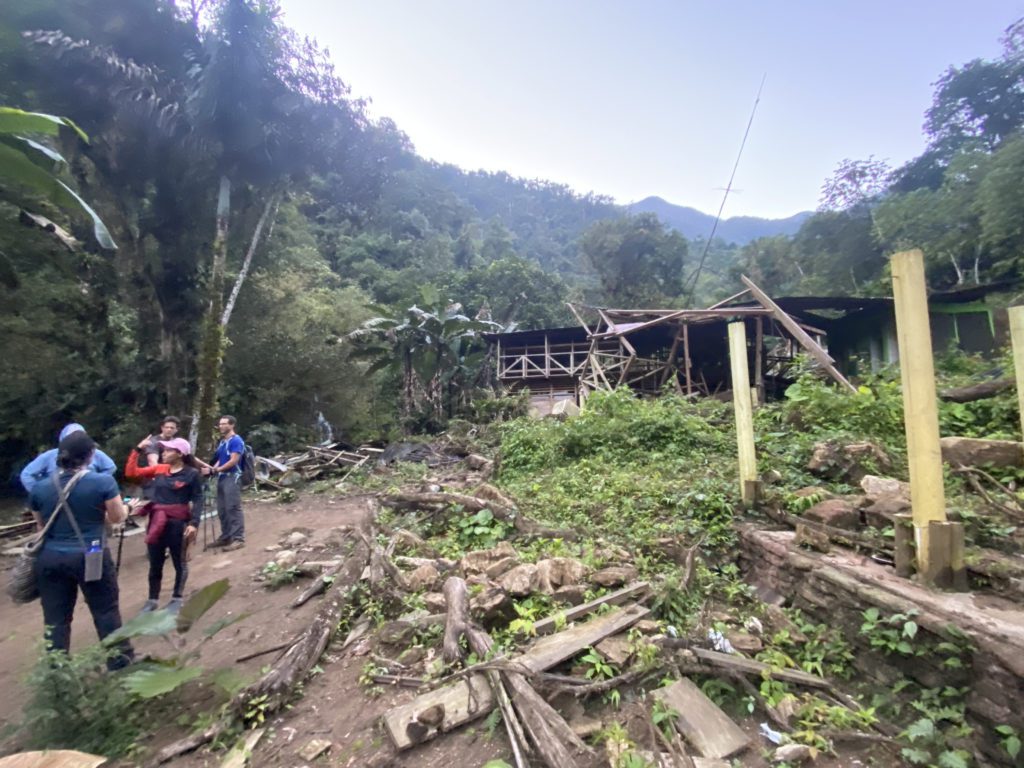
With a soft ‘Listos chicos?’ (‘Ready guys?’) Tyson wakes us from our slumbers at 4:45am. After a light breakfast, we head out. We quickly reach the former campsite we were supposed to stay at; 3 months earlier a landslide had destroyed part of the camp while 80 trekkers slept – miraculously no one was hurt. We follow along the river through the jungle, and reach the first of the 1200 steps leading up to the lost city.
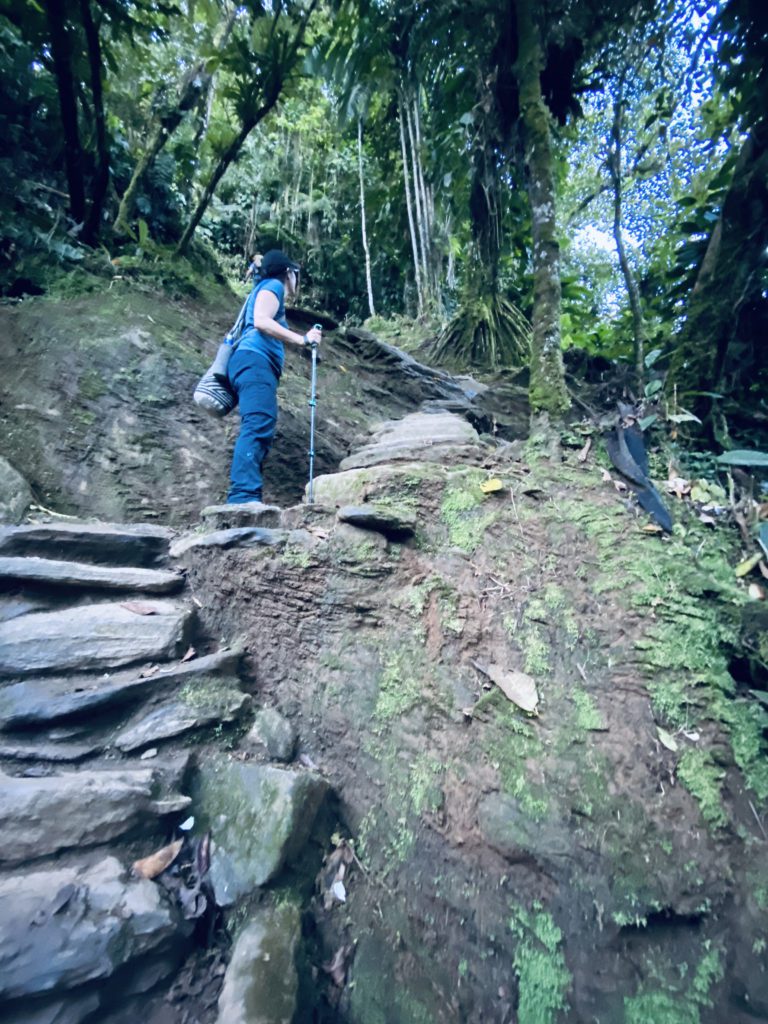
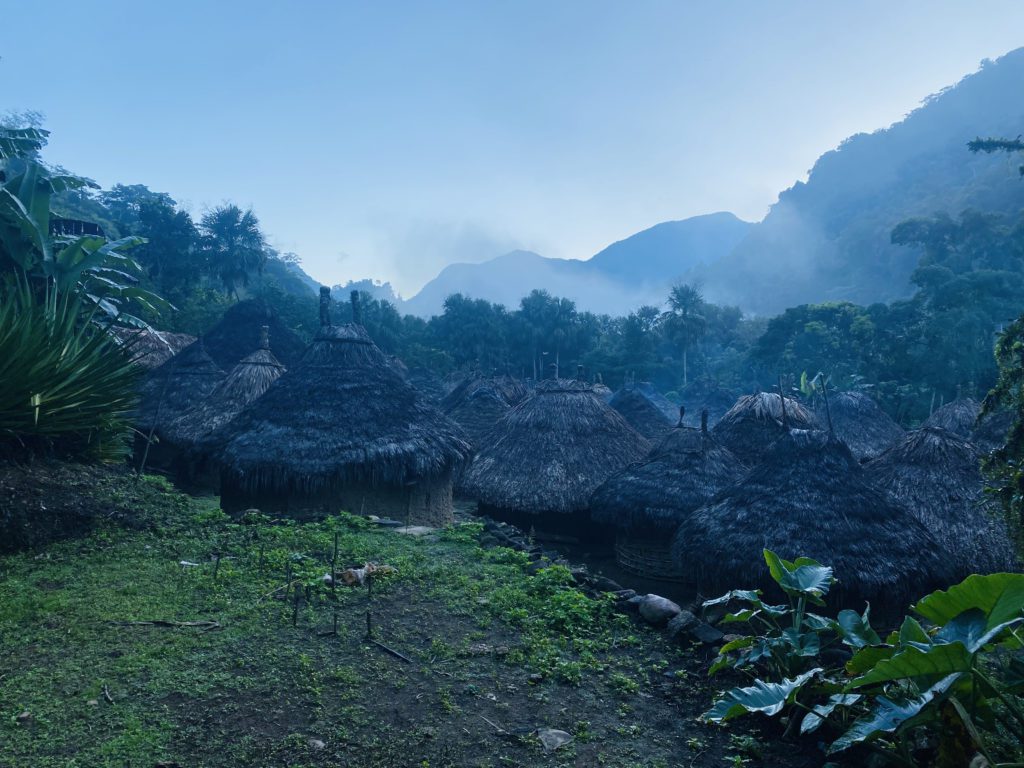
In its day La Ciudad Perdida was a bustling city with over 2,000 inhabitants and was a place to meet, trade and worship for the more than 200 villages in the surrounding area. The city is believed to have been founded about 800 CE, which would predate the Inca’s Machu Picchu in Peru by about 650 years. Today all of the original temples and houses are gone; built with natural materials, they have long succumbed to the jungle environment. All that remains are the many grassy terraces and plazas linked by stone paths and staircases etched into the side of the mountain. And this city, known as ‘Teyuna’ to the indigenous peoples, represents less than a third of the structures still ‘lost’ in the surrounding jungle. Lidar investigations have revealed hundreds of other sites nearby, but at the request of the local population, they will remain just that: lost.
And suddenly, we’re here. The staircase emerges to a clearing, where we can see the first of the terraces. We’re 1150m above sea level. For the first time this trip, a t-shirt and shorts is the wrong choice; with the elevation change and the early hour, it’s chilly without the morning sun. A jumper would have been handy, if only for the first hour or so.
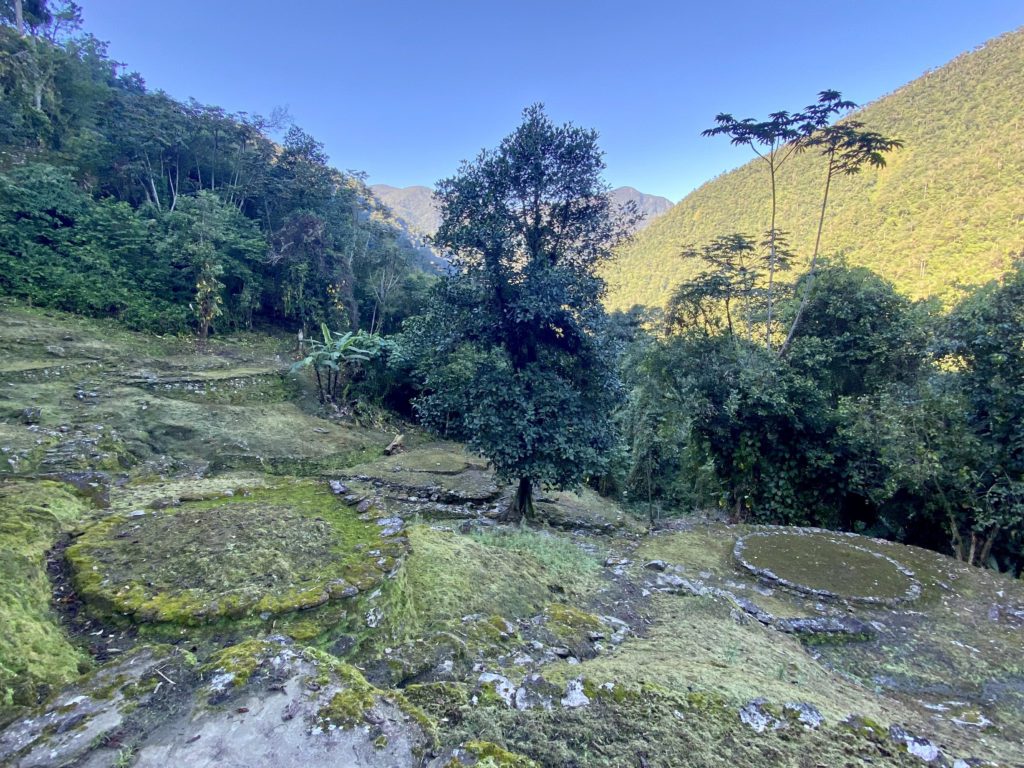
At first we’re not sure what we’re looking at: is what we can see the whole of the the city? No, it’s actually 30 hectares of land; after a short briefing on this first section, we take a side trail that winds its way through the jungle, making its way up through various other clearings and terraces and which will eventually take us to the top (and most photographed) site.
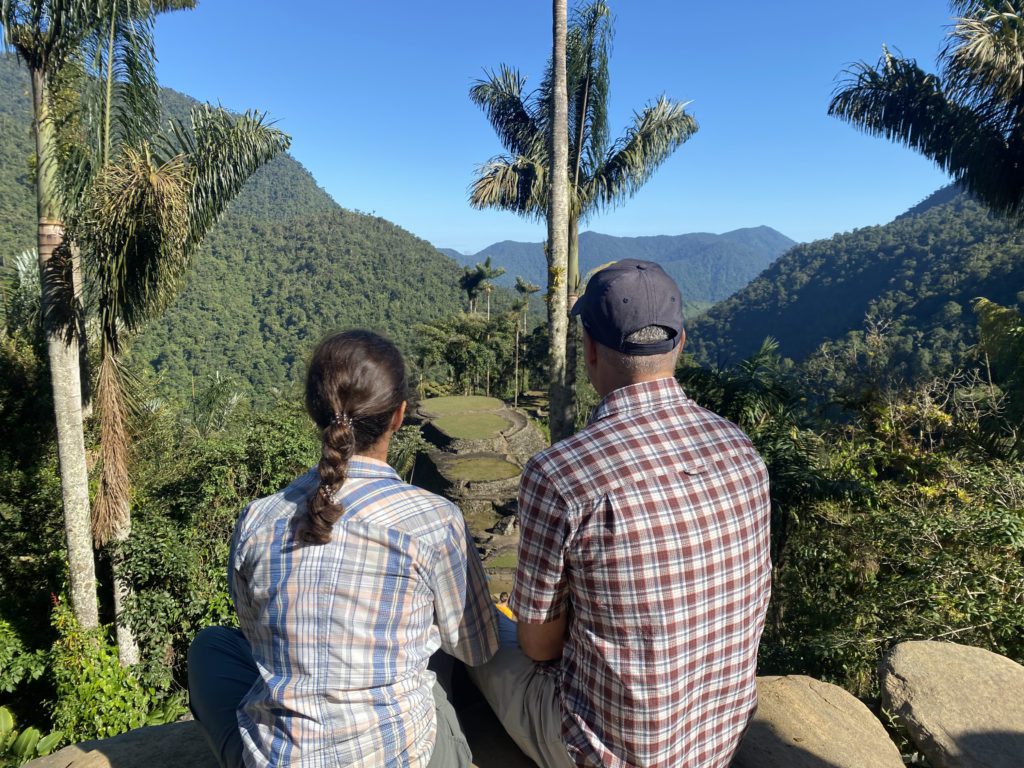
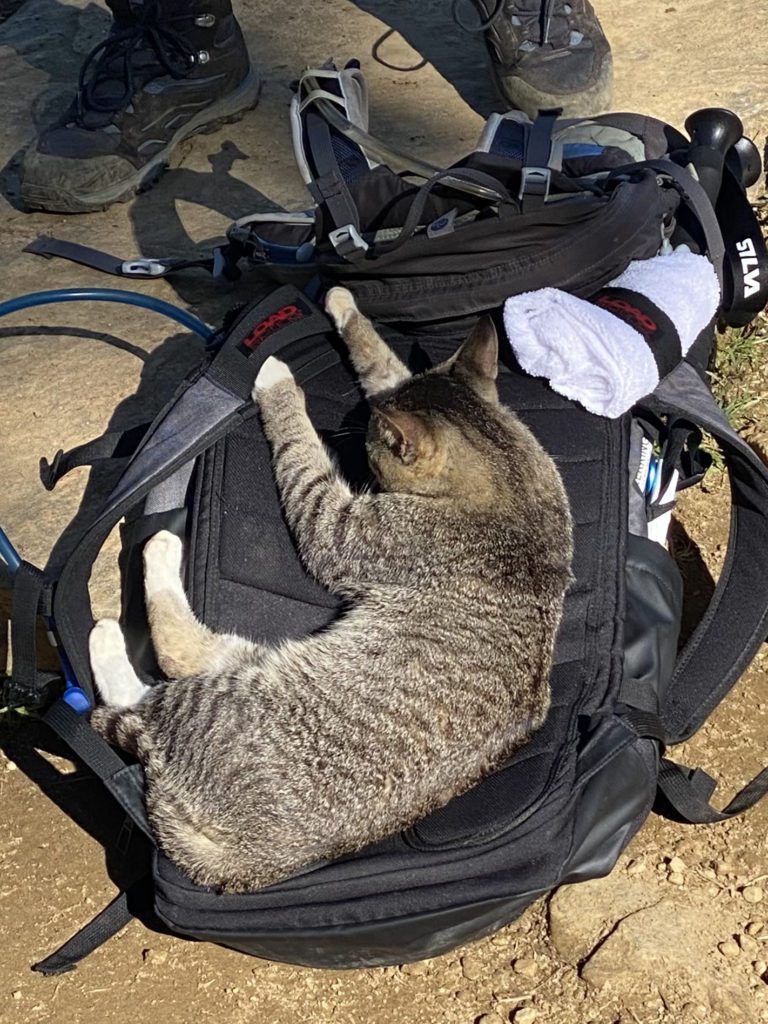
The local cat takes over my bag
With so many groups visiting the site every day, we’re pleasantly surprised by how few other people are here. Our guides have done a great job in timing our arrival and our movement around the site, to provide us with a relatively secluded experience. After a few hours of exploring the site, and more fruit and snacks, we begin the trek back down the 1200 steps to the edge of the river. These Taironas could have used a lesson from the Romans on building steps: they’re definitely not designed for size 12 hiking boots, and the journey down is slow and careful.
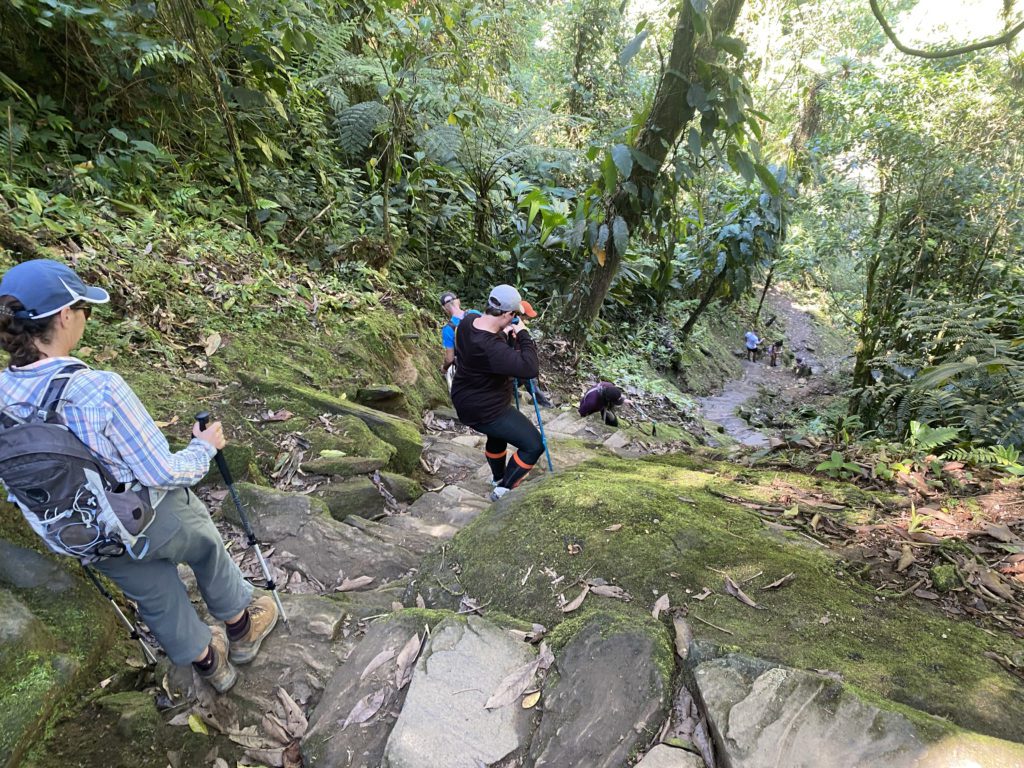
We retrace our steps back to camp and opt for another icy swim to cool us off before lunch, and then another three or four hours hiking back to the camp we had lunch the day before, where we’ll be spending our final night. In the afternoon a light rain starts to fall, which helps to cool things down but also makes us wonder what tomorrow’s trail will be like.
The Legend of El Dorado
El Dorado was the term used by the Spanish in the 16th century to describe (depending on who was doing the describing) a mythical king, city, or empire. The legend is derived from an ancient Colombian rite rite whereby the chief covered himself with gold dust and threw gold offerings into a mystical lake as a gift to the gods.
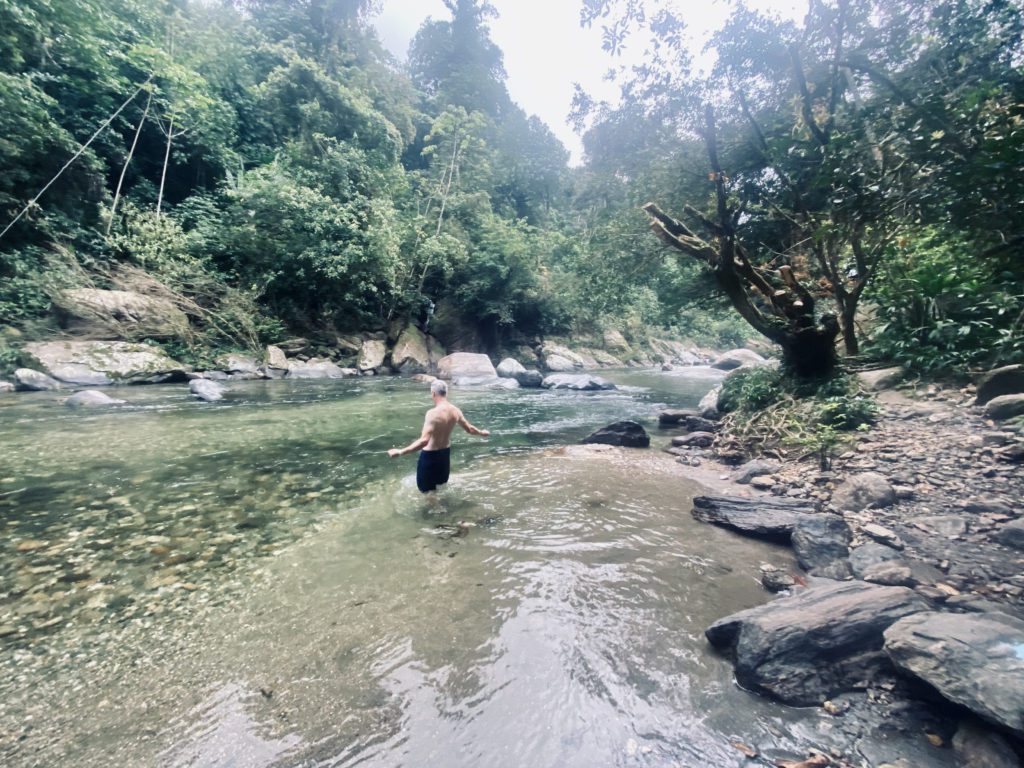
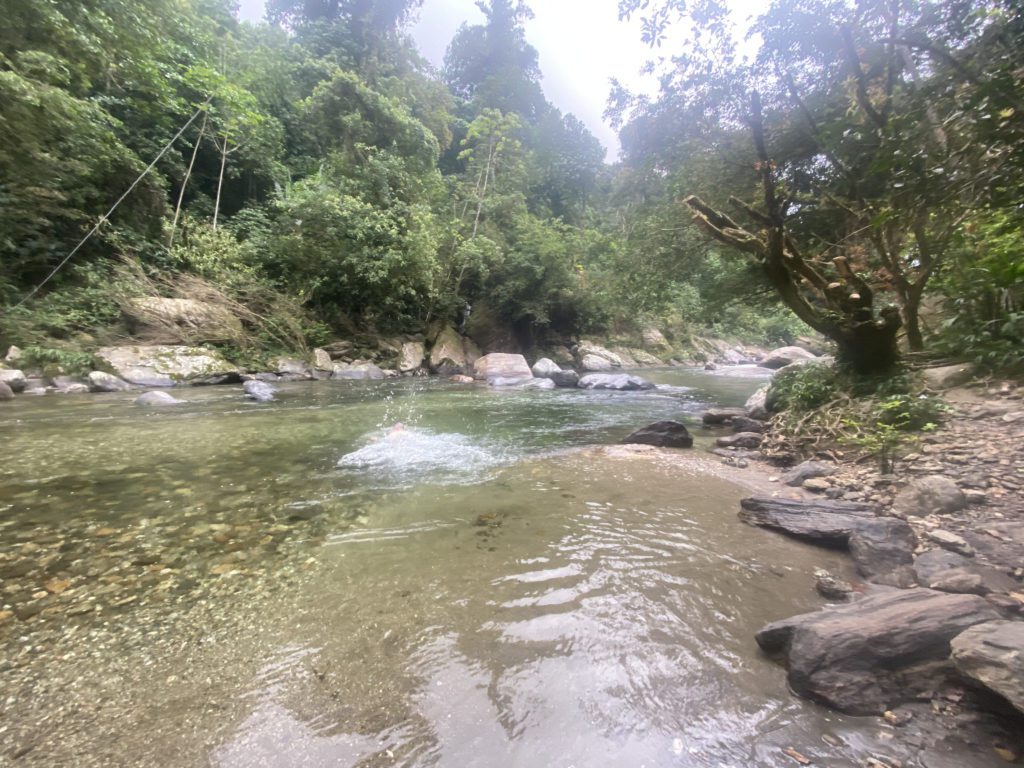
Before setting off this morning, we head back down to the river. The previous evening’s swim saw Al perform his own El Dorado ritual, by (apparently) making an offering of his wedding ring to the river gods during his evening swim. Apparently the water really was icy, cold enough to shrink his fingers to allow the ring to slip off. Alas, the ring was not to be found: El Anillo Perdido, as it were. On the plus side, at least he didn’t lose it doing something really mundane or dumb.
(The pictures above are the last known sighting of said wedding ring…)
On this, the fourth and final day of our trek, we all try our best to soak in the jungle, the local people, the trail, before our return to civilization. Which is just as well, because all of us have forgotten how far we had actually walked between the afternoon of Day 1 and the morning of Day 2, which is the distance we’re covering on this last day. The last few kilometers seem to drag on and on as we get progressively more and more tired and hungry, but eventually we reach the building where this all began just a few short days ago. Other fresh-faced groups are there, making last minute preparations. We snigger behind our hands at these ‘rookies’ – we, the seasoned veterans, know all about this trek and could tell them a thing or two about what they’re about to face.
But we let them learn through their own experiences. We collapse into our plastic chairs and enjoy one last ice cold cervesa and traditional Colombian meal before piling into the Land Cruisers for the journey back to Santa Marta. By the time we get back to Santa Marta we are tired but happy, ready for a (warm) shower and a rest. Tonight is New Year’s Eve, so later this evening we and some of our newfound friends will regroup for a few drinks to see in the new year.
What a magnificent trek!
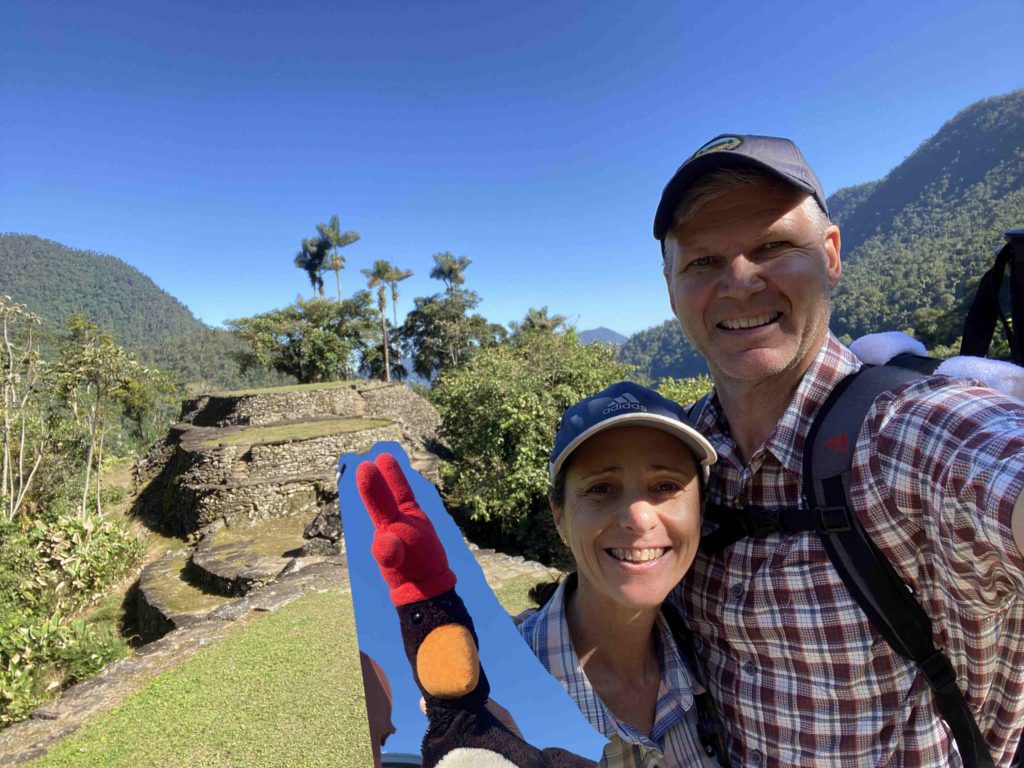
P.S. Although we’re pretty certain we left Feathers with the rest of our stuff back in Santa Marta, he insists he was there with us, and produced this photo to prove it. Photos don’t lie, I guess.
La Ciudad Perdida In A Nutshell
The Tour Company we used was Magic Tour, and they were quite magical. We would highly recommend them. When we booked, I had a conversation via WhatsApp with the booking agent, and he was able to answer my questions and allay any concerns I had. We did the four-day tour; there is a five-day tour but we wouldn’t recommend it – in fact others in our group had signed up for the five days but changed their minds by the end and went with the four-day.
- All tours have a price fixed by the government (about $350USD pp in 2022), so you’re really shopping for quality vs price.
- There was beer, power and even wifi available at all camps that we stayed at, so bring some cash. You may be fighting to get your charger in an outlet, so you might consider bringing a charger with multiple USB ports so that you can share.
- All camps had beds, pillows, mattresses, sheets and bug nets – we’d been told that one night we’d be in hammocks, but that wasn’t the case.
- The checklist of what to bring, which is on Magic Tours website, is pretty much perfect. I brought a few things that weren’t on the list, and didn’t end up needing them.
- Bring walking sticks! Especially if you have bad knees/old bones
- Keep your bathers and a towel easily accessible each day, so that you can go for a swim at lunchtime
- Things don’t tend to dry very well overnight due to the humidity. Quick-dry everything is key. Bring extra socks, especially if you’re prone to blisters. (And bring blister bandages too)
- On the day you go to Ciudad Perdida, you leave most of your stuff at camp. I left everything in a drybag and brought a (basically empty) daypack, as I had a camelbak. I wish I’d packed my jumper (sweater) in that bag, as that was the only time you actually need it.
- Bug spray is important. Even though we never felt any bites, all of us ended up with lots of insect bites on our calves (and weirdly, nowhere else)
Having seem the effects of over-tourism in similar places around the world, we were concerned about the effect so many trekkers were having and if there was any oversight. Turns out there is. Since 2009, non-profit organization Global Heritage Fund (GHF) has been working in Ciudad Perdida to preserve and protect the historic site against climate, vegetation, neglect, looting, and unsustainable tourism. GHF’s stated goals include the development and implementation of a regional Management Plan, documentation and conservation of the archaeological features at Ciudad Perdida and the engagement of the local indigenous communities as major stakeholders in the preservation and sustainable development of the site. Good, let’s hope it works so more people can enjoy this magical place for years to come.