
From Medellín: Two Weekend Getaways
A little less than 150km south of Medellín, high up in the Andes mountains lies the small town of Jardin. We spent two days there over Christmas as we’d heard it was a beautiful Colombian town, typical of many in this region. We also spent another weekend in the town of Guatapé, a lakeside getaway town just east of the city.
Jardin: Where Life is Easy, Not ‘Jard’
The main square is the heartbeat of Colombian life, and nowhere is this more evident than sitting in the central square of Jardin (har-DEEN), a few hours south of the hustle and bustle of Medellín city.
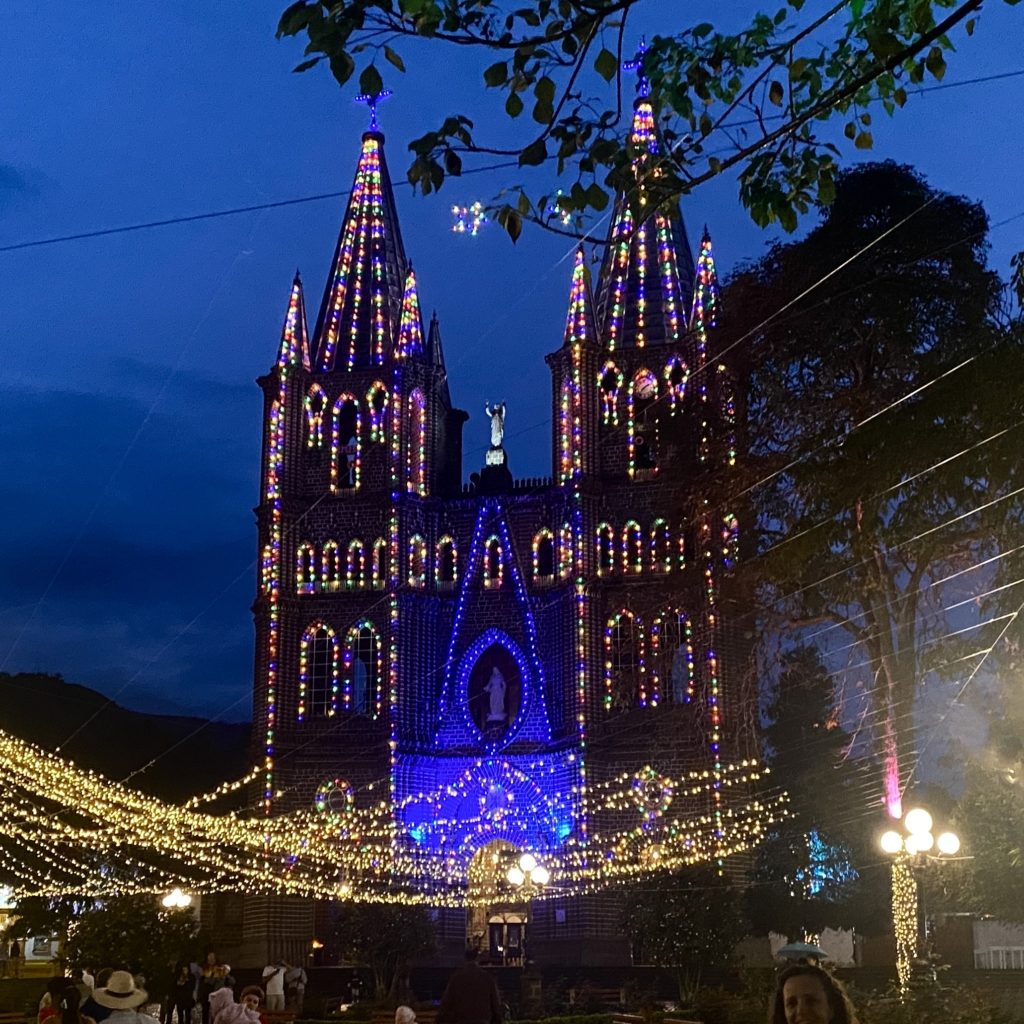
It’s Christmas Eve when we arrive and despite our fear that the streets might be deserted while families gathered at home, in fact the central square is buzzing. The whole edifice of the grey-stoned church, which is large enough for a much bigger town, is lit brightly in Christmas lights from the very top of its spires more than twice as high as any surrounding building. Around the square, every tree is wrapped in lights and a large web of sparkling lights is suspended over the central water fountain.
The square is lined with 20 or more traditional two story buildings with whitewashed walls, carved wooden railings and brightly coloured paint decorating the doors, walls and railings. Each houses a bar or restaurant which have a few coveted tables just outside the door and then 20 more extending out into the square. For Christmas, the front of each bar is decorated with colourful lights, and uptempo music flows from several to add to the festive spirit.
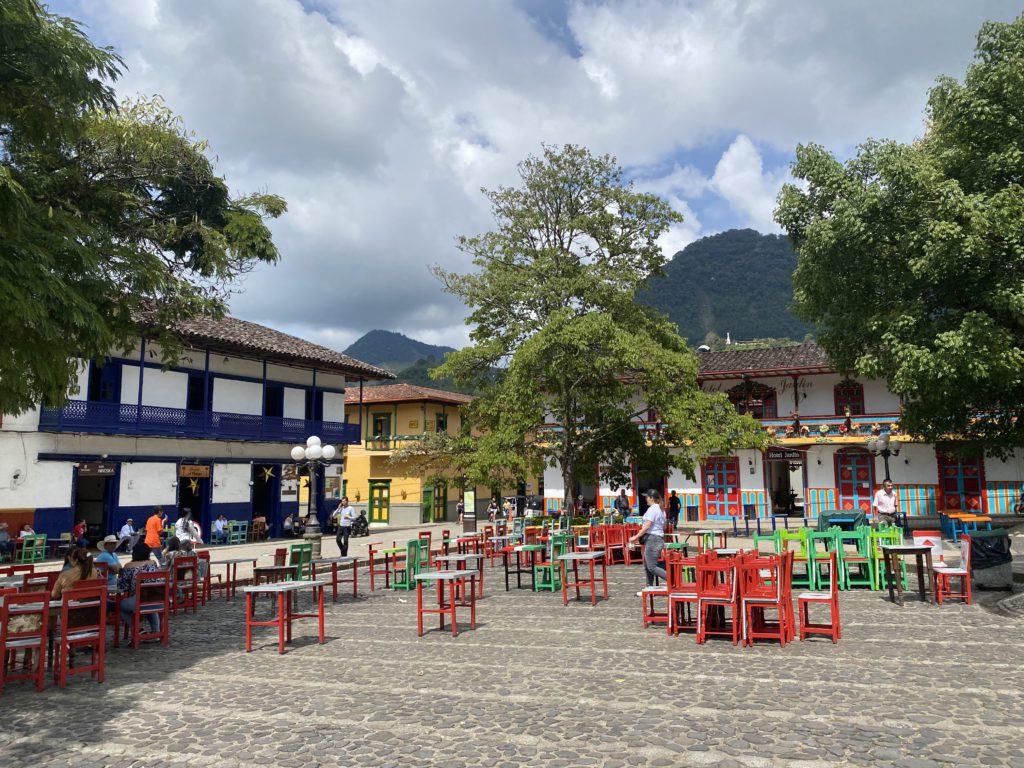
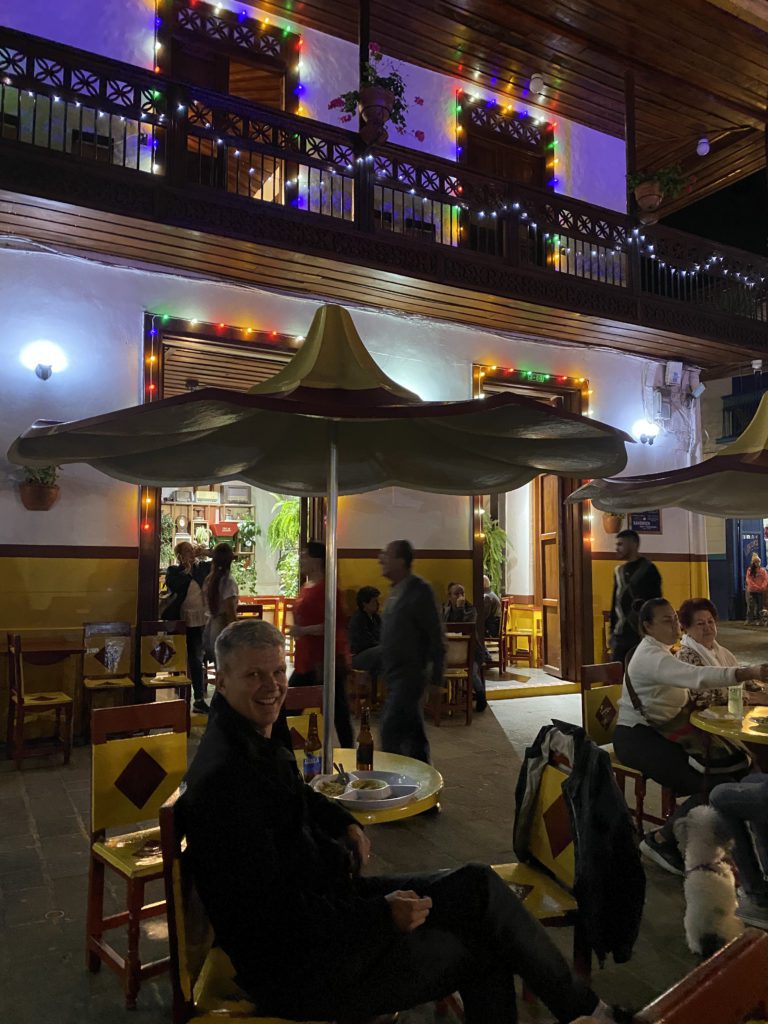
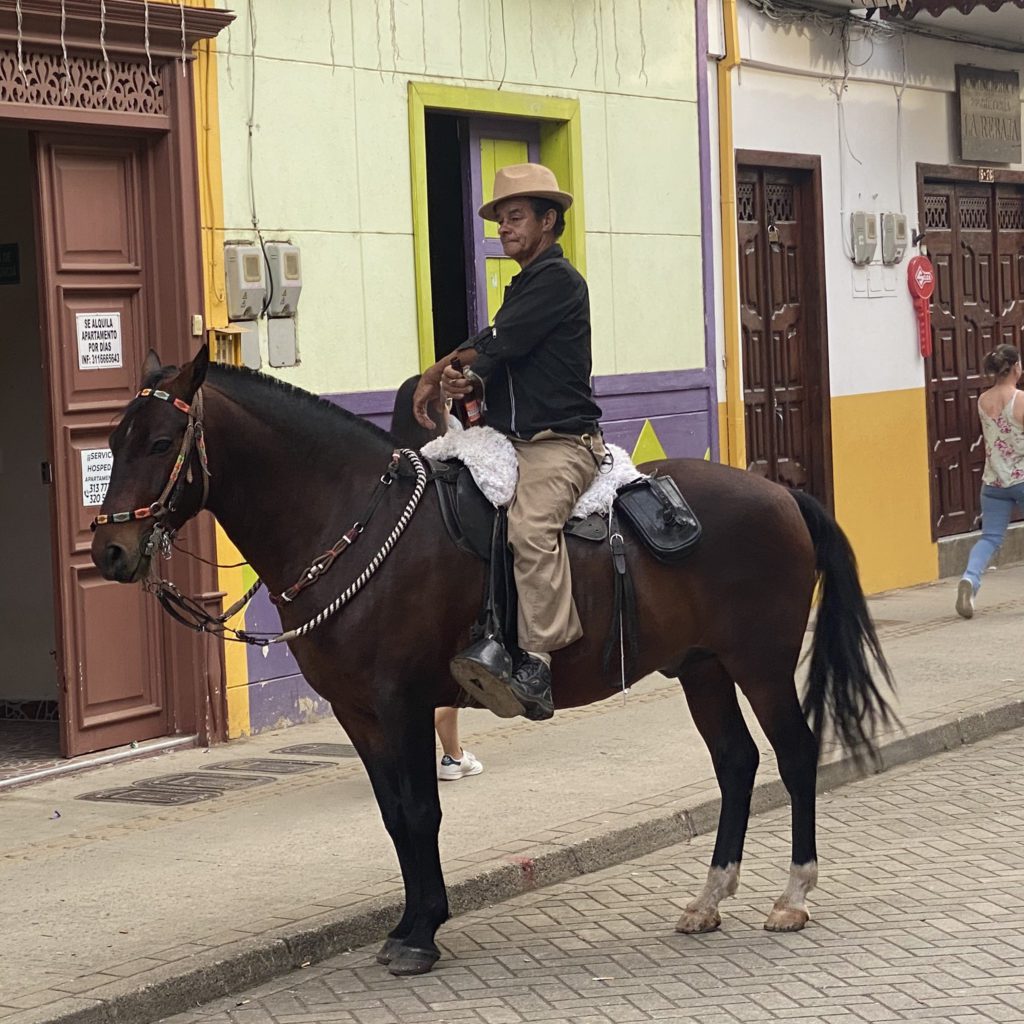
Servers scurry from the bar to the tables and back to keep people stocked with coffee, beer and snacks. Horses prance the Churro style up and down the square. All the bars have the same small wooden square tables and small upright wooden chairs, but each bar has its individual colour scheme: red and yellow for one, blue and white for another, darks and light green for a third. The overall effect is a kaleidoscope of bright colours that can’t help but make you feel festive even in the tropical rain that comes down as we sit and enjoy a cervesa and take it all in. If you can’t be with family on Christmas Eve, this is not a bad way to enjoy the day.
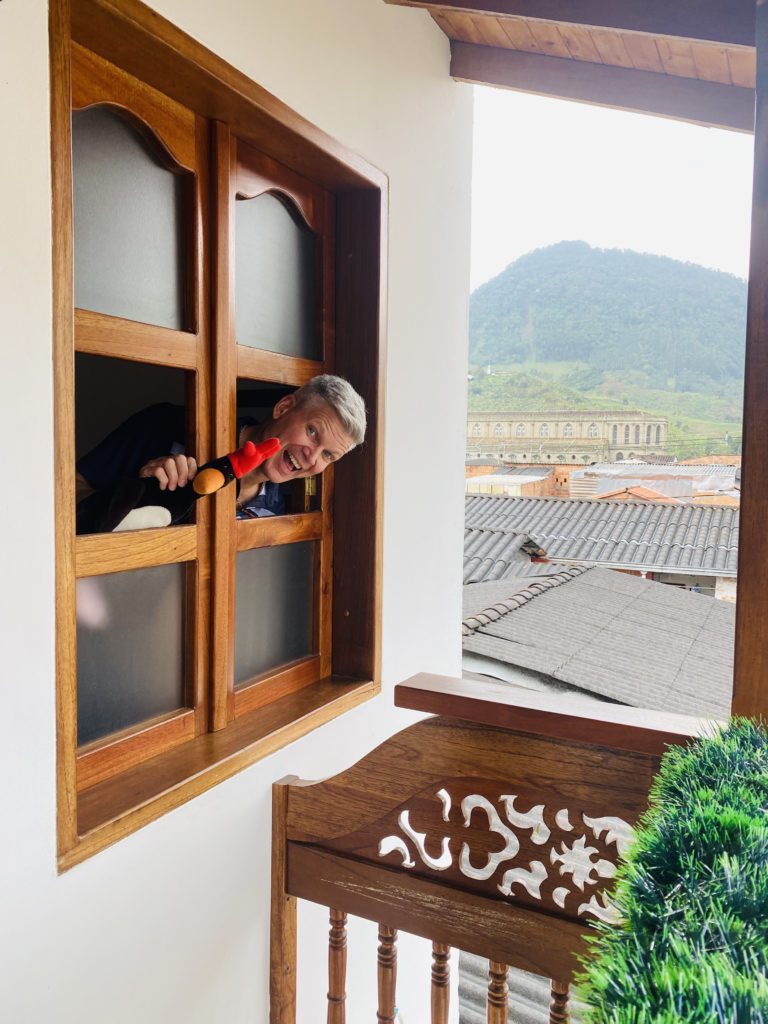
Coffee Culture: Tour of a Local Coffee Farm
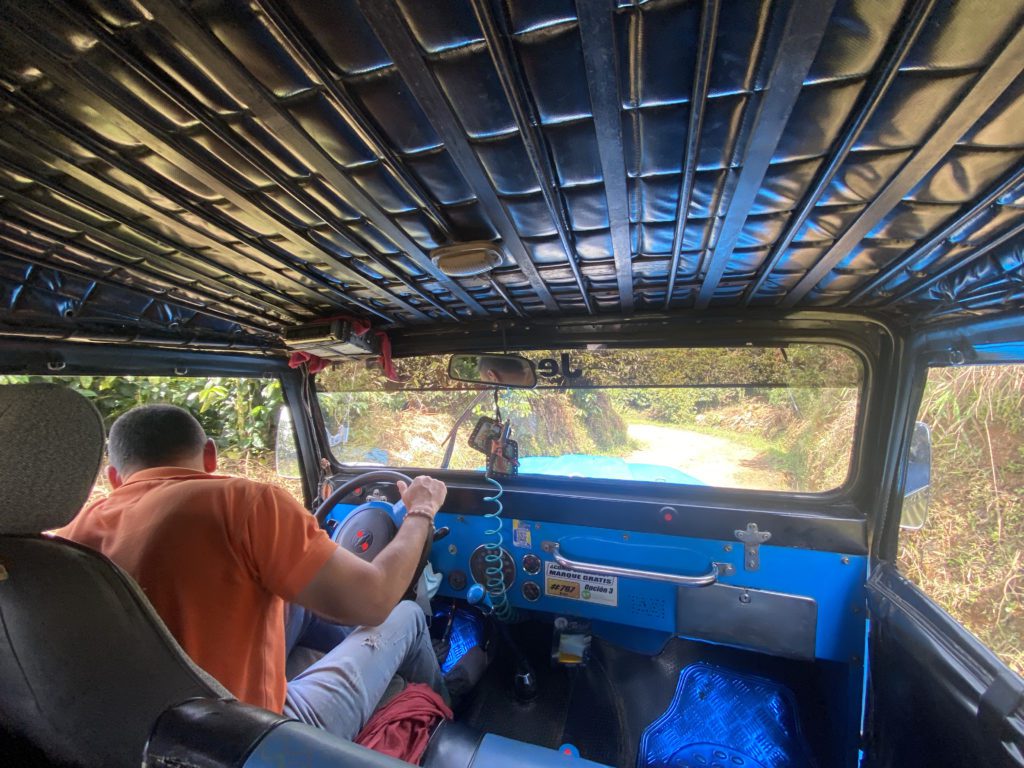
Christmas Day found us back in the square and jumping in the back of a JEEP Willy, For the tour, we’d been driven out of town in a Jeep Willy, a car that’s apparently synonymous with Colombia, up up up into the surrounding mountains on the rocky unsealed roads. When the driver got out to lock the 4WD hubs on the front tires, we knew the true ‘up’ was about to start. (See our post from our Australian Diary to find out what happens if you don’t do this). This is about to get more extreme.
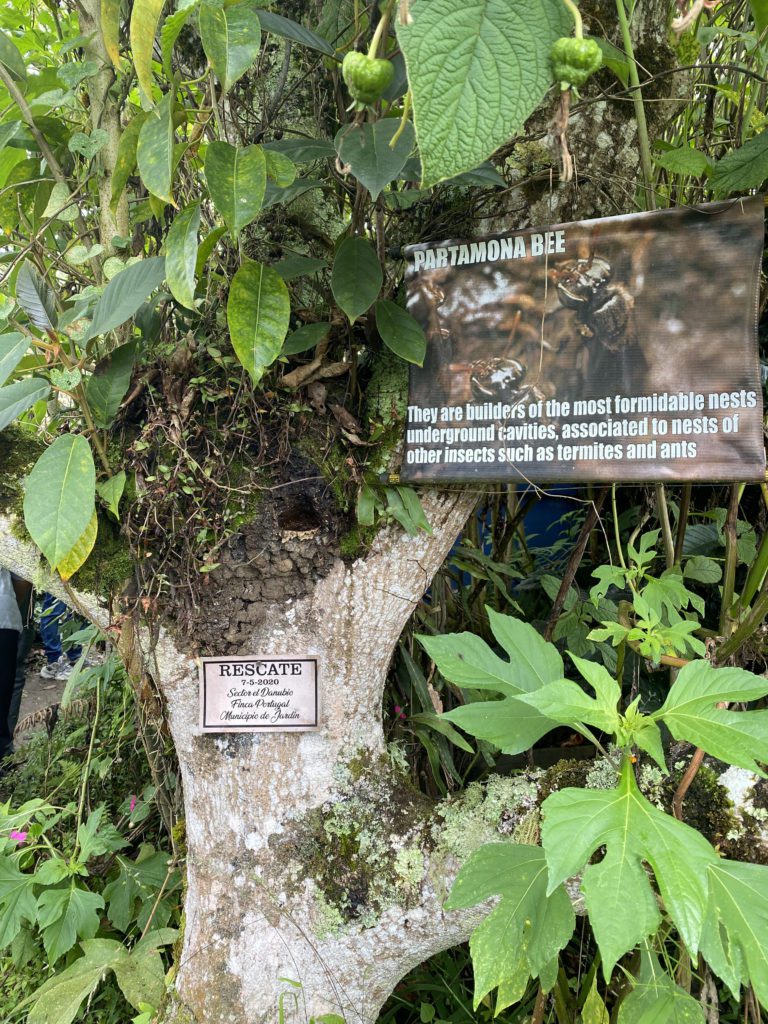
As the bees buzzed around us in and out of the hive in the tree log, every fibre of our being felt like we should be running away like a cartoon character with arms flailing. But the farmer reassured us that we were fine, as the bees had no sting. It’s hard to convince your animal brain.
I thought we’d signed up for a coffee farm tour, not a bee tour. But of course, bees are very important for the propagation of all kinds of fruit and vegetables. On the Finca Florides farm just outside Jardin township there are no less than 20 different types of bees, for an estimated million bees in total. This information was not helping quell our desire to run.
As we walk through a small section of the farm behind the main farm house, every 15m or so there is a different type of bee hive — from spheres the size of a medicine ball, to logs of wood and the more traditional box hive. Each one has an explanation of the type of bee that uses the hive and is marked with a date and place from where the bee colony has been rescued; most often when a tree was cut down for farming.
The bees are busy pollinating the many different plants all around us in the lush mountainside: guava, avocado, mango and oranges. But we’re here for the coffee plants which are carefully kept at just 2m tall so they can be easily harvested by hand.
As we twist individual red berries the size of a small marble off the tightly packed coffee plants, we struggle to stay upright on the impossibly steep hills covered in slippery clay 2,000m above sea level. We’re starting to realise why it is that all Colombian coffee is hand picked. It would be quite an amazing feat of engineering to come up with harvesting machinery that could deal with these growing conditions. Farming here is not for the faint-hearted.
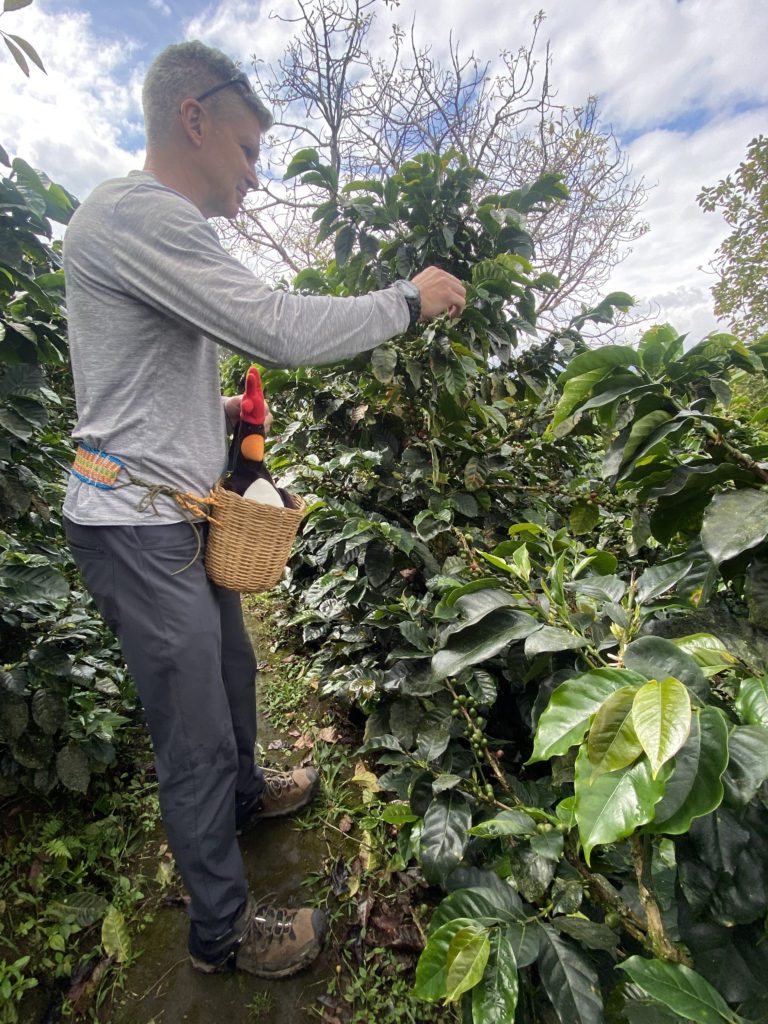
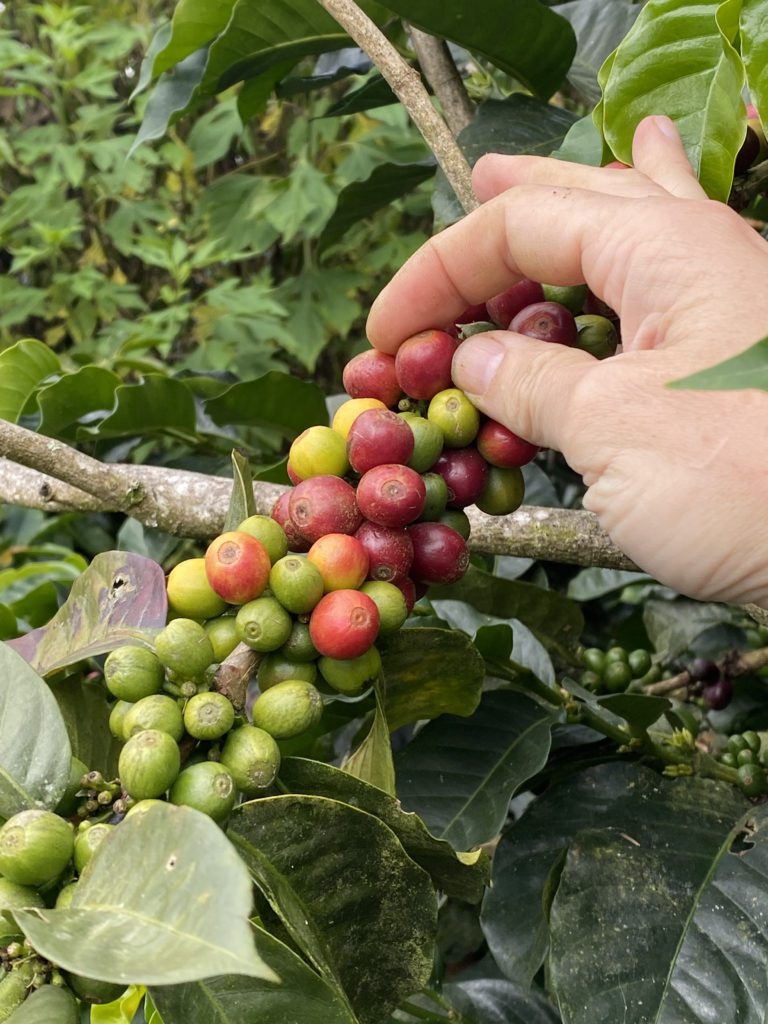
Our small group of four spent half an hour picking, and even combining all of our baskets together managed only a paltry half basket of berries; a fraction of the 100kg a day the usual picker would collect. We make our way back down the hill to find out what happens next in the journey to the coffee cup.
Next up is a nifty hand grinder that magically separates the two small seeds from their skin. Seeds spill out one side, red skins and pulp the other. Somehow mesmerizing in its simplicity. From there, the seeds have to be dried for a week, so we head to the roof to see them spread out in a thin layer baking in the sunshine.
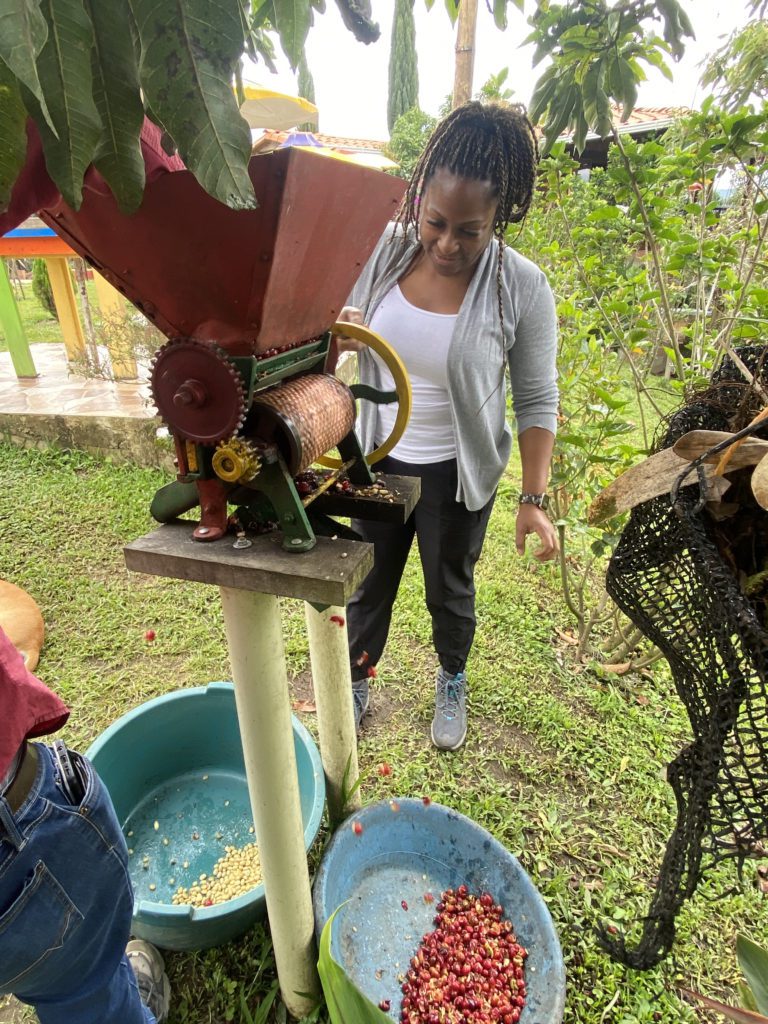
This farm is just five hectares, but the extended family of this fourth generation of coffee farmers own more than 20 farms in the area. So, what we were seeing is just a small scale replication of the real process. But while the machinery might be slightly larger for their day-to-day operations, the basic techniques remain just that: basic.
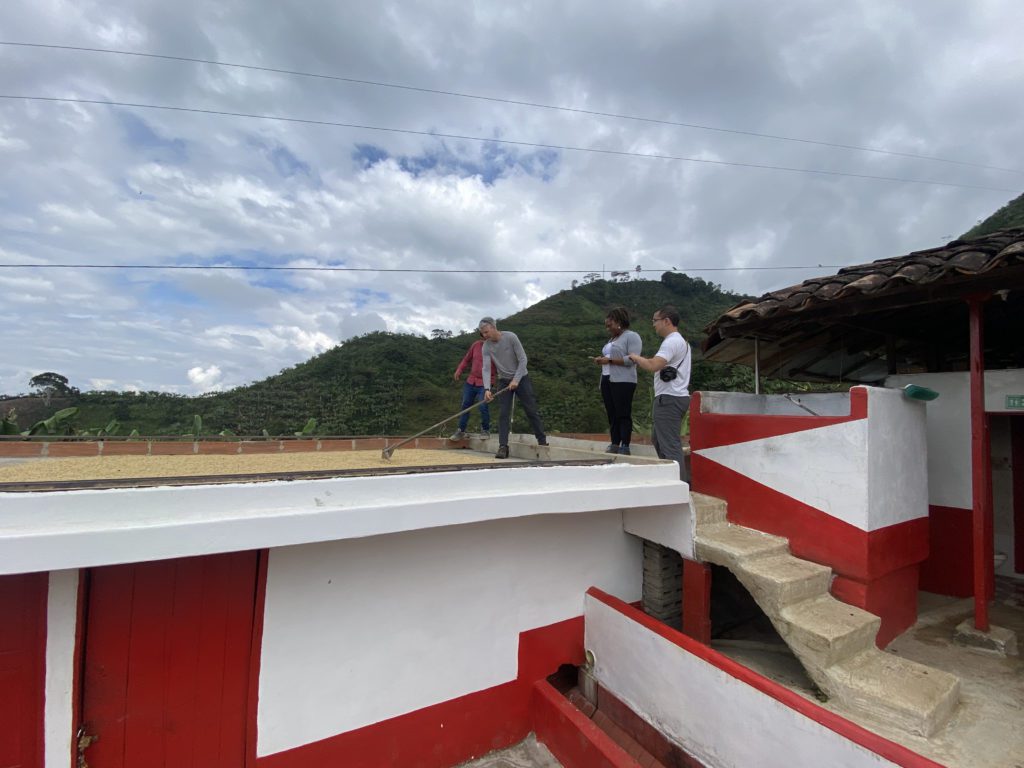
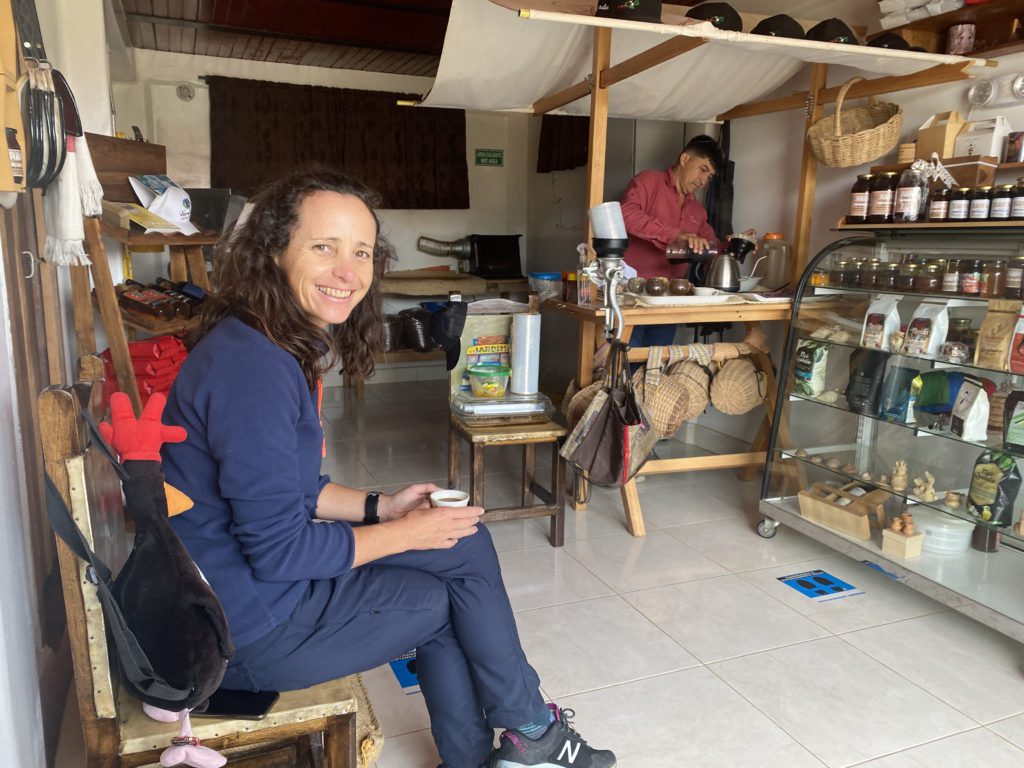
After a week of sun baking the beans then head to another nifty machine that removes the outer husk of the seed and reveals the dull green coffee beans. From there, they are roasted and ground for our drinking pleasure. And pleasant it is, drunk as an espresso just as Colombians do.
On our return to town the weather has cleared after last night’s rain. We quickly realise that the town square was actually quite subdued the night before, and tonight seemingly the whole town is out ready to party. It’s only 6pm and already people are dancing to the music in the bars or chatting with family and friends in the kaleidoscope of chairs.
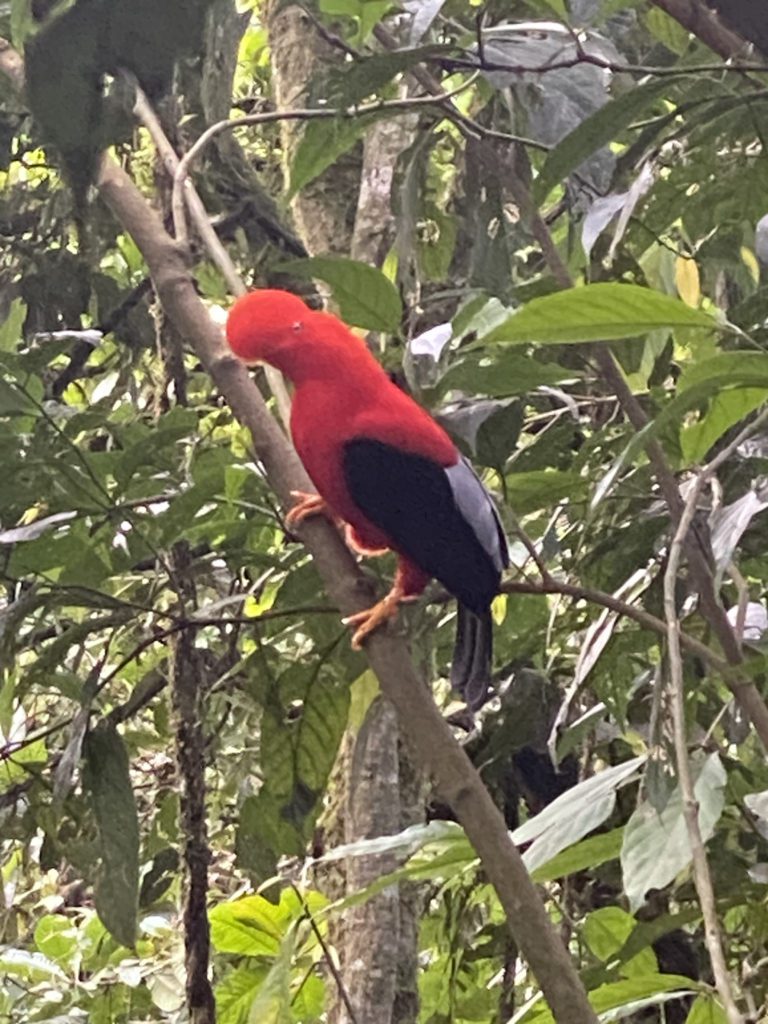
These birds have a name that is almost as crazy and unusual as their plumage. ‘Cock on the rock’ birds are the National bird of Peru and we found them in a sanctuary on the outskirts of Jardin.
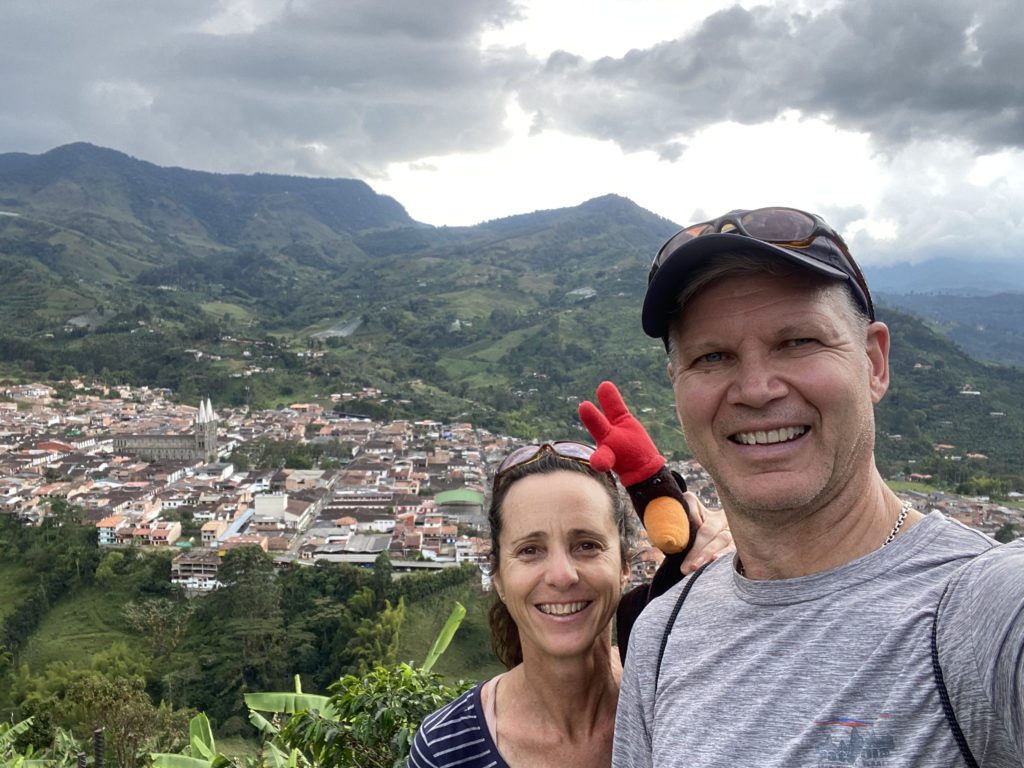
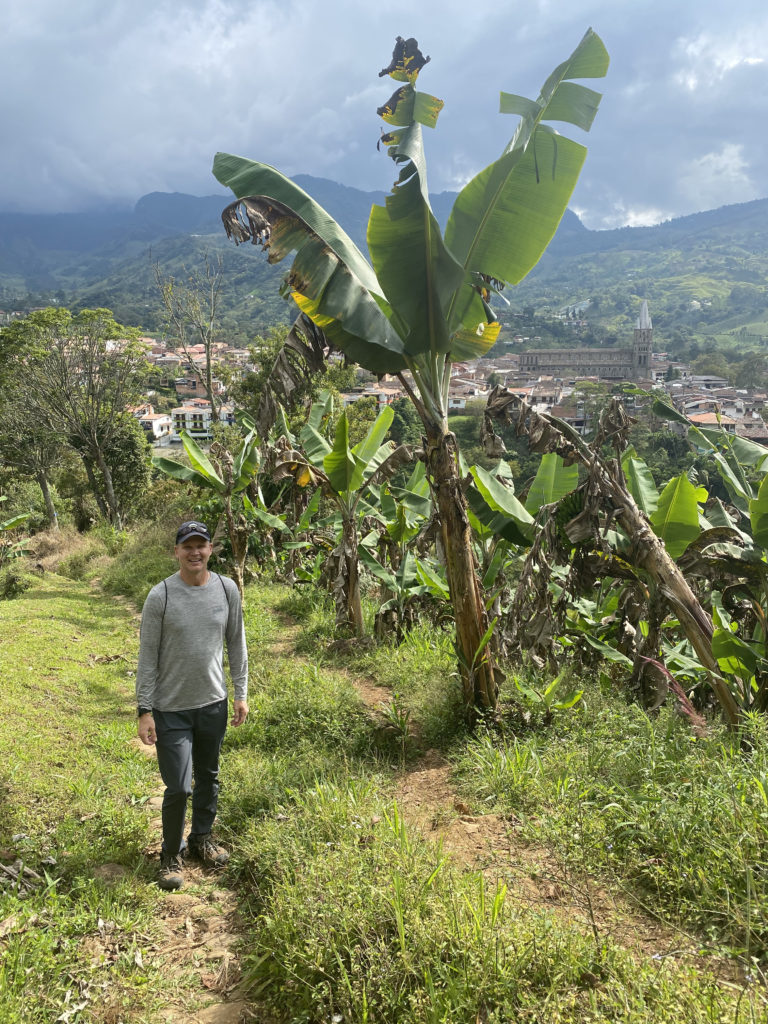
A short walk up one of the hills surrounding tow; brought us to this amazing view and the Christo Rey statue that looks out over Jardin, nestled in the valley below.
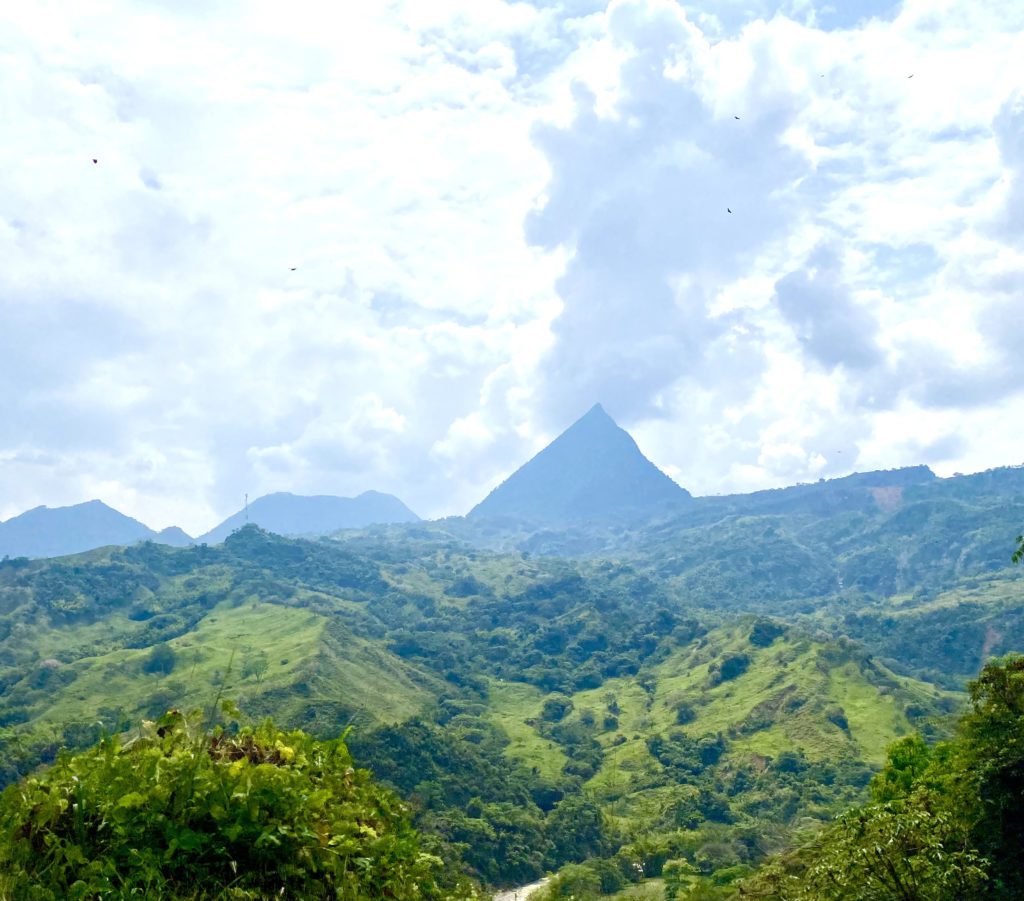
As we rounded one particularly tight corner, a cartoon mountain came into view that looked like something Feathers might have drawn with his flippers.
Guatapé
It’s not unusual for towns and tourist attractions to become a victim of their own popularity. It’s a fine line between a place being beautiful and being overrun with tourists
For us, Guatapé has unfortunately crossed over that line. While at one time it was probably a cute town and a relaxing getaway, it’s now filled to the brim with day trippers. As you walk along the lakeshore you run the gauntlet of touts selling trips on overcrowded boat tours, kayaking or waterskiing. The colourful streets lined with houses painted with themed images are jammed with people trying to get that perfect Insta photo. And yes, we were two more bodies in the pile.
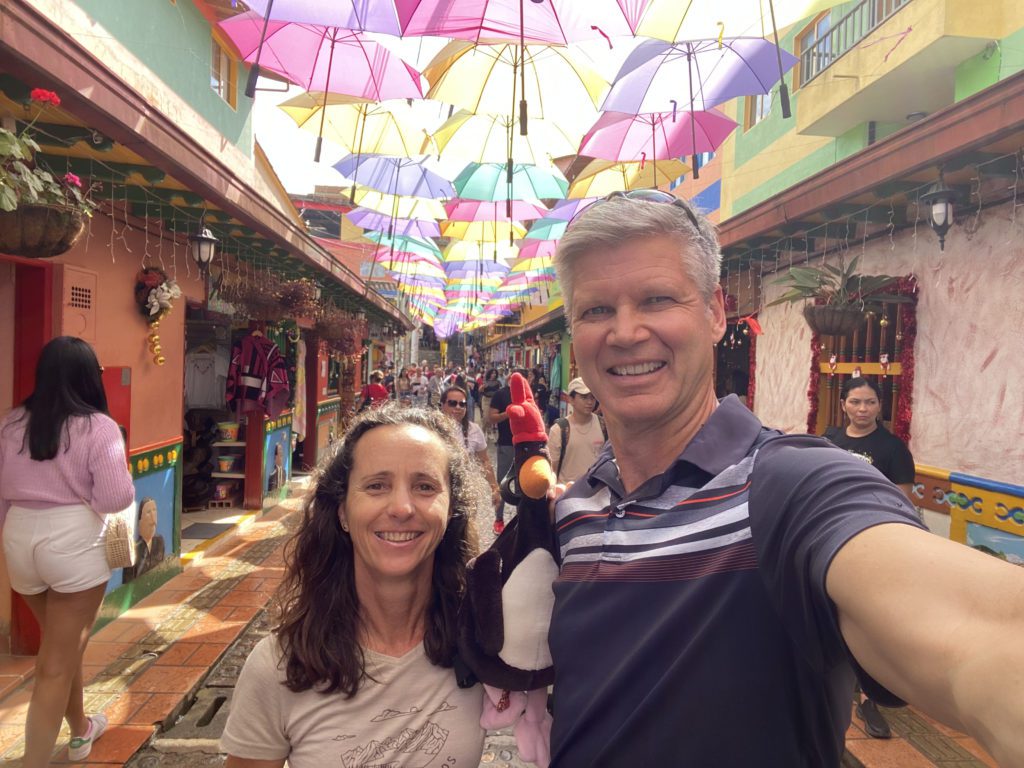
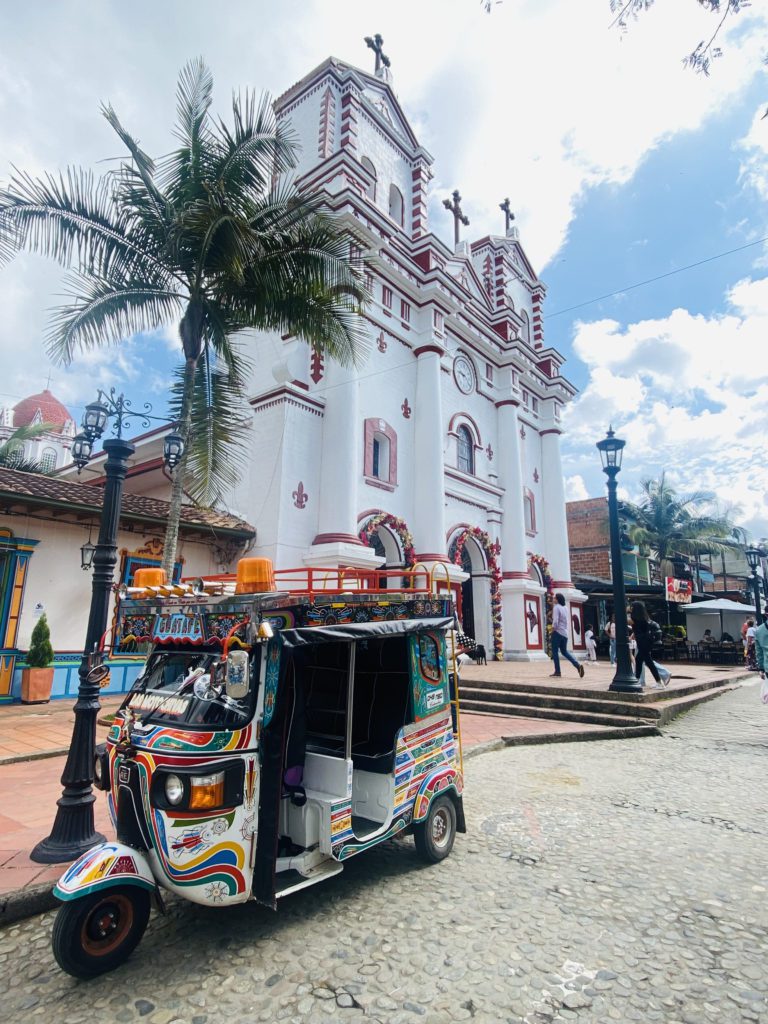
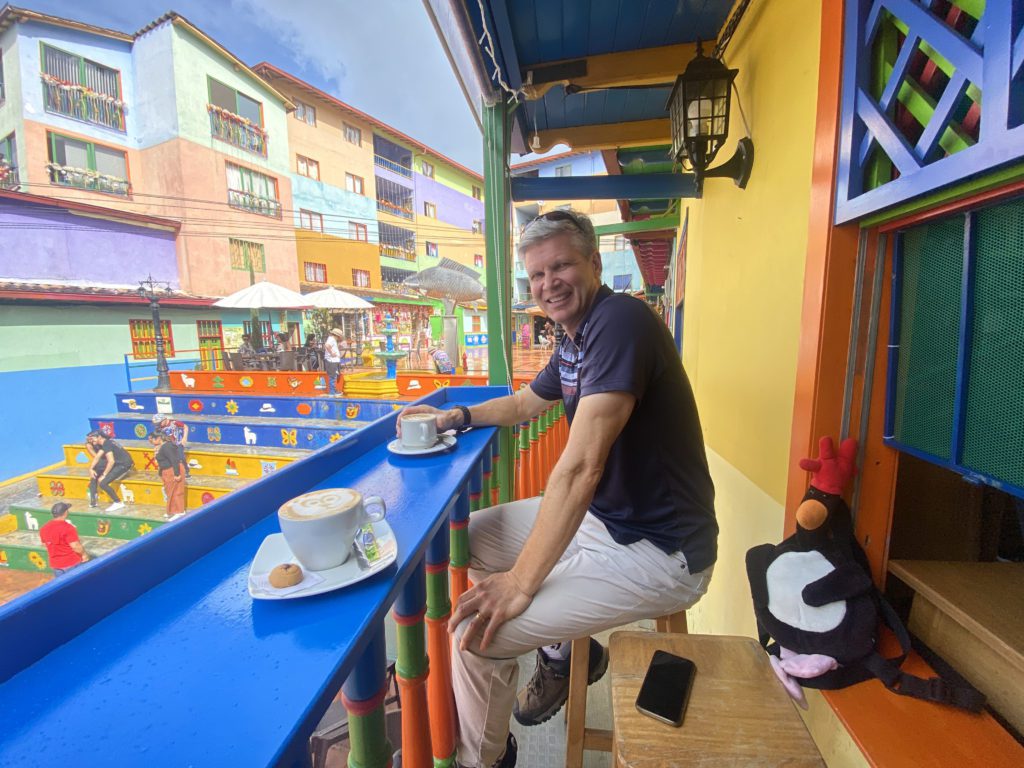
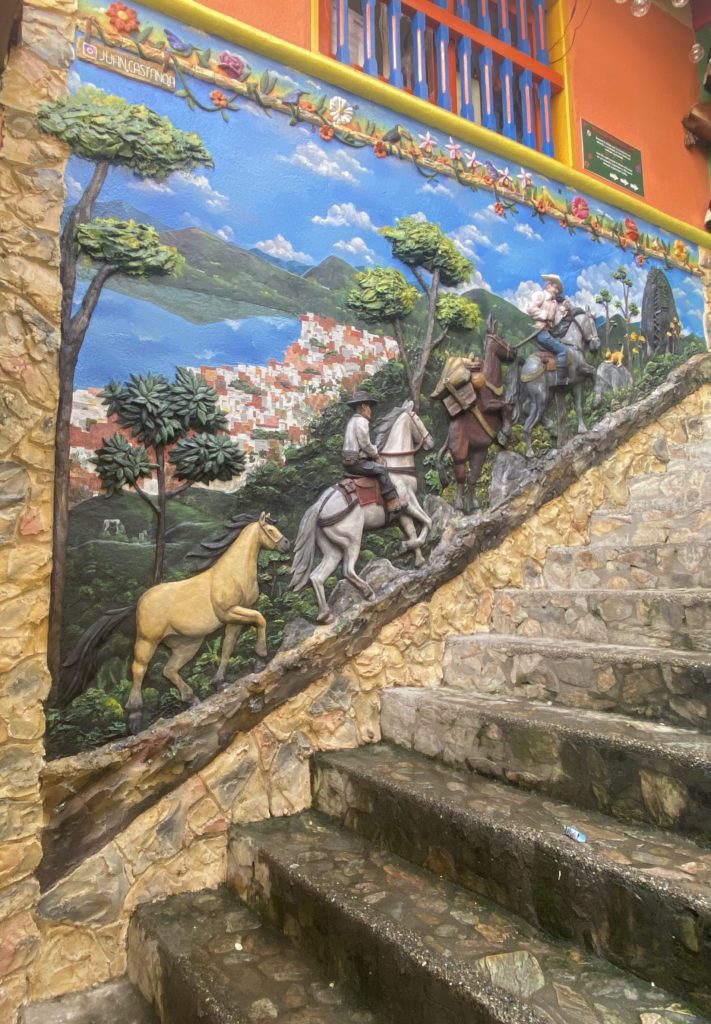
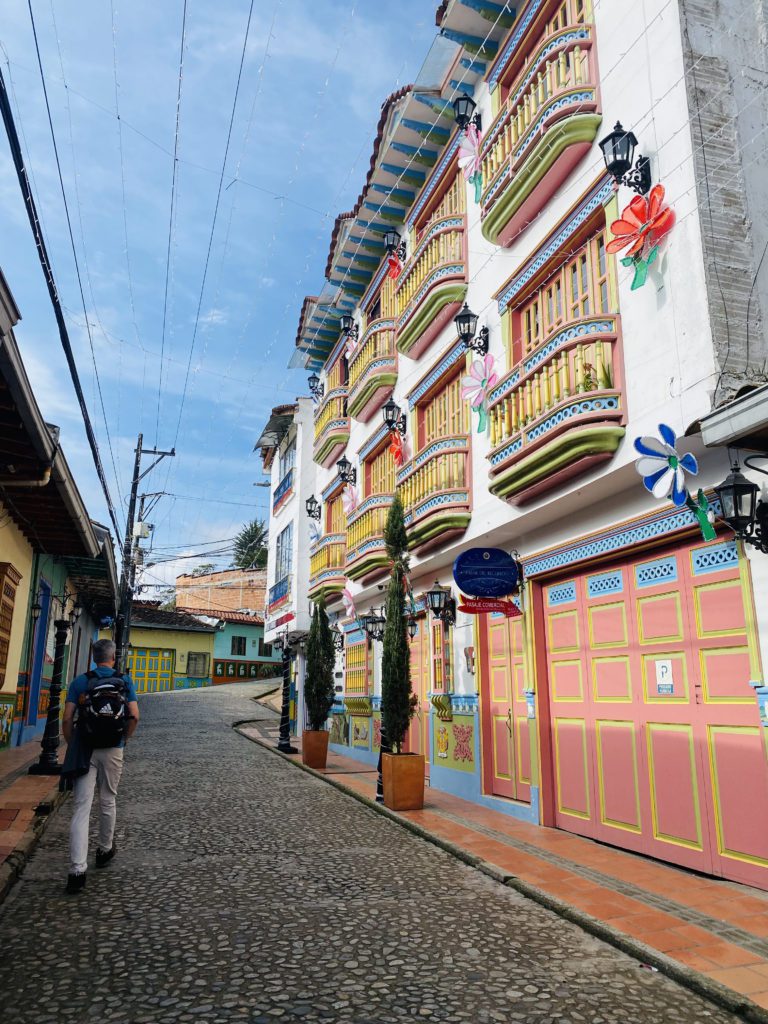
All that being said, the town still retains a certain charm after the day trippers leave and before they descend the next day. This made it a great place for us to watch the FIFA World Cup final surrounded by locals supporting their Latin American friends from Argentina. (Or not. There’s a popular joke here in Latin America along the lines of ‘How does an Argentine commit suicide? He jumps off his ego. So there were plenty of French supporters as well.)
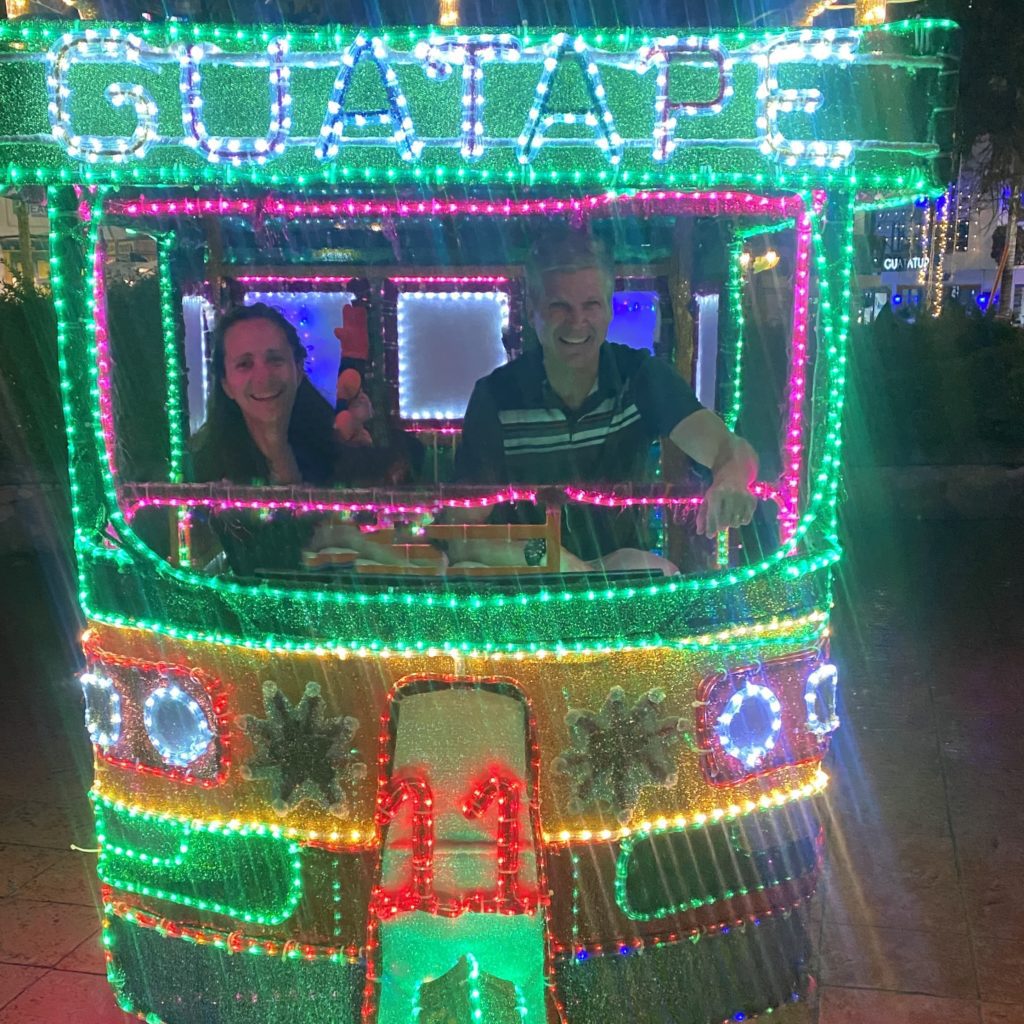
There’s nothing quite like a ride in a tuk tuk down a main road to make you really feel like you’re in a fun country. Or, as it’s known here, a moto-racon (motor mouse). Our particular motor mouse took us out to a giant monolith that is a big part of the attraction of Guatapé. (Not so dissimilar to Perce Rock in Quebec).
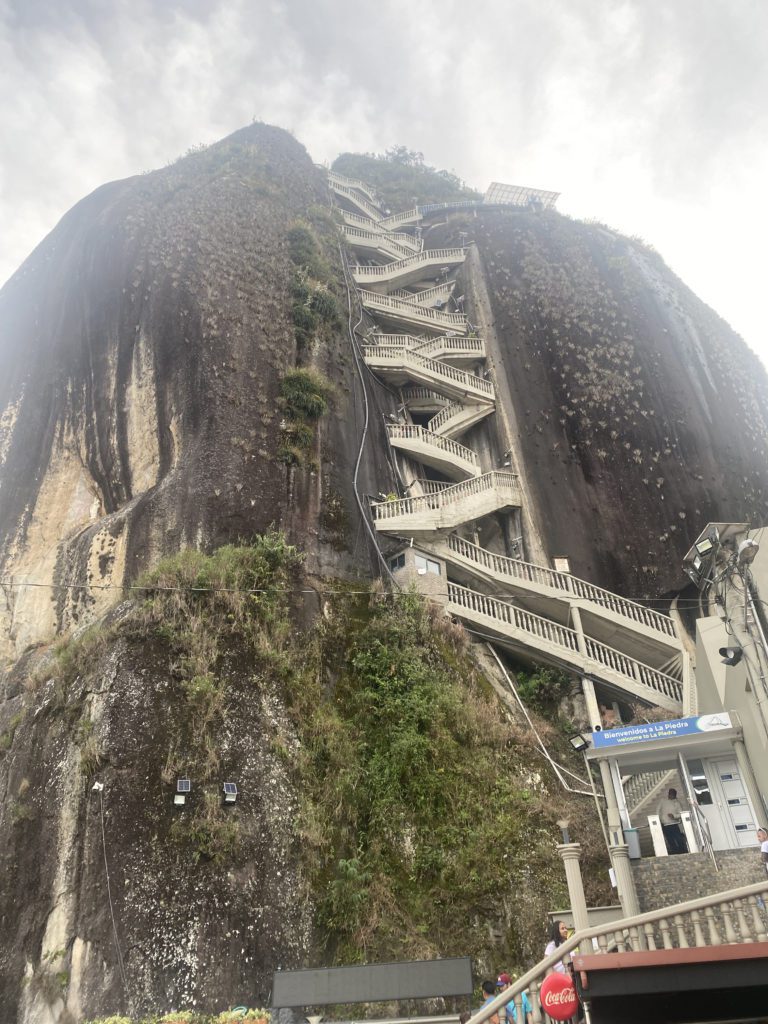
Amusingly, there has been an ongoing dispute between Guatapé and El Peñol, a neighboring town, about who actually ‘owns’ this big rock, and therefore what its name is. Depending on who you ask, it’s either El Peñón de Guatapé or La Piedra del Peñol. A number of years ago Guatapé decided to take matters into their own hands and started painting ‘Guatapé’ in giant white letters on its side. They got as far as the first letter and a half before the Penolians stopped them. To this day the rock still has a giant ‘GI’ on the side, faithfully reproduced on the many trinkets and t-shirts displaying its image.
The walk up the 600 steps to the top of the monolith is fun, with a pretty spectacular view out over the man-made lake, formed by a large hydroelectric complex developed here in the 1970s. As we reached the top we were glad we’d followed some advice to go after 4pm to avoid peak tourist.
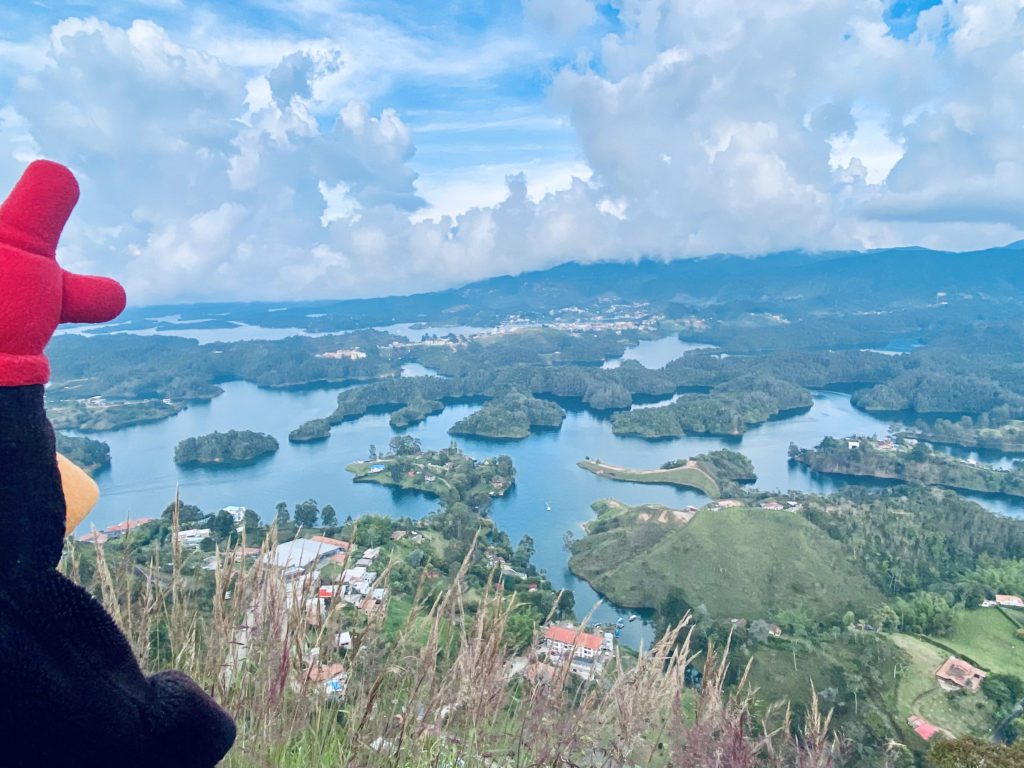
Guatapé is the playground of the rich and famous to some extent, with large mansions scattered throughout the lakeshore. helicopters rides and the odd luxury yacht.
We did feel a bit sorry for the local people having their town overrun by tourists, but then in some ways it must be like living in the Eastern beaches of Sydney. You get used to people taking photos of your backyard.
With months on the road it’s inevitable that we come across ‘touristy’ places like this – and to be fair, this is absolute peak tourist season for Guatapé.
In a Nutshell: Guatapé and Jardin
Guatapé is well known as a tourist destination and can get pretty overrun, especially around December.
While sitting in the town square of Jardin is fun, we also found some beautiful spots when we went inside the buildings. The Maracas cafe has a gorgeous back courtyard (pictured)
A couple of locals we spoke to were a bit baffled that we wanted to visit Jardin. ‘It’s just a town and full of foreign tourists’ was the comment. We didn’t find this at all and liked it much more than the local favourite of Guatapé.
140km from Medellín, the drive to Jardin takes just shy of 4 hours. The roads aren’t bad (no pointy rocks or landslides, and wide enough for two cars). Just very winding, with turns every 100m or so. After missing out on bus tickets, we ended up renting a car from Localiza, which was easy and inexpensive, as well as flexible. With the full insurance package, it was around $30 CAD per day.
Other towns that local ‘Paisas’ have told us are their favourites near Medellín are Concepción and El Carmen de Viboral which apparently has great local music.