
Comuna 13 and Medellín Museum of Modern Art
What is truly amazing is that in a place that has faced some of the worst of humanity, its people can be some of the friendliest and happiest we’ve come across. We’ve felt genuinely welcomed by the local paisas of Medellín, who are proud of how far their city and country has come.
There were two particularly poignant experiences we had in Medellín that brought this to the fore.
Comuna 13
In 1991 Medellín was named the most violent city in the world, and Comuna 13 was the most dangerous part of Medellín. Not somewhere you would ever contemplate going voluntarily either as a tourist or a local. But by 2013, Medellín had been named the world’s most innovative city, and barrios like Comuna 13 were undergoing a remarkable transformation as part of the Colombia government’s efforts and investments in the poorest neighborhoods, which continue today with the National Development Plan.
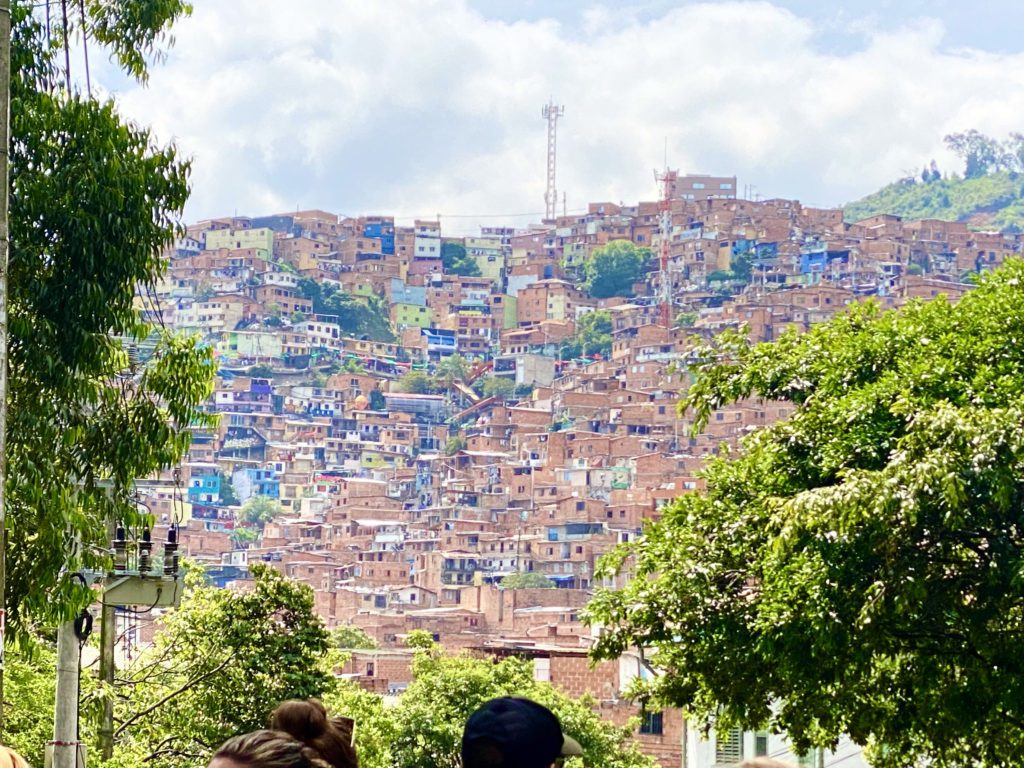
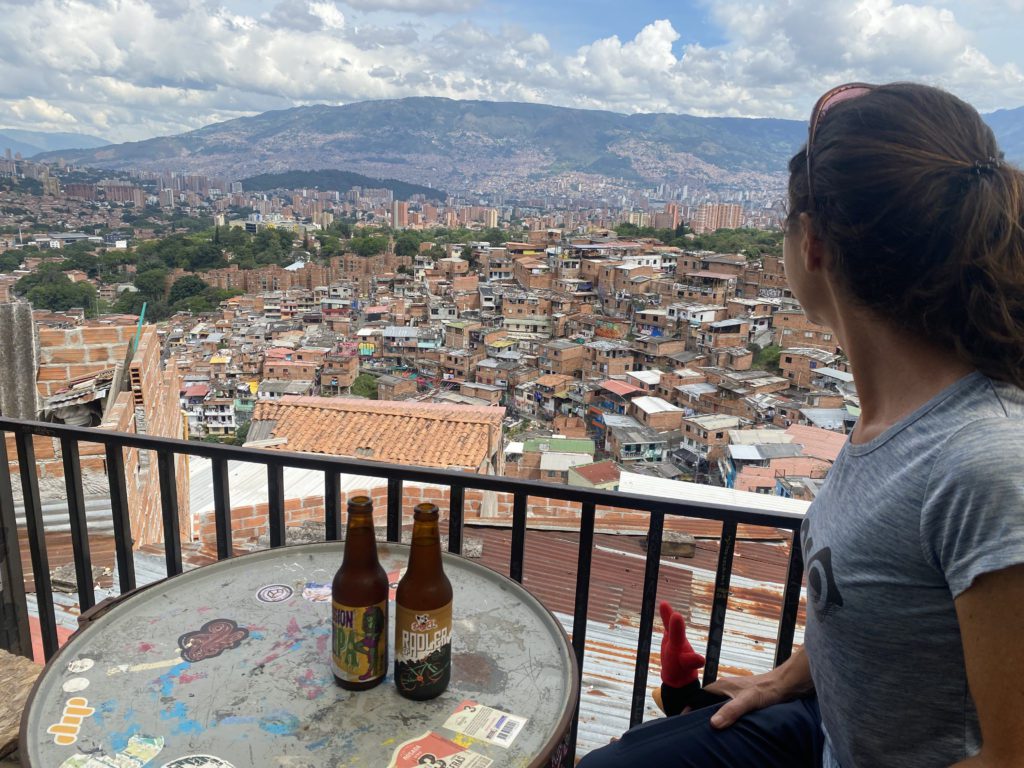
View up to Comuna 13. The escalators are visible in the centre of the photo
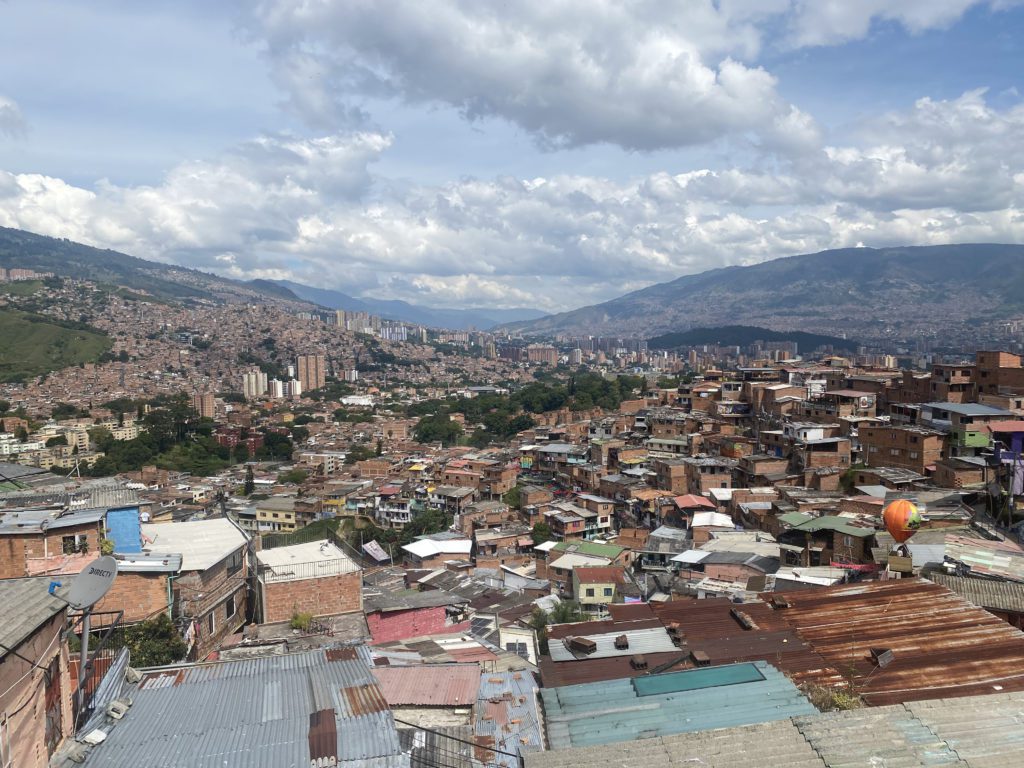
View from the top
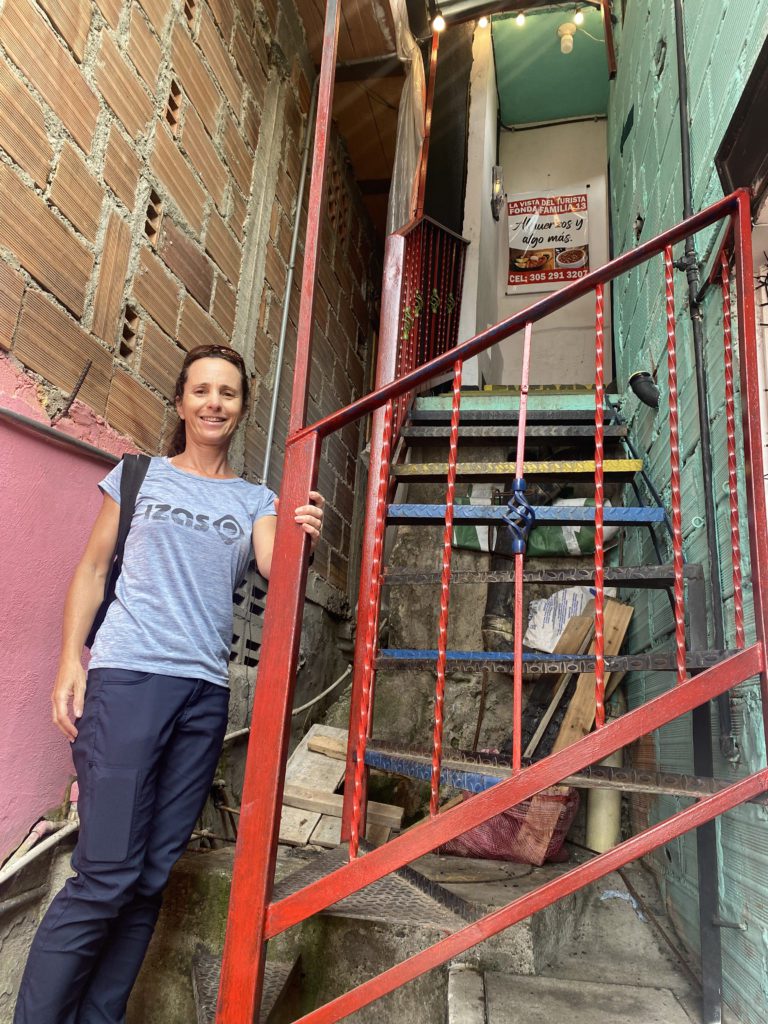
One of the most visible of these investments was the installation of Comuna 13’s famous outdoor escalators, which ease the transport of people and goods up and down the extremely steep mountainside, where the rapid development of (extremely basic, and extremely crowded) houses from the 1940s onwards was not matched with any kind of urban planning such as a structured road system.
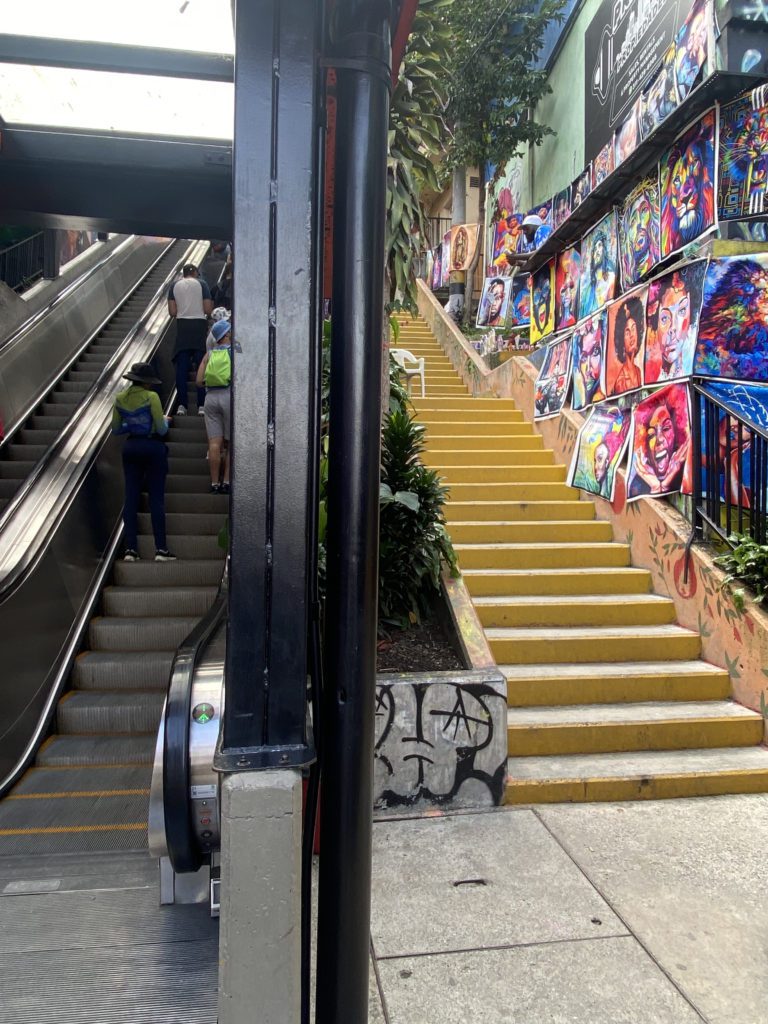
But as Yulieth, our tour guide from Zippy Tours, was quick to point out, the escalators are not the only investment. There are four pillars that she highlighted that are key to ensuring a long term impact to the community: education, health, social programs, and tourism.
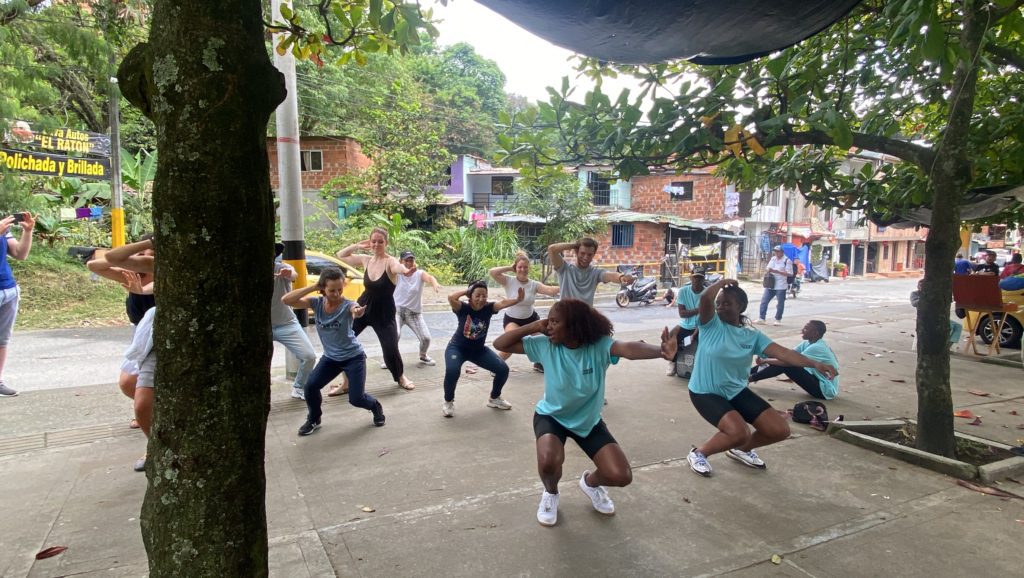
Helping kids see that there are other opportunities outside of joining a gang or entering the drug trade has been critical. As a chid of a single parent Yulieth could attest to the pressure from gangs to join the drug trade and help boost the family income. Today, there are many free initiatives and classes kids can get involved with – things like language classes, sports, theatre, and music. Hip hop has played an important role here, as it was the first group to reach out to Comuna 13 and teach the kids to dance. Today all across Colombia there are hundreds of dance crews – we were treated to one and Michelle even got in there and learned a couple of moves!
While the government would like you to believe that the improvements were as a result of their investments and their military interventions, the reality is that the biggest impact towards making Comuna 13 so much safer was the signing of a peace treaty between rival drug gangs. Traditionally, the reason that the barrio was so dangerous was that just on the other side of the hill there is a major highway, which was the main form of transport to bring drugs in and out of the city. Gangs, paramilitary groups and guerrillas all fought for control of the neighborhood to secure easy access to the highway. When for various reasons the highway ceased to be important to the drug trade, Comuna 13 was no longer as critical a location; a ceasefire made sense for all parties.
But not before the Colombian government sent in over 3,000 troops and several US military-supplied Blackhawk helicopters on multiple ‘raids’ over many years to kill or capture the baddies – and in the process killing or ‘disappearing’ hundreds of innocent civilians. ‘Operation Orion’ was yet another sad chapter in Comuna 13’s history, captured in a powerful mural. Our tour guide told us her own story, of hiding under her bed during the week-long raid to avoid the submachine gun bullets whizzing through the walls, and sadly her father being killed in the ensuing ‘peace’ that followed the ‘successful’ military operations. Heavy use of quotation marks here to register our disgust at the heavy handed tactics of several governments. Also mindful that it’s easy to judge when you’re not the ones having to make the decisions to try to bring peace to your country.
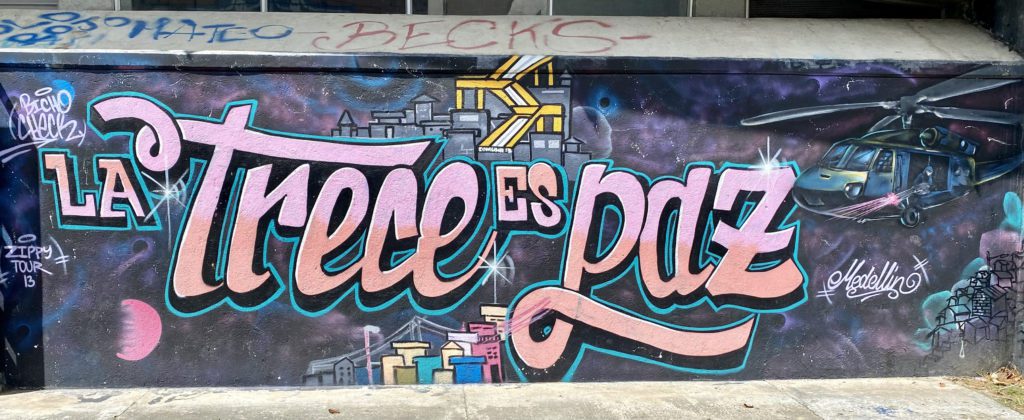
A Blackhawk helicopter shoots paint from its gunmount to spell out ‘The 13 is Peace’
Whatever the reason, it’s truly inspiring to see such a troubled area emerging as one of the bright spots in Latin America. Peace has allowed the providing of opportunities for people. In the words of one of their new politicians, ‘We need to build the social conditions for a peaceful society’. It is an inspiring place of the triumph of the human spirit. Something we could all use when society seems more divided than ever.
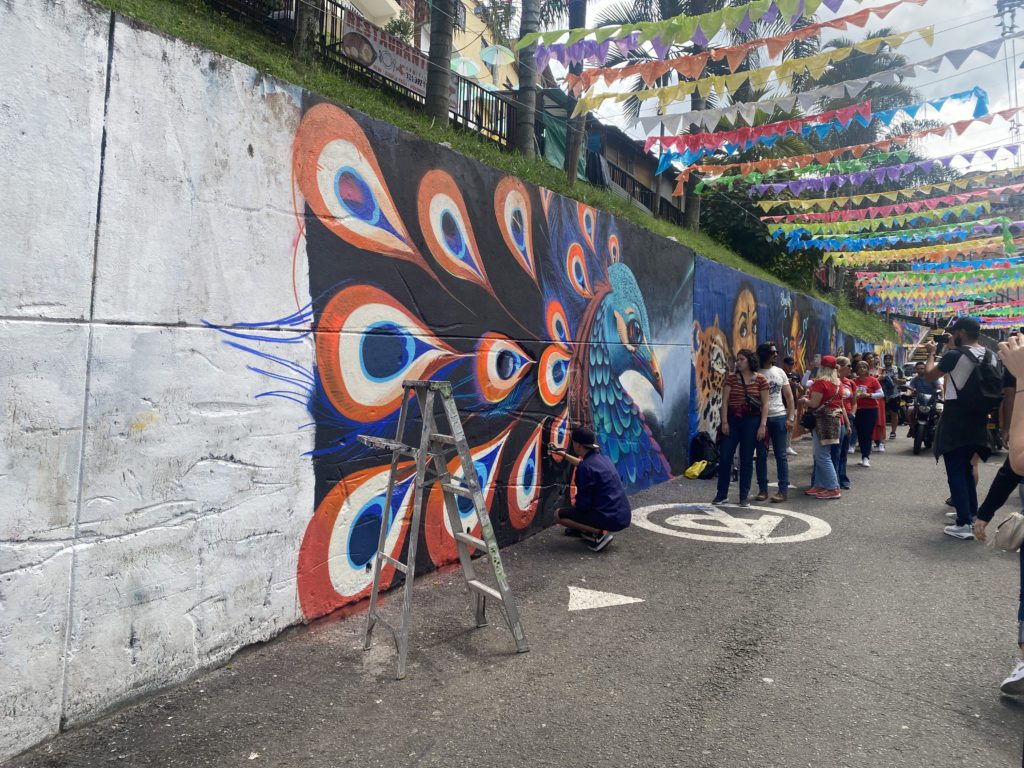
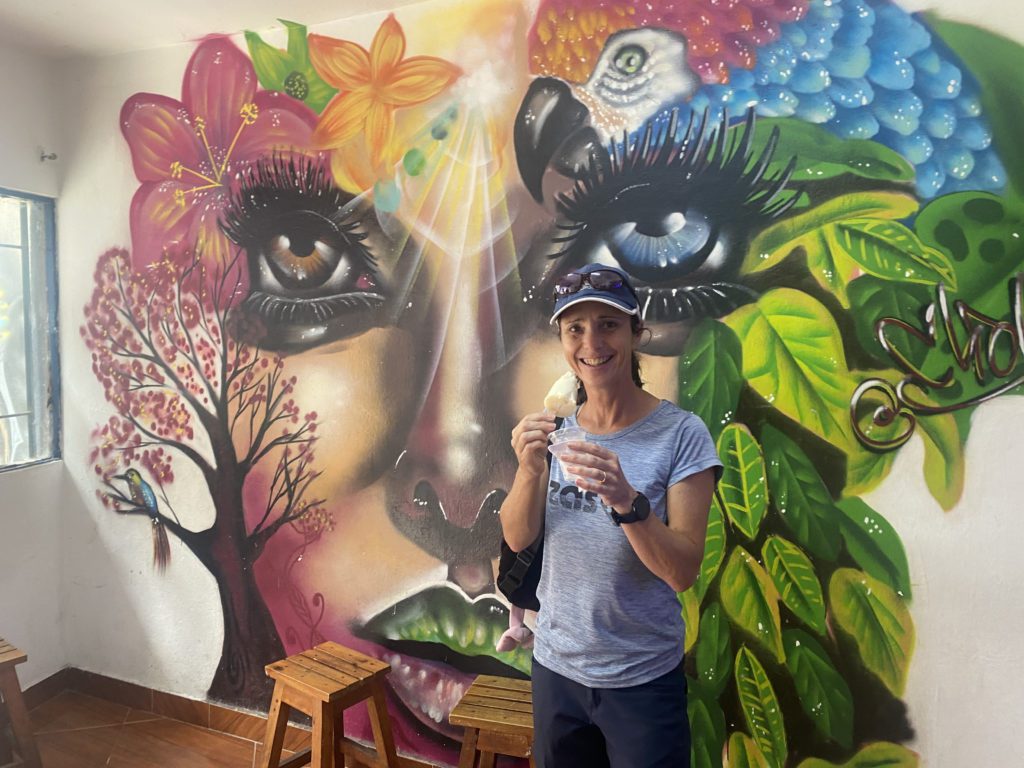
Street art is an important part of the community.
New murals regularly replace the old via a locally-run system of merit
Yulieth encouraged us to spread the word far and wide for visitors to come and walk through the neighborhood, see the transformation and experience the neighborhood. And while you’re at it, enjoy the million-dollar views from the top of the barrio while enjoying a cervesa artesanal. So – come to Comuna 13. Do a tour that takes you on an (extremely safe) walk through the commune, not just a bus to the top. Absorb the street art, the colour, the emerging beauty of the neighborhood. And reflect a little.
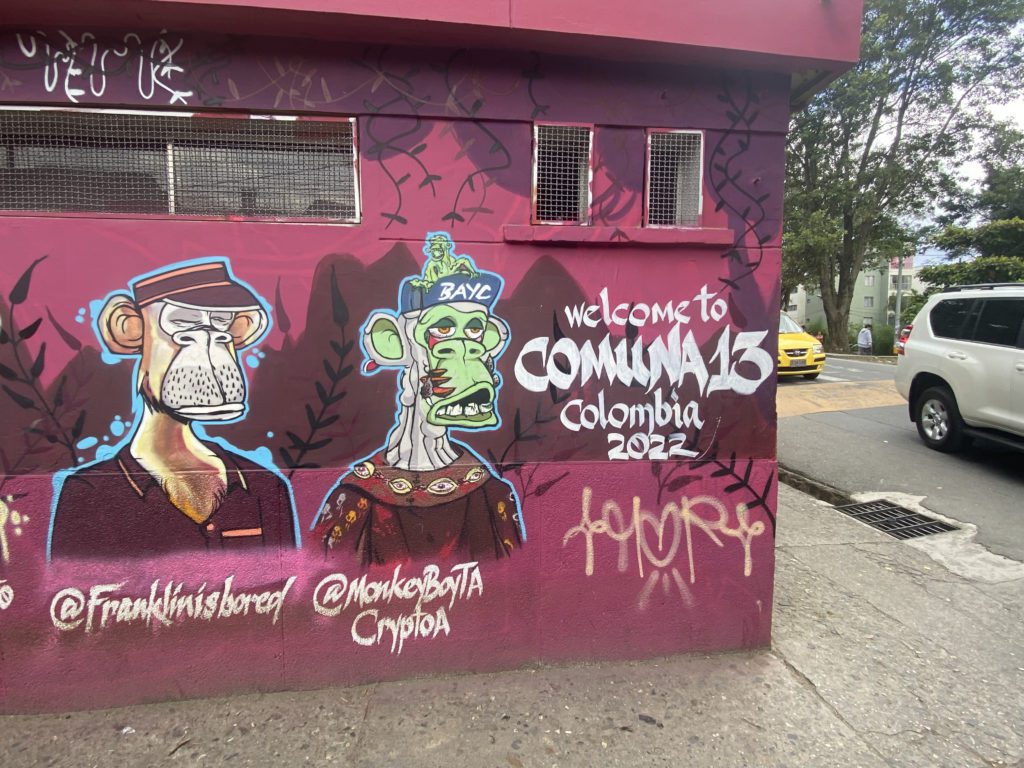
Click the pic for a cool video of these NFT monkeys!
For a good introduction to Comuna 13 and Operation Orion, start with this article
Medellín Museum of Modern Art
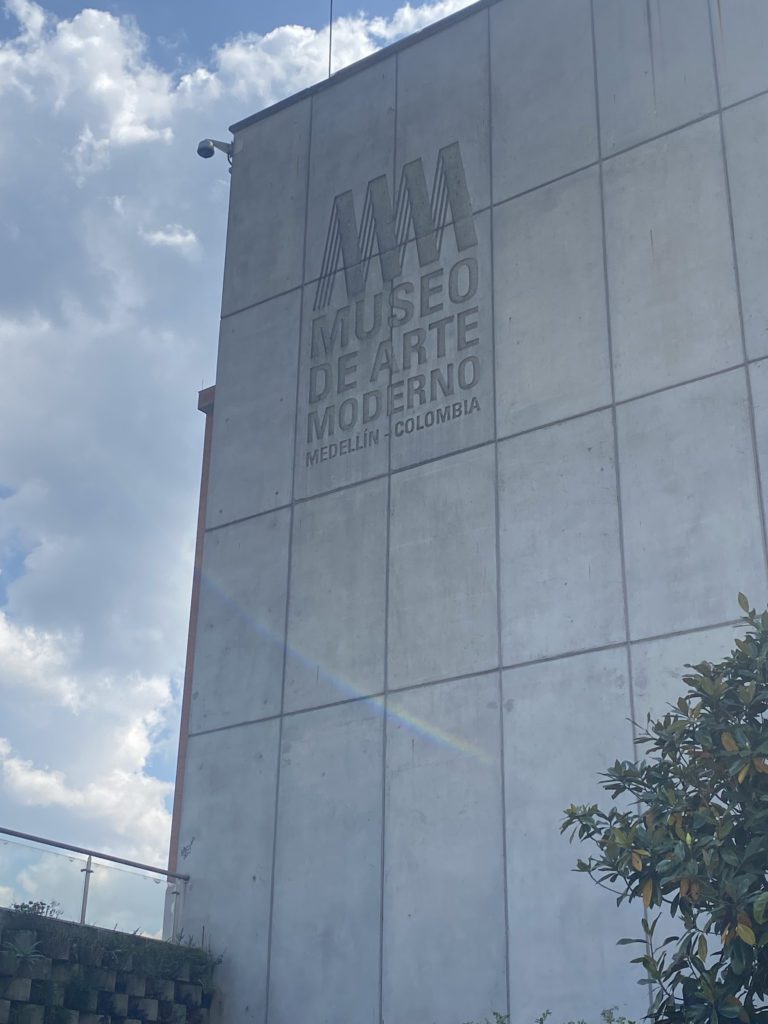
The Medellín Museum of Modern Art is one of the most thought-provoking and challenging that we’ve visited.
You cannot separate this museum from the city and country in which it resides. The original museum was bombed in 1989 during one of Medellín’s darkest decades, and many of the art works capturing the violence and horror of this troubled period were lost.
Violence, bombings and assassinations have haunted Medellín and Colombia for over 100 years. The work “School Principal Assignation”, was painted in 1980 but could have equally been painted 30 years earlier. It is an arresting piece that with a trickle of light red paint evokes a visceral response to the horror that was everyday life for Colombians for so long.
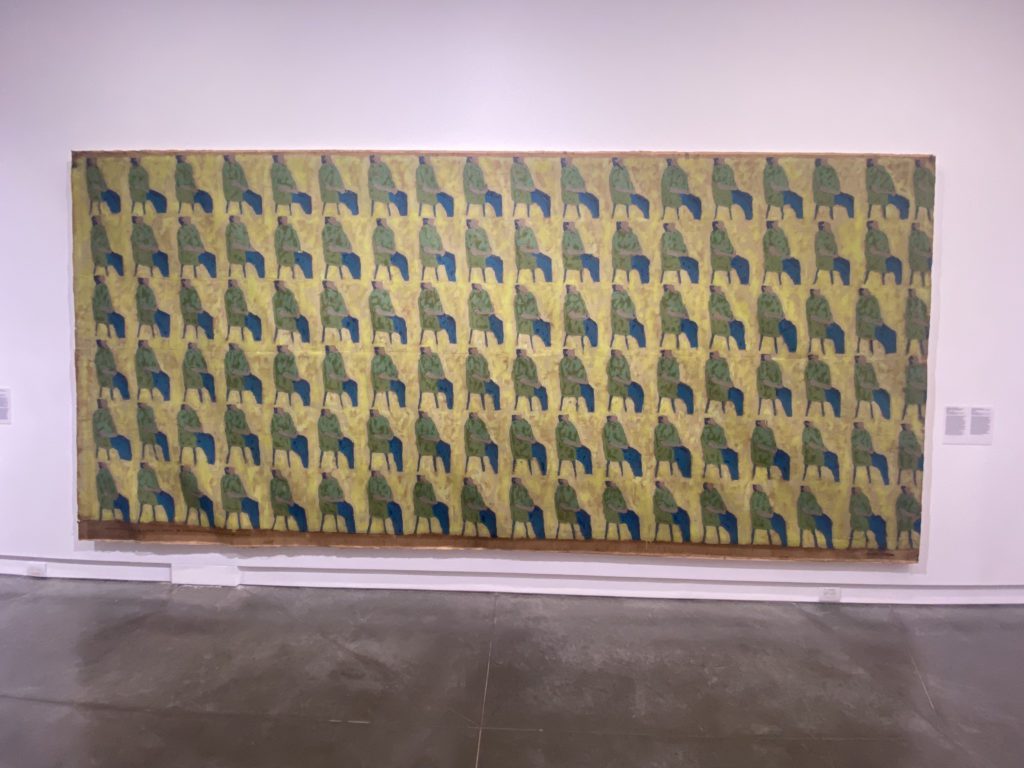
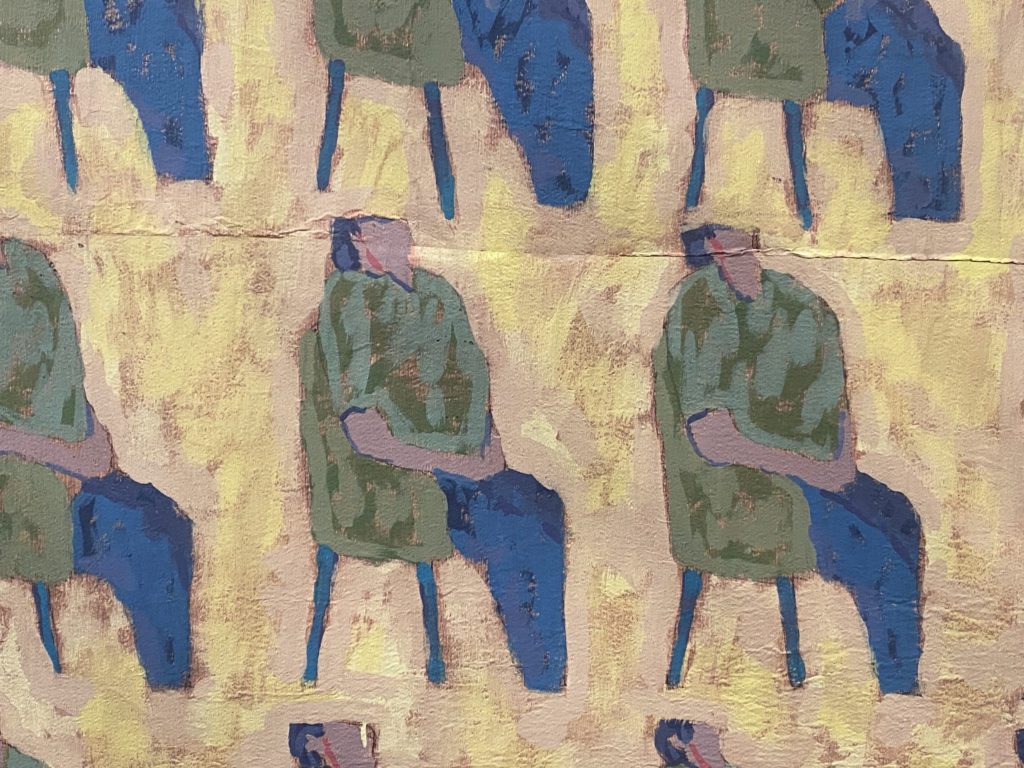
There are many works dealing with ‘The Disappeared’, the thousands of men, women and children who were kidnapped or murdered or who simply vanished, and whose very existence is only now (reluctantly) being admitted by the Colombian government. This chapter is not yet closed, with hundreds of protestors being ‘disappeared’ as recently as 2019.
The collected works on ‘Non-Objectualism’ challenge our views on what constitutes art, who it is being made ‘for’ and what its purpose is. With the backdrop of a massive divide between the ‘haves’ and the ‘have-nots’, the (literally) millions of displaced Colombians that have been forced from their homes and resettled in places like Medellín and Bogotá, building homes from whatever materials they can find in the Comunas surrounding the wealthy suburbs, a collection of art from found materials is not only fitting, but poignant beyond what one would normally find in a Modern Art Museum.
The museum demands your full attention. Some galleries encourage strolling through their halls, soaking in the works in a semi-detached haze. This is not one of them. Most of their works have excellent explanations and background in Spanish and English, giving you a historical context that you otherwise might not appreciate. It’s worth investing a few hours to learn more about this fascinating country and its difficult history.
The Guardian have an excellent article on the ‘disappeared’ from the 2019 protests here
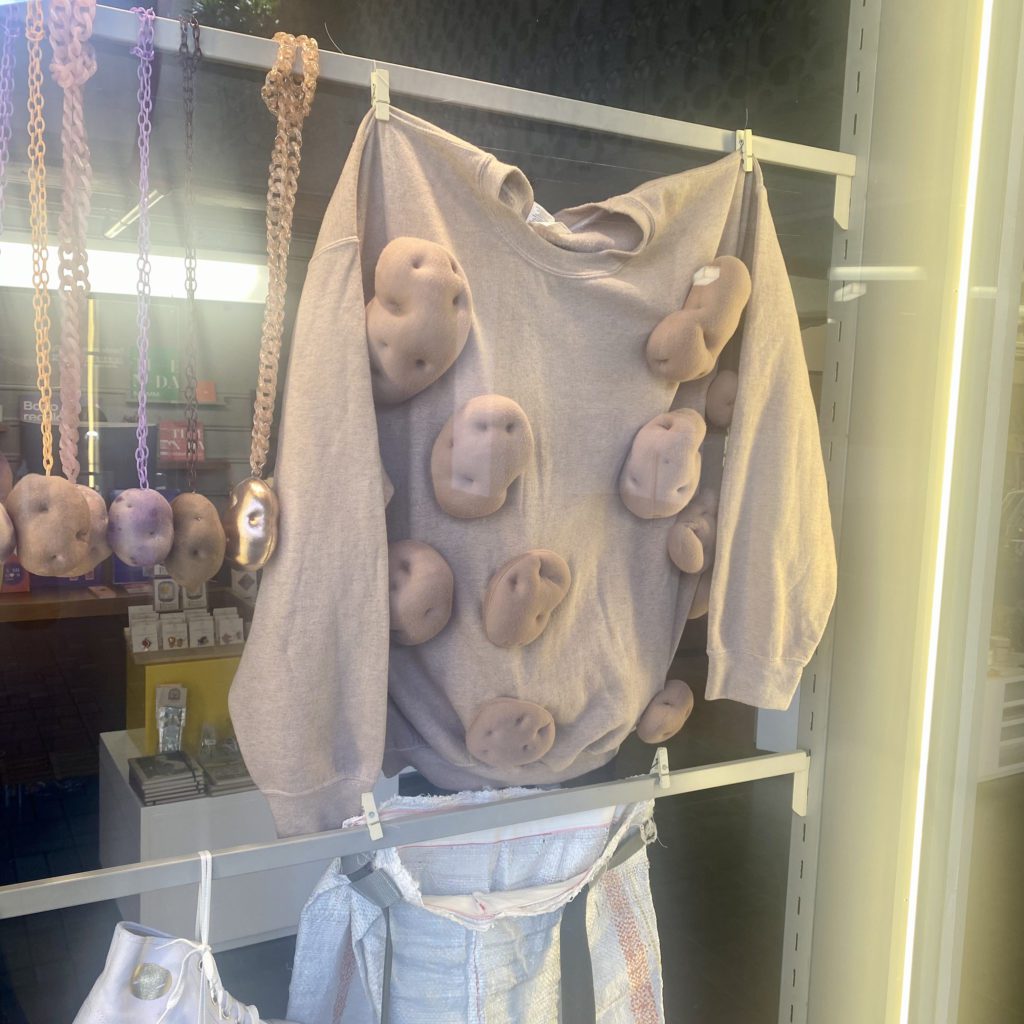
It’s not all doom and gloom at the museum, as this ‘Potato Shirt’ in the gift shop attests…
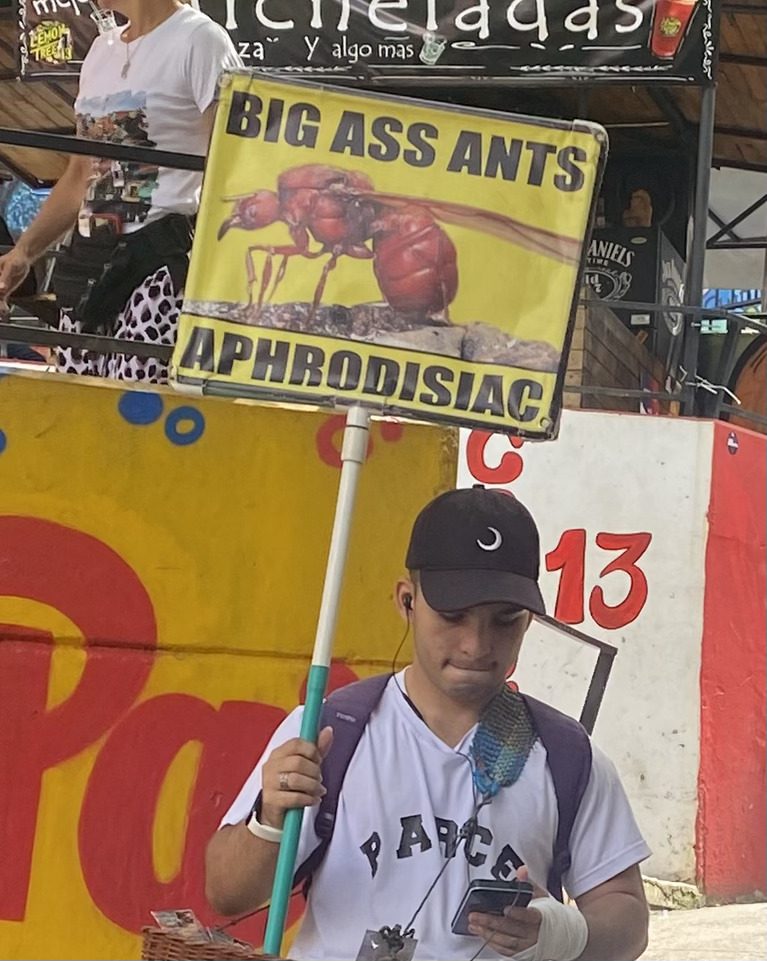
You can buy many things in Comuna 13…

…or follow us on Instagram…